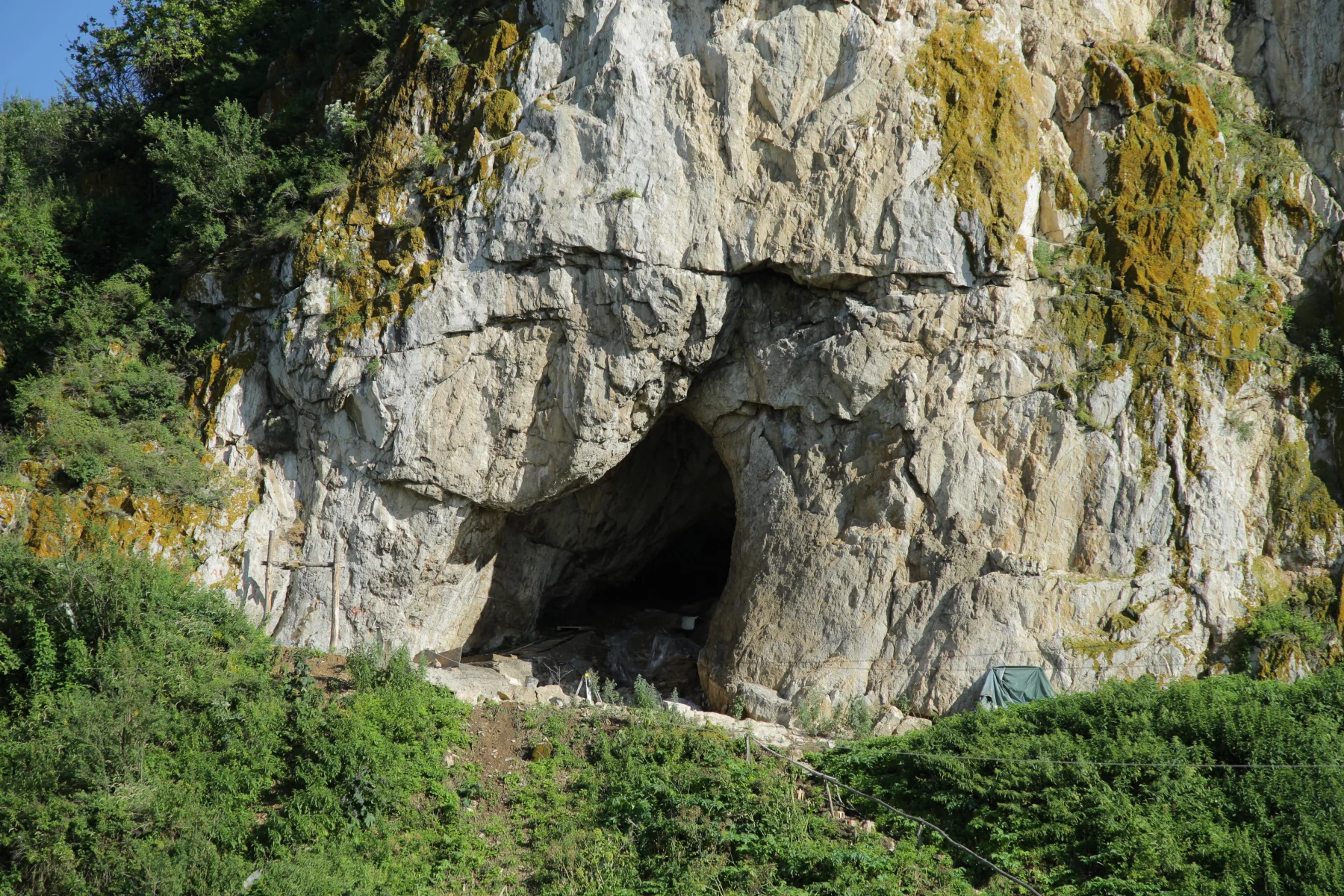
Several views of the molar tooth archeologists discovered in Chagyrskaya Cave. Zubova et al./ PLOS One hide caption toggle caption Zubova et al./ PLOS One Over the years, excavations at Chagyrskaya Cave in southwestern Siberia have unearthed an assortment of Paleolithic treasures, including heaps of tools fashioned from stone and bone, alongside fossils from the easternmost population of Neanderthals. And now, in a study published Wednesday in the journal PLOS One , scientists describe the latest discovery from the site — a Neanderthal molar with a depression that they believe is evidence of an ancient invasive dental procedure. "Basically a root canal," says John Olsen , an archaeologist at the University of Arizona and a co-author of the report. "This [hole] was created by a stone tool handled by a Neanderthal between the thumb and the forefinger," he says.…