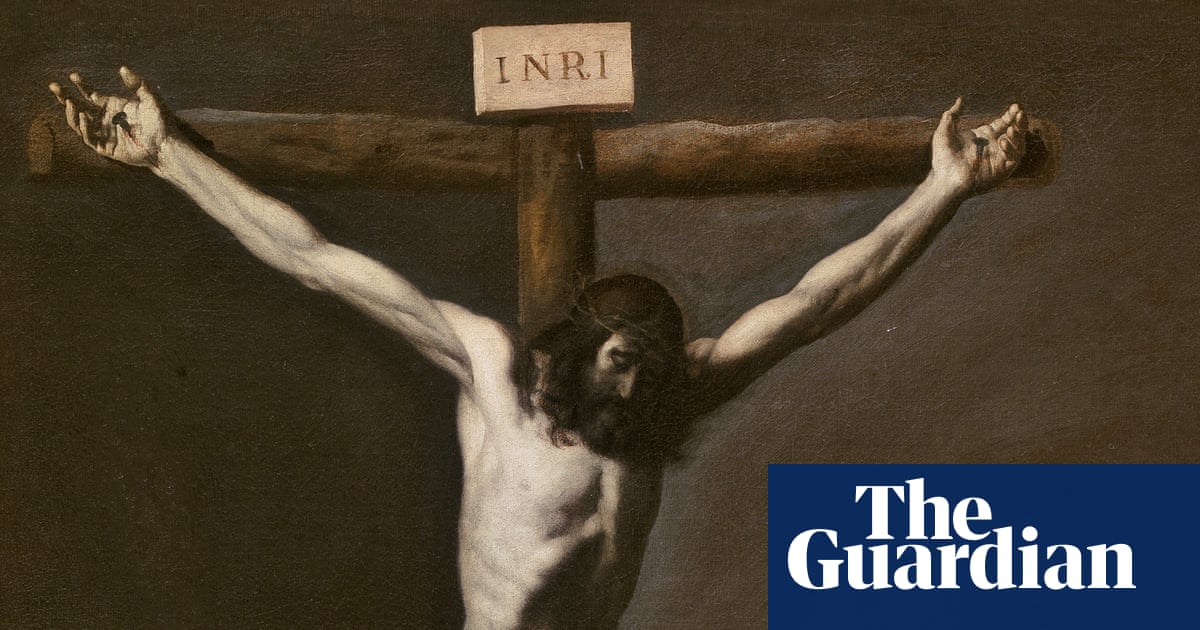
A gainst an impenetrable black ground, the crucified figure looms pale and shining. There’s almost no colour, beyond the trickle of blood on Christ’s feet from the nails driven through his flesh. His head slumps, and his carefully modelled face is at peace (no agony here). But the most striking part of the picture is surely the loincloth, which folds and crumples and bunches around his midriff – you can imagine passing your hand over it, feeling the linen’s volume and texture. In its original home, the monastery of San Pablo el Real in Seville, the painting was displayed with “little light”, according to the 17th-century Spanish artist and writer, Antonio Palomino. “Everyone who sees it, and does not know it, believes it to be a sculpture.” The paleness of the body, the fabric, must have loomed out of the dark like a vision. Francisco de Zurbarán, who painted this solitary crucified Christ, is one of the three great artists of the Spanish 17th century.…