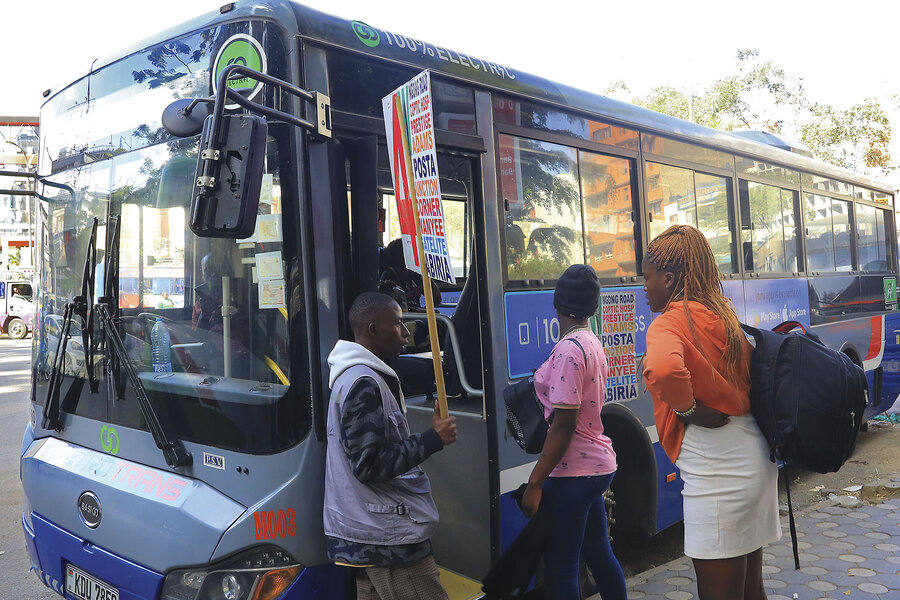
Every evening, Anne Kituku queues at a streetside bus park in central Nairobi, waiting for a bus to take her to her home in the eastern part of the Kenyan capital. Nearby, a rainbow of neon-colored matatus – minibuses – emblazoned with graffiti art and blasting loud music quickly fill and depart in clouds of gritty exhaust, but Ms. Kituku waits until a sleek white electric bus silently glides up beside her. For Ms. Kituku, who makes 16,000 Kenyan shillings (about $123) monthly working as a cleaner, the decision to take the electric bus comes down to cost. The fare is 10 to 20 Kenyan shillings ($0.08 to $0.15) less than their gas-powered counterparts depending on the route, a savings that adds up significantly over the course of a month. Fuel prices in Kenya have risen nearly 40% since 2022, driven by Russia’s invasion of Ukraine and, more recently, the war in Iran. The latest surge, in turn, has pushed matatu operators to raise fares by 25%.…