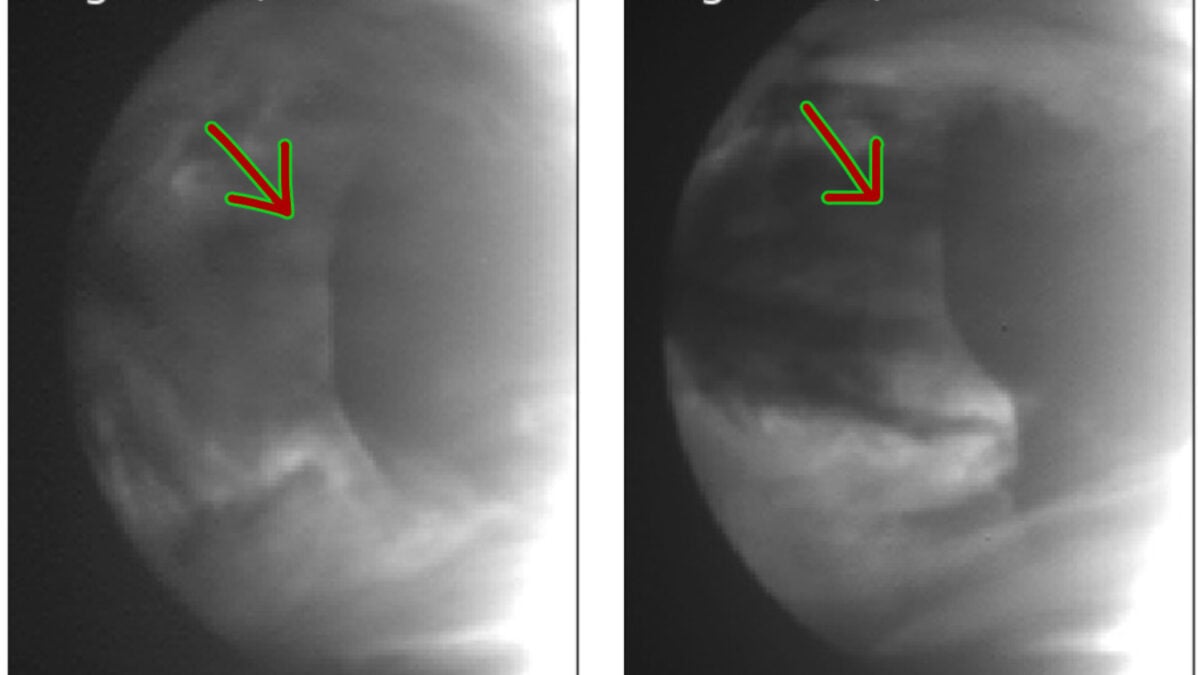
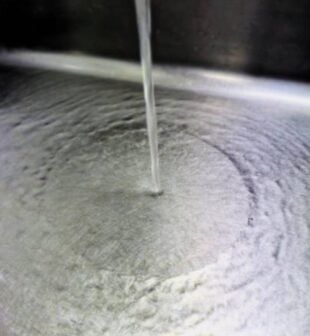
In 2016, a Japanese Venus orbiter repeatedly spotted colossal waves of acidic clouds sweeping the planet’s atmosphere. For roughly a decade, astronomers weren’t able to reconcile their observations with existing models. But an unexpected connection finally offers an answer. In a recent Journal of Geophysical Research: Planets study, an international research team describes how a large “hydraulic jump” forces sulfuric acid vapor higher into the atmosphere, where it bunches up into a massive, acidic cloud. These fronts can grow up to around 3,728 miles (6,000 kilometers) and persist for an extended period of time. As a result, the team believes this hydraulic jump also maintains planet-wide atmospheric phenomena on Venus, such as its unusually fast winds.…