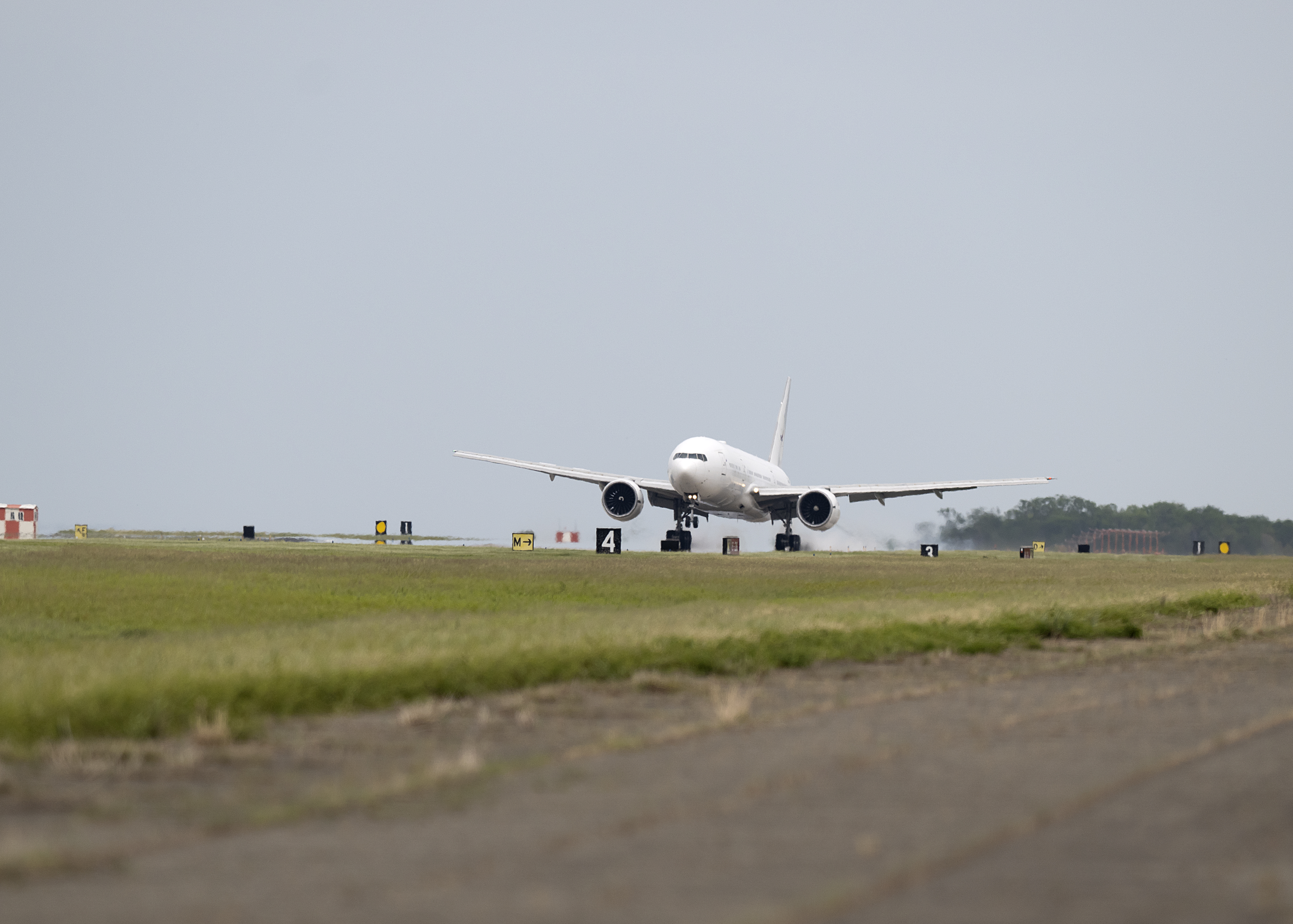
NASA’s Boeing 777 has returned to the agency’s fleet after undergoing heavy structural modifications as it transforms from a giant passenger plane into the agency’s next-generation airborne science laboratory. After a check flight and a three-hour transit from Waco, the aircraft returned to NASA’s Langley Research Center in Hampton, Virginia, on April 22. Since January 2025, the aircraft has been in Texas receiving hardware and structural upgrades to prepare for science operations. The modifications include installing dedicated research stations and extensive wiring. This allows payload systems to communicate with sensors such as lidar and infrared imaging spectrometers during flights. Cabin windows were enlarged and open portals installed at the bottom of the fuselage to mount remote-sensing instruments. “Airborne missions at NASA use cutting-edge instruments to explore and understand our home planet,” said Derek Rutovic, program manager for the Airborne Science Program at NASA Headquarters in Washington.…