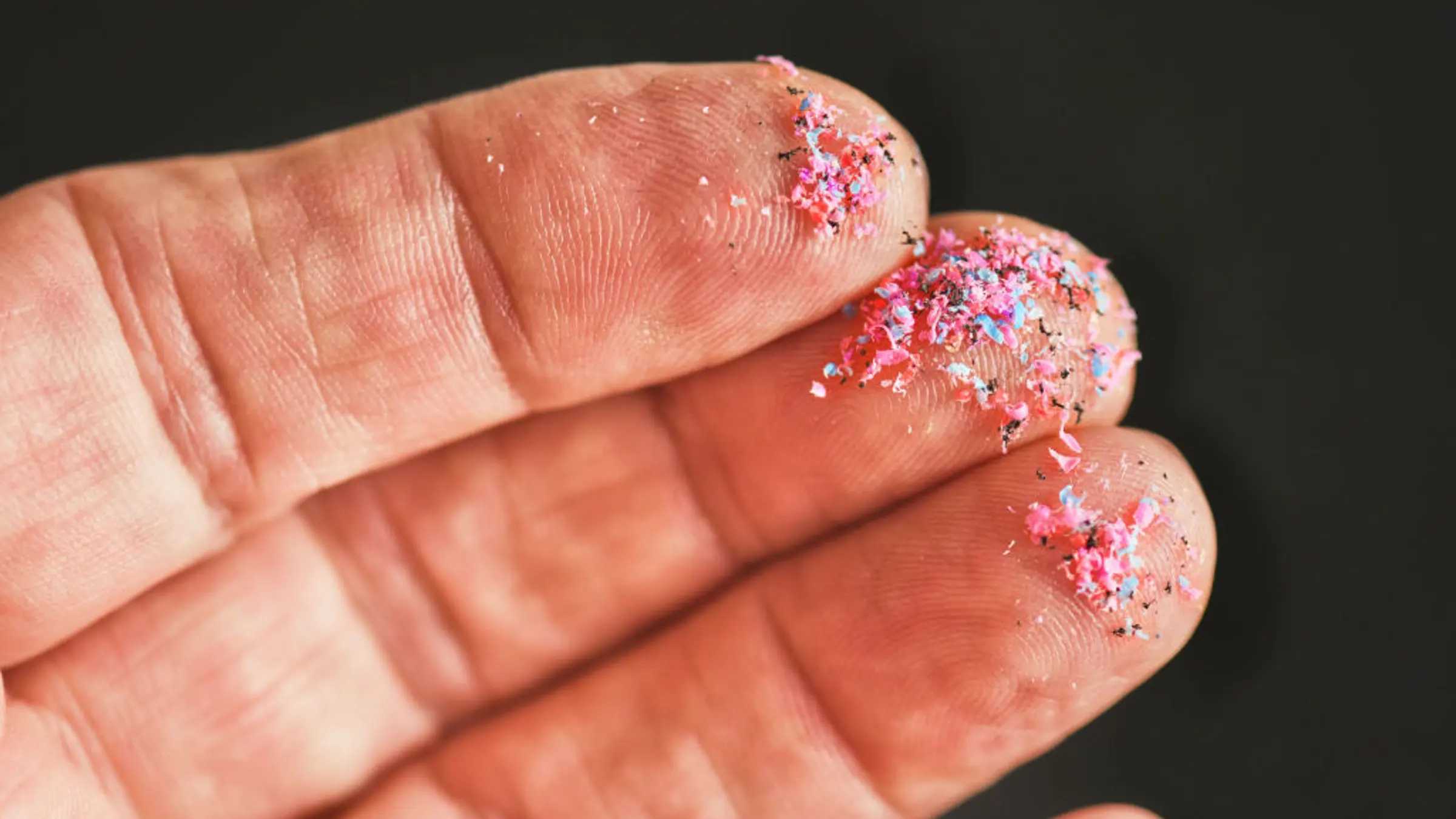
Microplastics seem to be everywhere—from our oceans and air , to drinking water and cosmetic products. Researchers have even found evidence of microplastics , and smaller nanoplastics, throughout the human body . Now, scientists have reason to believe that airborne microscopic particles could even be contributing to the warming of our planet . It begs the question: how worried should we be? What are the sources of airborne microplastics? Microplastics are minuscule particles— less than five millimeters in size—that originate from the disintegration of plastic products. As plastics break down, whether that be through washing polyester clothing or wearing out our tires, microscopic particles of plastic shed, small enough to be picked up and transported by the air. Once in the air, they can impact the atmosphere in different ways. “Particles in the air can affect the air in two ways,” says Fay Couceiro, professor of environmental pollution at the University of Portsmouth.…