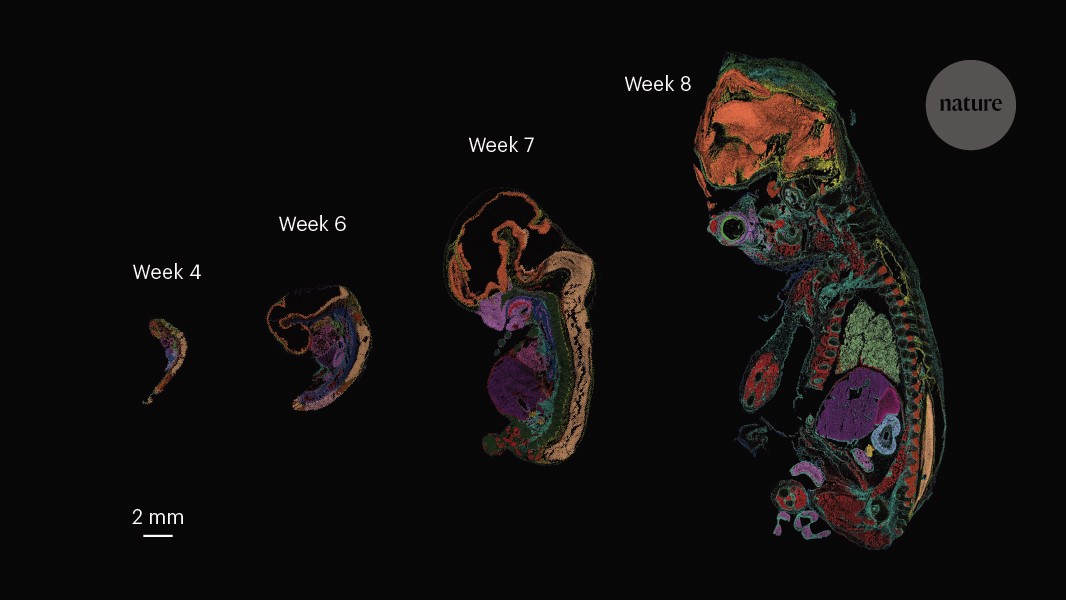
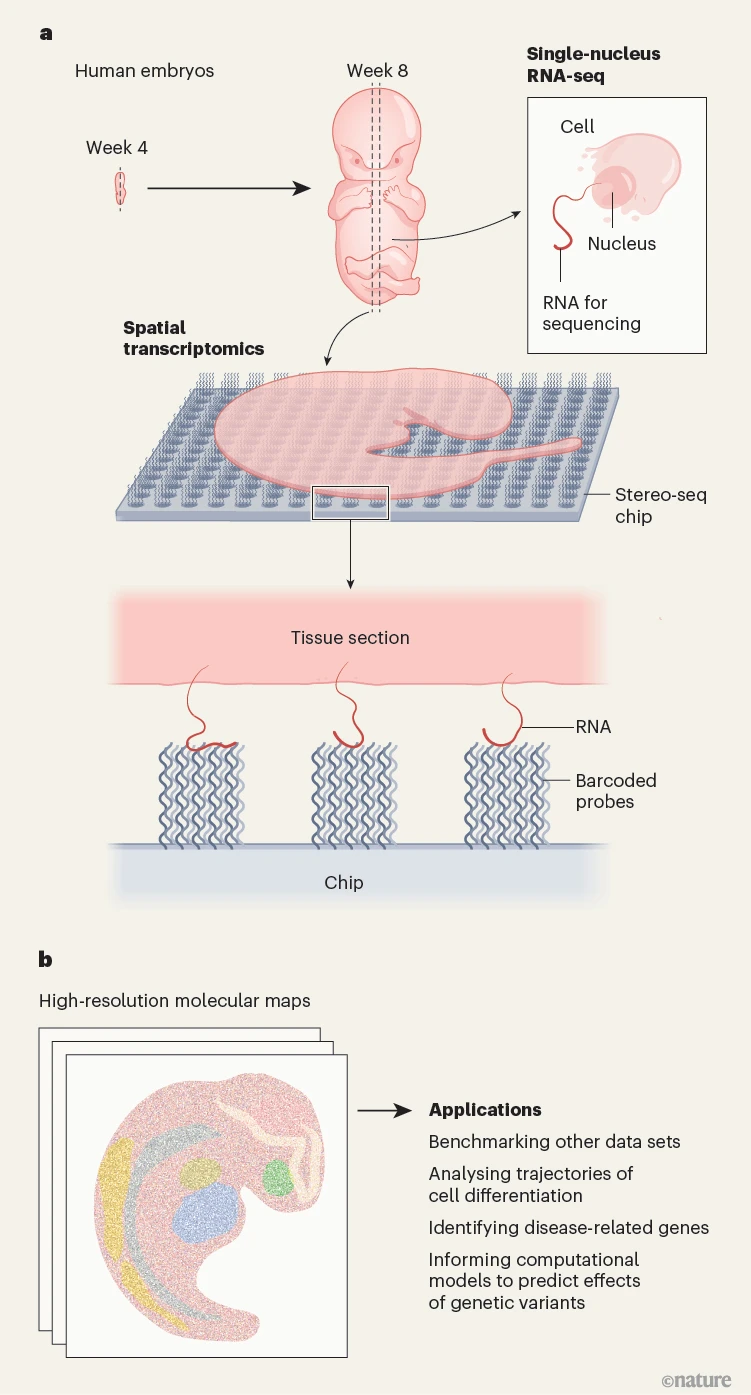
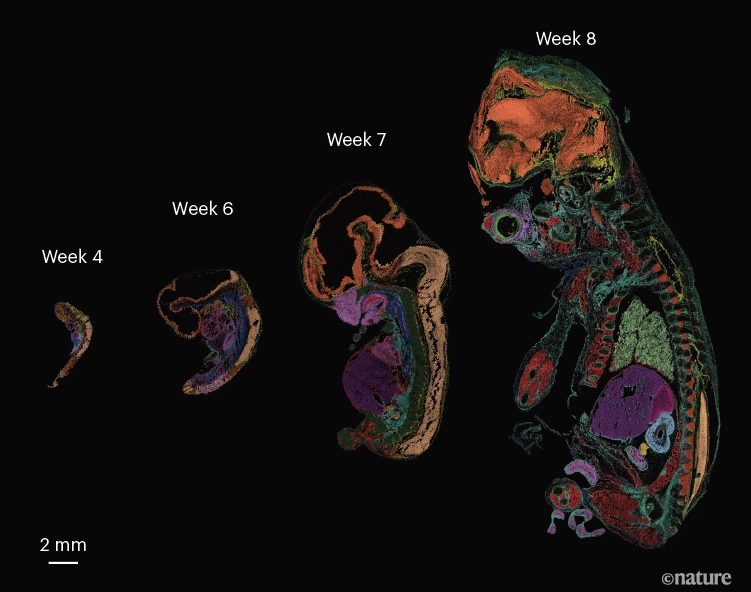
How a single fertilized cell gives rise to the intricate architecture of the human body is one of biology’s most enduring questions. Writing in Nature , Pan et al. 1 present a high-resolution spatiotemporal atlas of whole human embryos, capturing the molecular details of early organ formation. With this resource, they provide a powerful framework for connecting genetic variation to human disease. Read the paper: Spatiotemporal transcriptome atlas of human embryos after gastrulation The most decisive events in human development occur early in pregnancy, during embryogenesis in the first trimester, when the initially simple embryo rapidly gains cellular and molecular complexity. During this brief window, the body plan is established and the process of organogenesis begins. This is the developmental stage at which the foundations of all major organ systems are laid out and when many congenital disorders originate.…