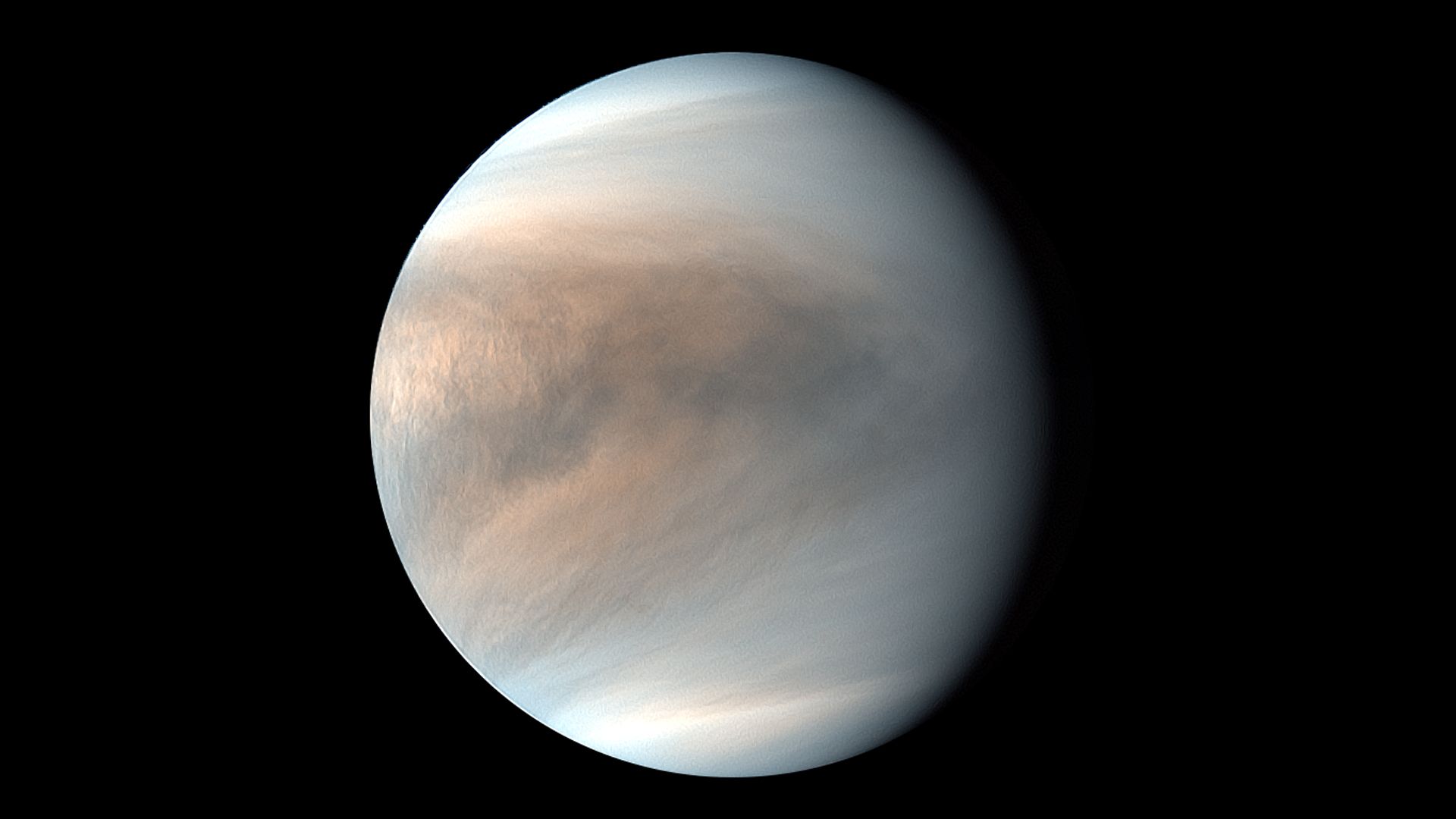
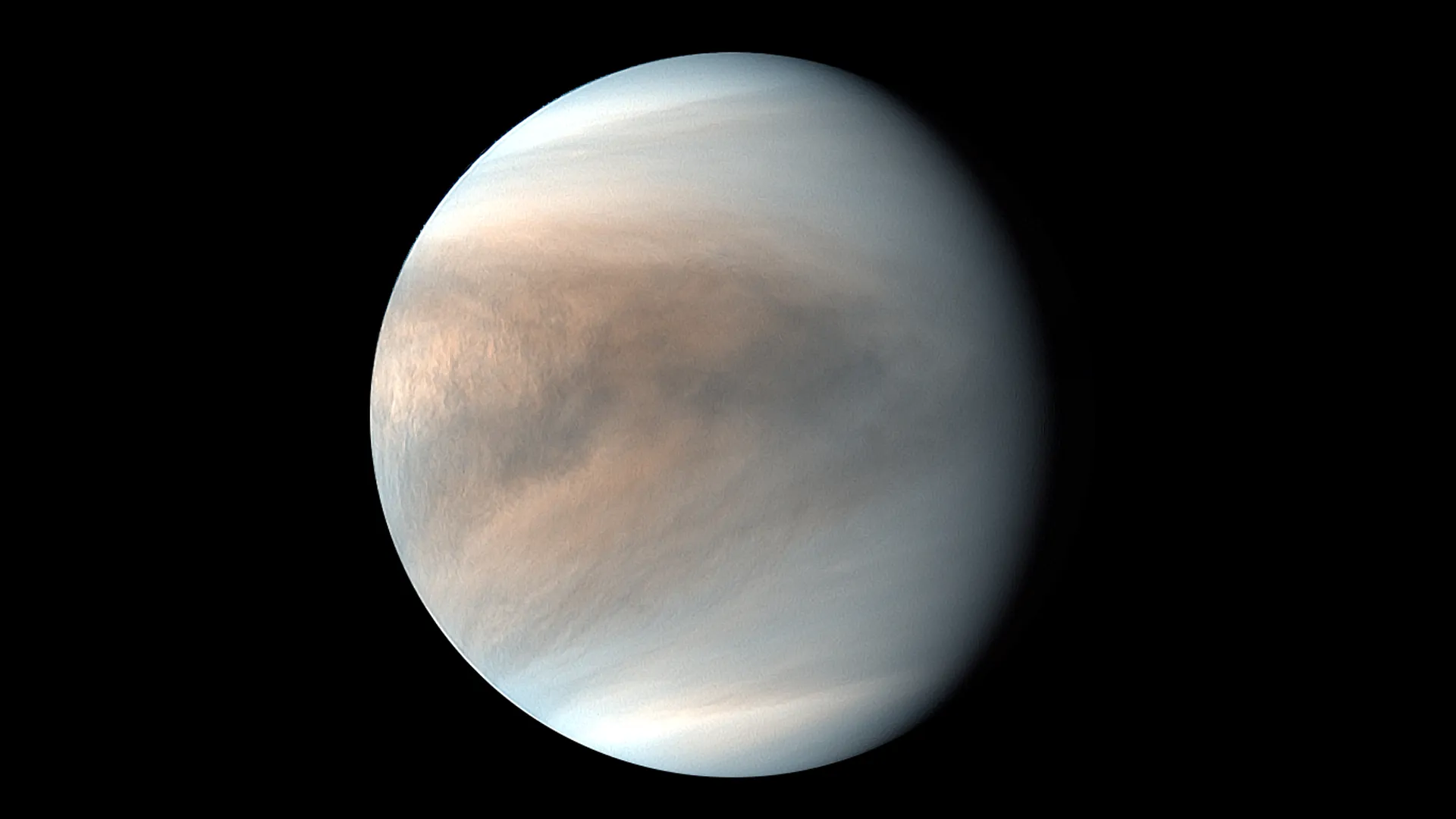
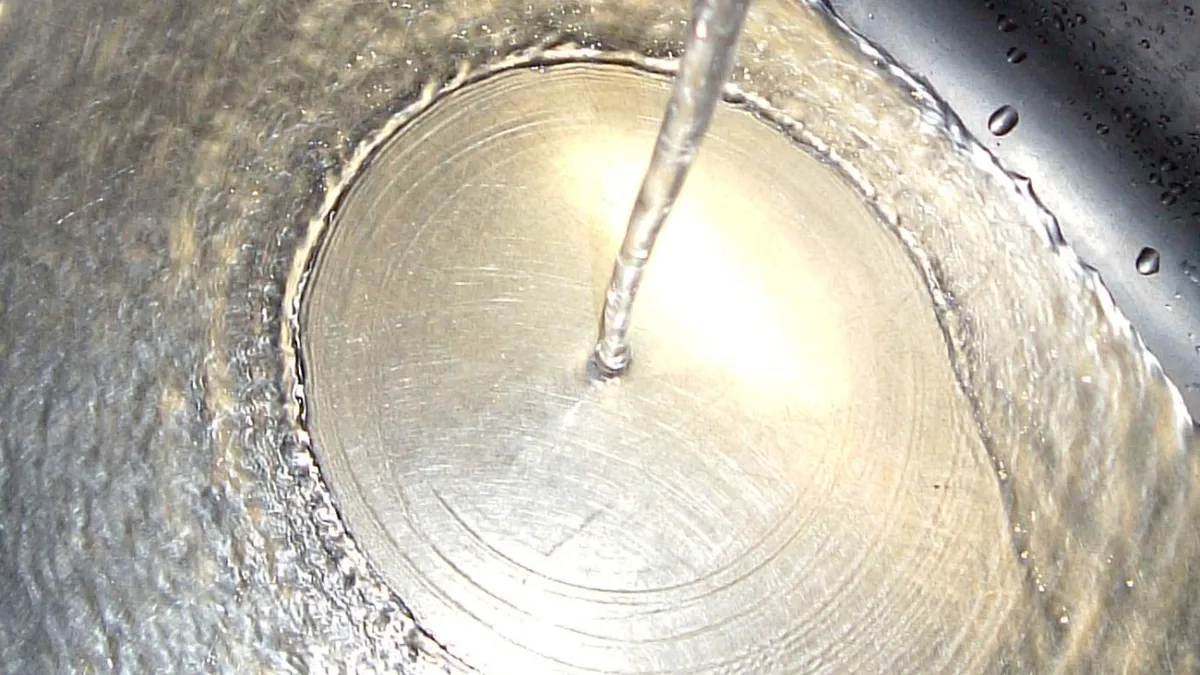
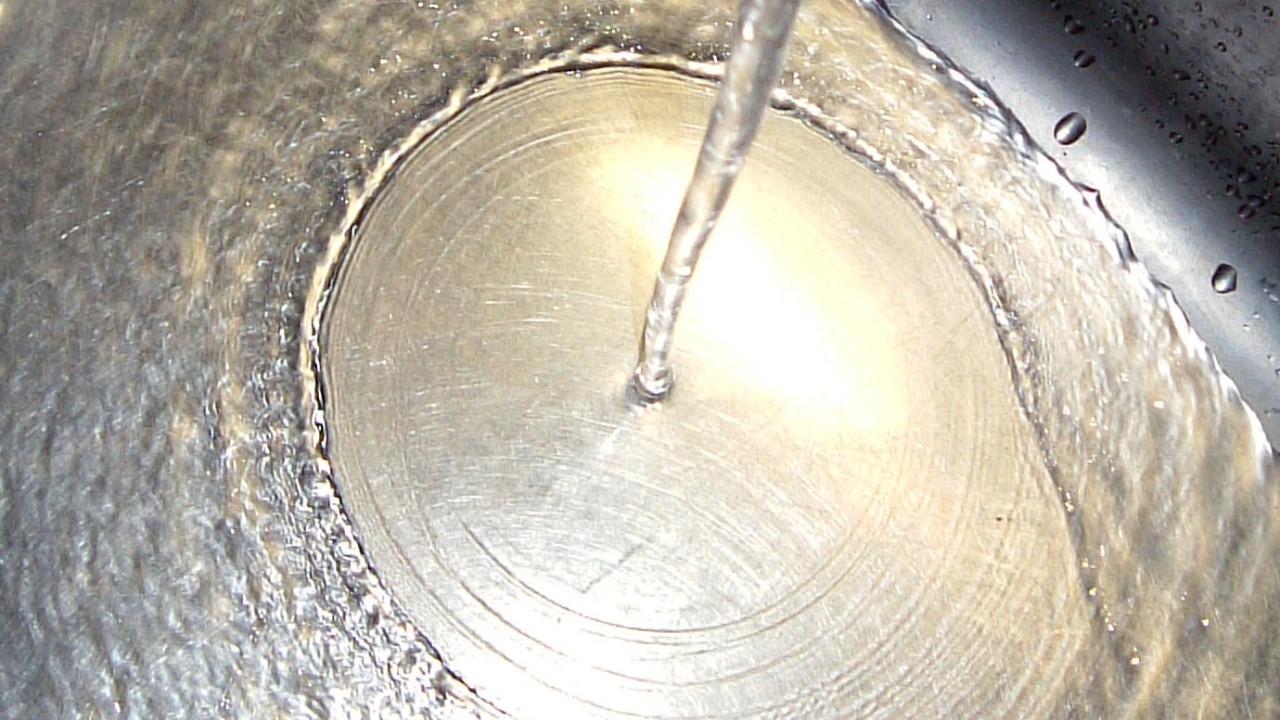
The day side of Venus covered in clouds as seen by Japan's Akatsuki probe in 2016. (Image credit: JAXA) A monstrous bank of cloud 3,700 miles (6,000 kilometers) long that sweeps around Venus every few days is being generated by rising sulfuric acid vapor pushed high into the atmosphere by what is essentially the same phenomenon that describes how water from a running tap spreads out in the basin of your kitchen sink. In 2016, the Japanese Aerospace Exploration Agency (JAXA)'s Akatsuki mission to Venus discovered the bank of clouds some 31 miles (50 km) up in Venus' dense Venus' dense atmosphere . The weather system is aligned with the planet's equator, but scientists have been unable to explain its immense size, velocity and its noticeably sharp leading edge. A similar thing happens in Venus's atmosphere, which is made almost entirely of carbon dioxide along with a small amount of nitrogen and trace amounts of other gases including sulfur dioxide, which can form clouds.…