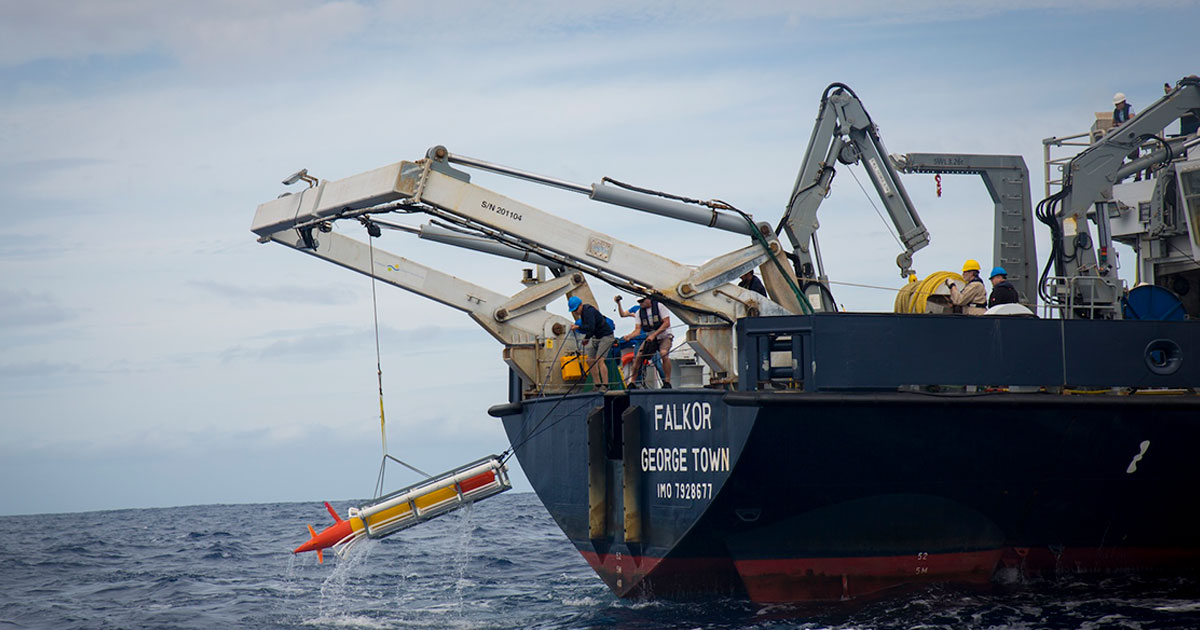
Robotic platforms like MBARI’s long-range autonomous underwater vehicles (LRAUVs) are transforming ocean exploration and science, bringing novel scientific instruments to remote areas to study marine life and processes. (Image credit: Thom Hoffman, Schmidt Ocean Institute) Tiny microbes play a big role in the open ocean, powering oxygen production and the ocean’s biogeochemical cycling. Studying the physical and biological processes that affect microbial populations is challenging in such a dynamic and variable environment far offshore. A team of researchers from MBARI, the University of Montana, and the University of Hawaiʻi at Mānoa recently shared how autonomous robots can provide scientists with new means for unveiling microbial activity in remote areas. Their new study in Nature Communications reveals how microbial communities and ocean biogeochemistry vary over daily cycles in response to physical and chemical ocean processes.…