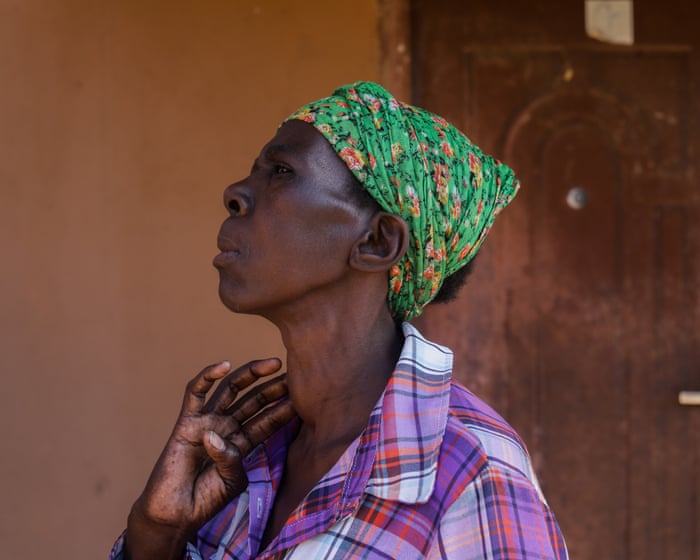
I n late 2023, Boitumelo Mosege fell sick. Her neck swelled up, her whole body itched and she fainted frequently. She was diagnosed with hyperthyroidism and had to give up her work as a farmer on the outskirts of Molepolole, a town about 30 miles north-west of Botswana’s capital, Gaborone. In Botswana, public healthcare is supposed to be universal and free. However, Mosege said she had only sporadically received medication since becoming ill. The 53-year-old relies on her four children’s occasional piecework (where a worker is paid a fixed rate per task or unit produced), and her mother’s 1,400 pula (£77) monthly pension, to afford 2,000 pula-worth of medication every month. In early May, she said it was three months since she had last bought medicine. “I felt like I had lost my life right there,” Mosege said, recounting when she was told she had to buy her medication herself. “I felt suicidal.” Nearby, Kelly Jansen cares full time for her 83-year-old father, Gerhardus Jansen, who uses a wheelchair.…