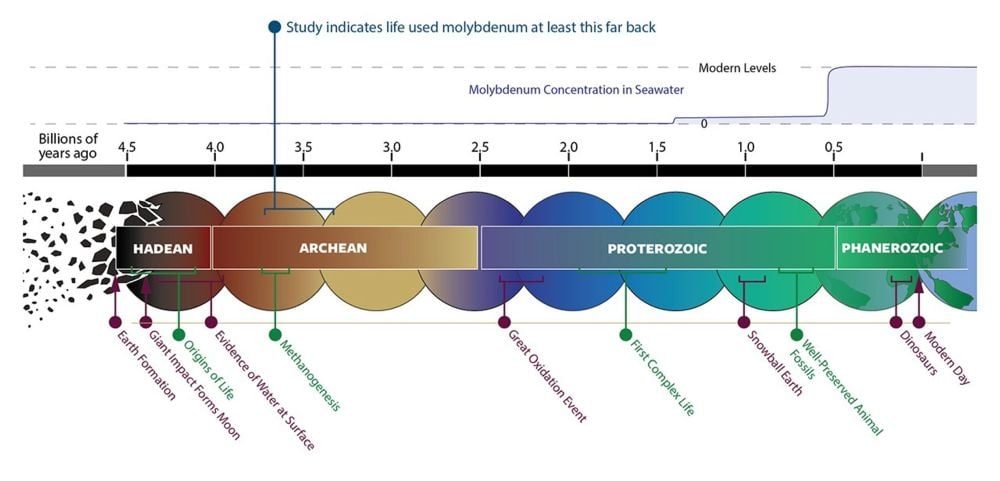
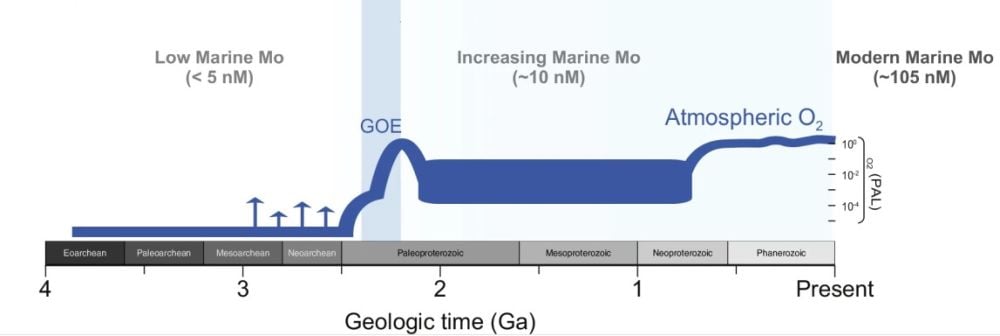
Life on Earth depends on organic chemicals—the elements carbon, hydrogen, nitrogen, oxygen, phosphorous, and sulfur—often referred to as CHNOPS. These elements enable life and make up about 98% of all living matter. But they don't do it alone. Biochemical activity inside of cells also requires small amounts of metals. These metals enable critical biochemical reactions. To understand how life on Earth evolved, scientists work to understand the availability of CHNOPs and bio-important metals and how they cycle through the environment. Molybdenum (Mo) is an important metal in biochemistry and lends speed to reactions in cells. These faster reactions make complex life possible. Mo is an essential element in most lifeforms, and is a component of their critical enzymes. While scientists have known about the role it plays for a long time, the history of its availability and how it shaped life on the planet hasn't been so clear.…