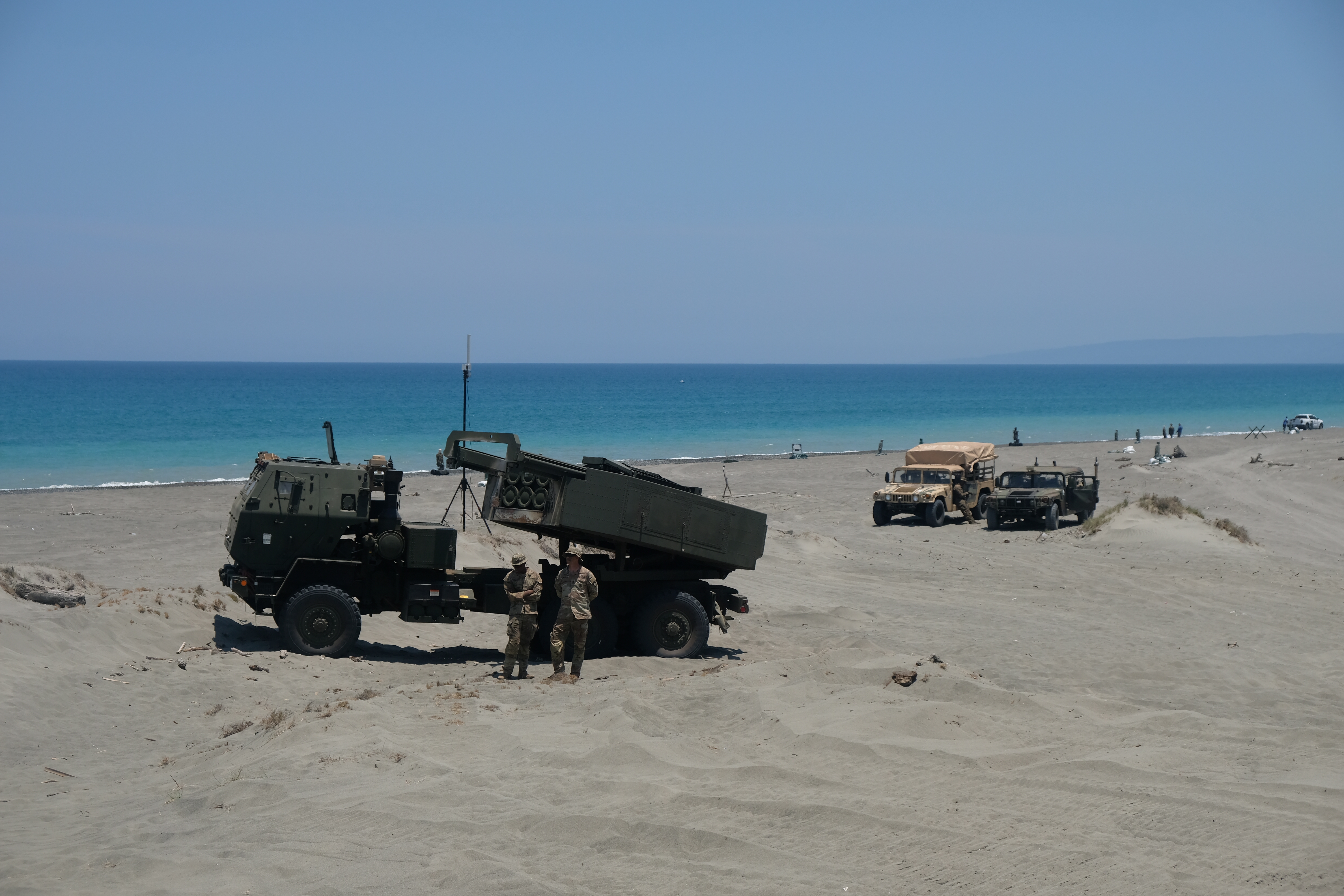
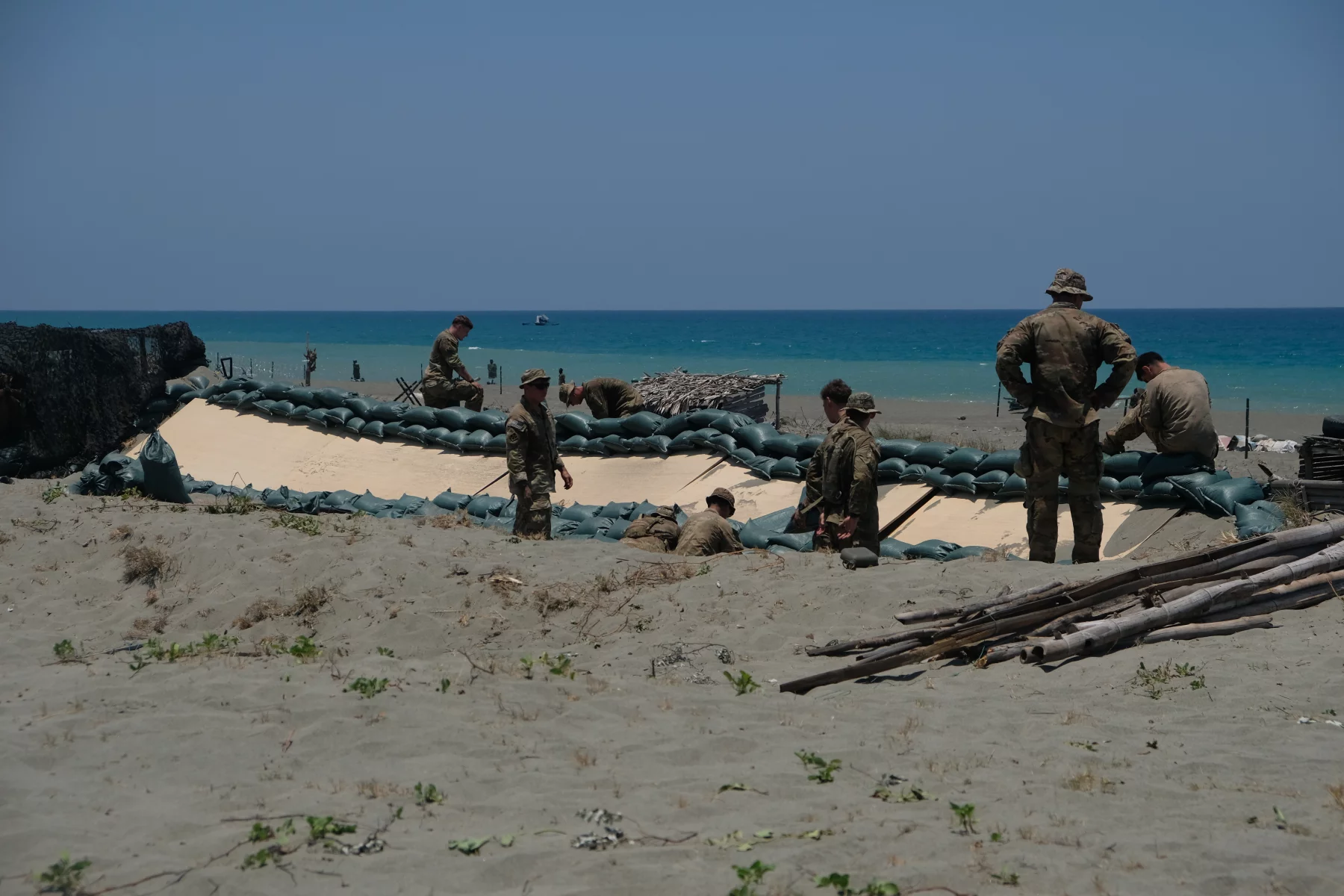
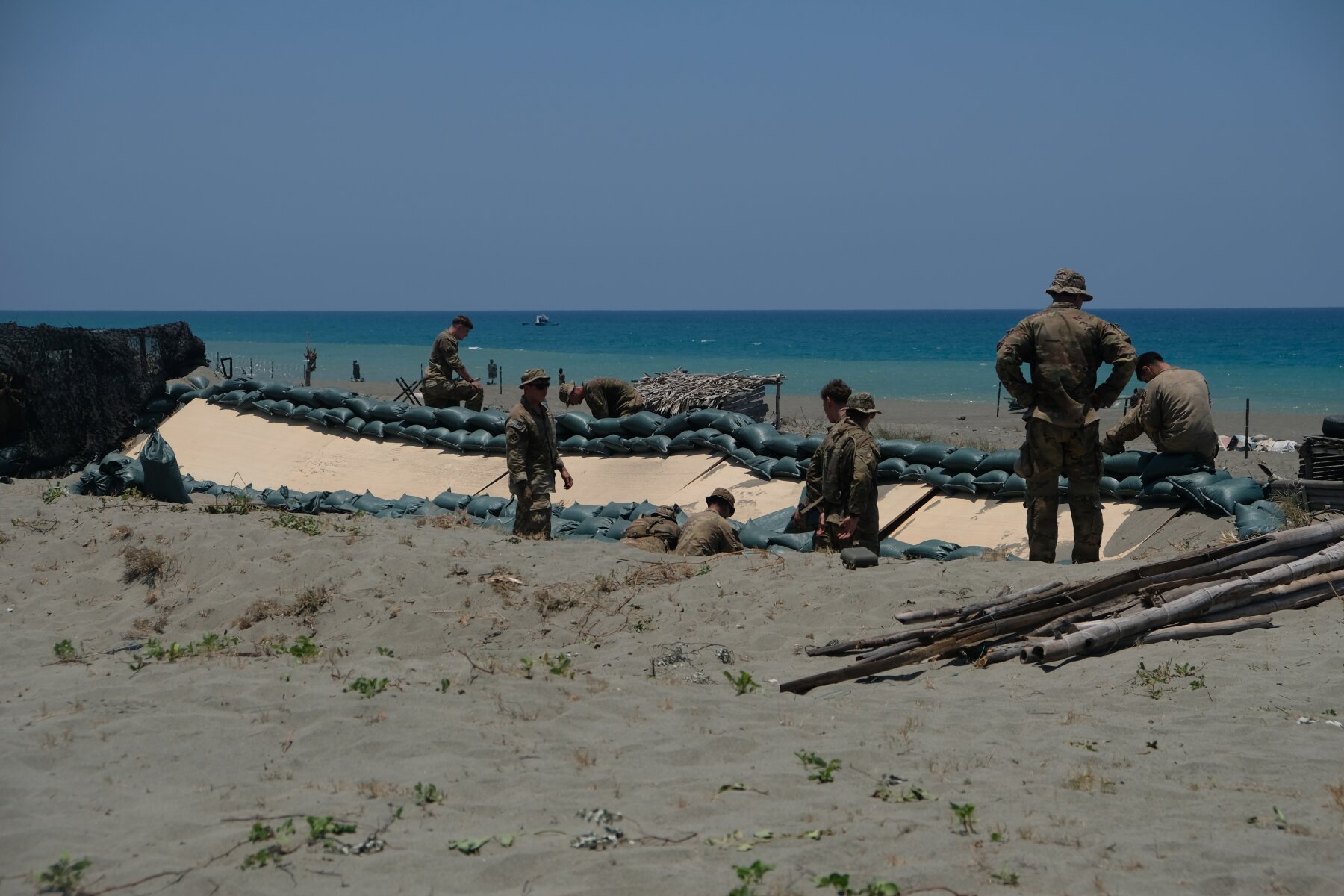
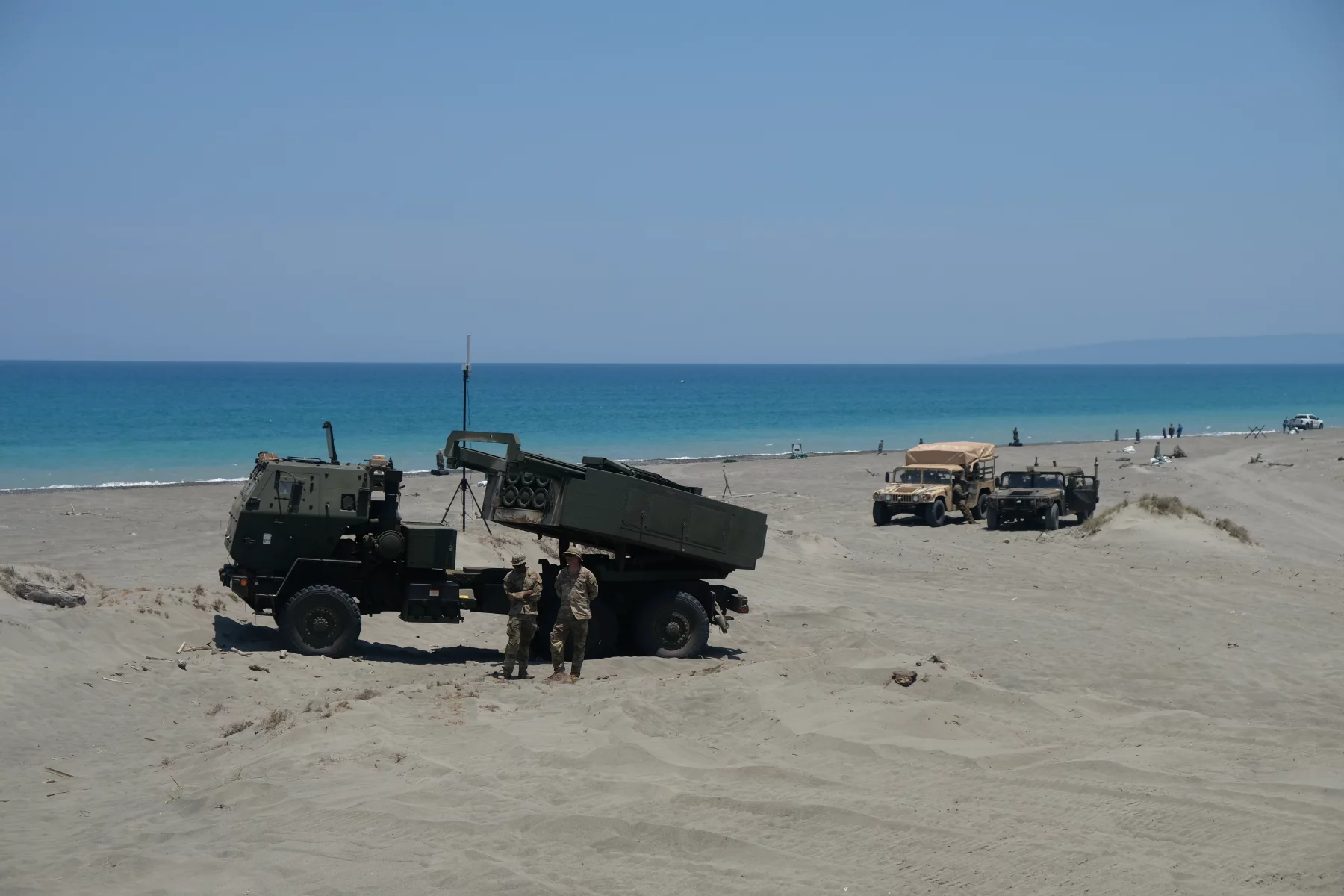
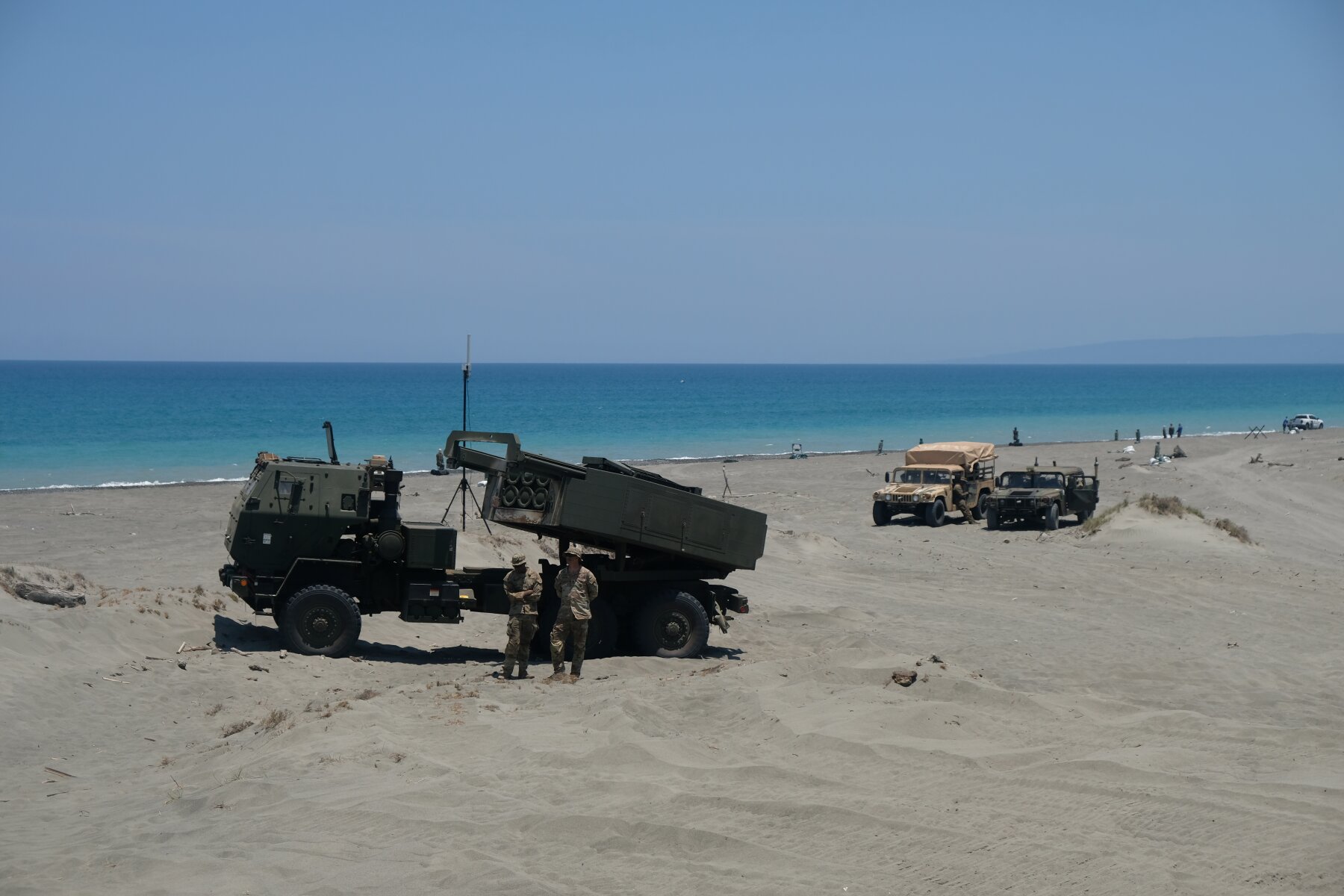
Soldiers of the U.S. Army's 25th Infantry Division build fighting positions along the beach of the La Paz sand dunes in Laoag City, Philippines, ahead of counterlanding exercises during annual Balikatan drills. Anthony Kuhn/NPR hide caption toggle caption Anthony Kuhn/NPR LAOAG CITY, Philippines — Silver drone boats scanned the azure waters for targets, rocket artillery rounds blasted out from behind sand dunes, mortars and machine guns raked the surf, and generator-powered air conditioners and tents cooled stacks of data servers on the beach, as U.S. and allied forces practiced repelling an amphibious assault. It's part of a U.S.-led drill on Luzon, the Philippines' largest island, dubbed Balikatan, or "shoulder to shoulder" in Tagalog. It put to test the U.S. military's new weapons, emerging strategies and shifting alliances, amid geopolitical tensions and rapidly evolving technologies. "It's really about 'see, sense, strike and protect,'" Gen. Ronald Clark, commander of the U.S.…