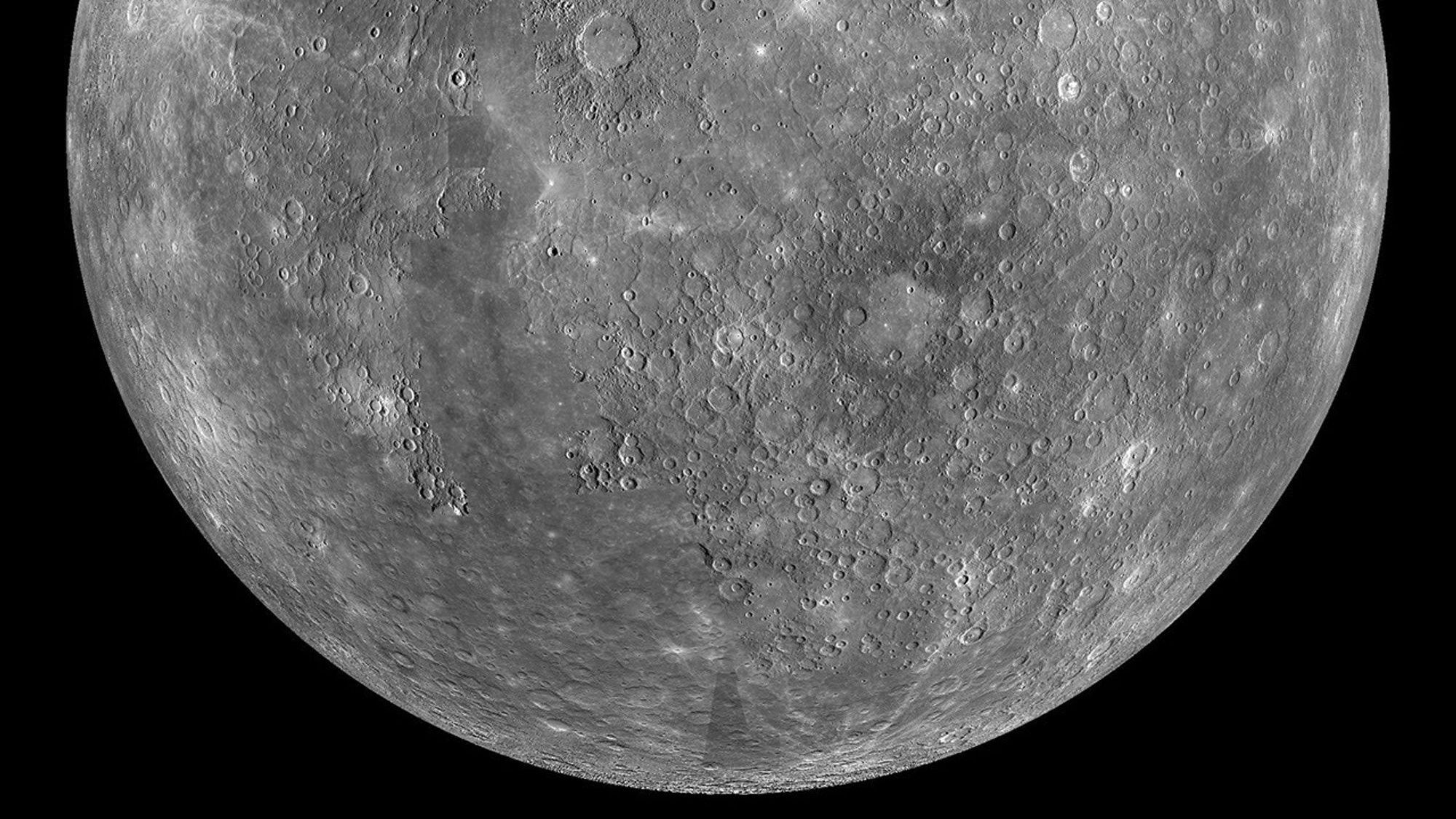
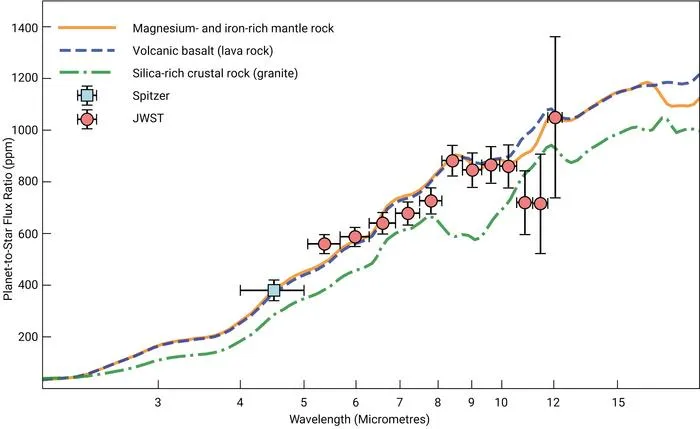
Scientists say this high-resolution photo of the planet Mercury probably resembles the rocky exoplanet LHS 3844 b, which the JWST just observed. (Image credit: NASA/Johns Hopkins University Applied Physics Laboratory/Carnegie Institution of Washington) Astronomers using the James Webb Space Telescope have, for the first time, directly analyzed the surface of a planet beyond our solar system, The James Webb Space Telescope's (JWST) exoplanet subject, LHS 3844 b , is a so-called "super-Earth" about 30% larger than our planet and located nearly 50 light-years away. Unlike most exoplanet studies, which focus on atmospheres, astronomers analyzed heat emitted from this planet's surface. "Thanks to the amazing sensitivity of JWST , we can detect light coming directly from the surface of this distant rocky planet," Laura Kreidberg of the Max Planck Institute for Astronomy in Germany, who served as the principal investigator of the JWST observations, said in a statement .…