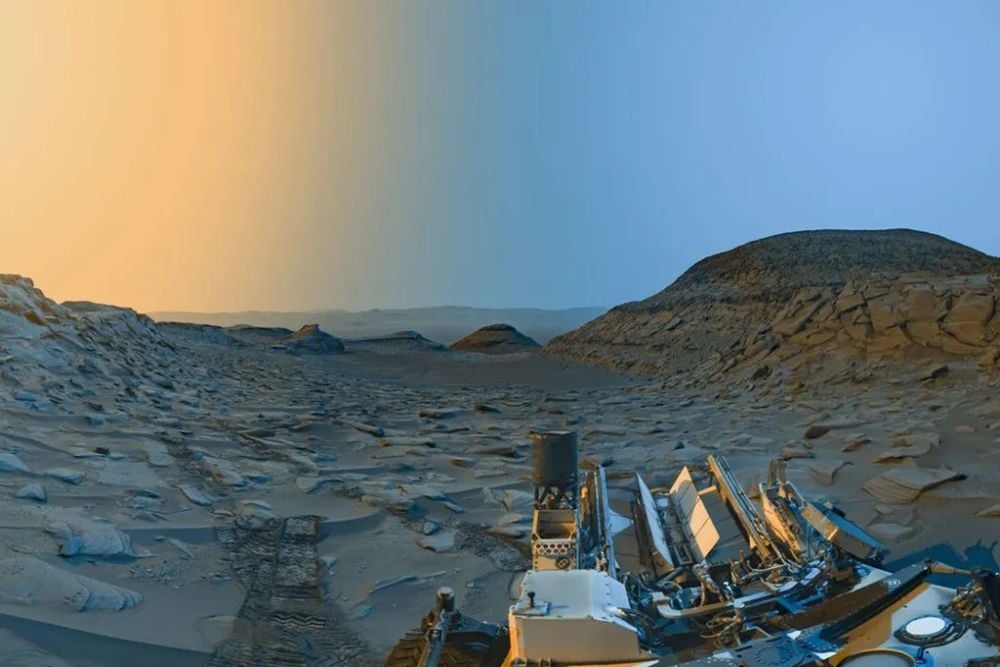
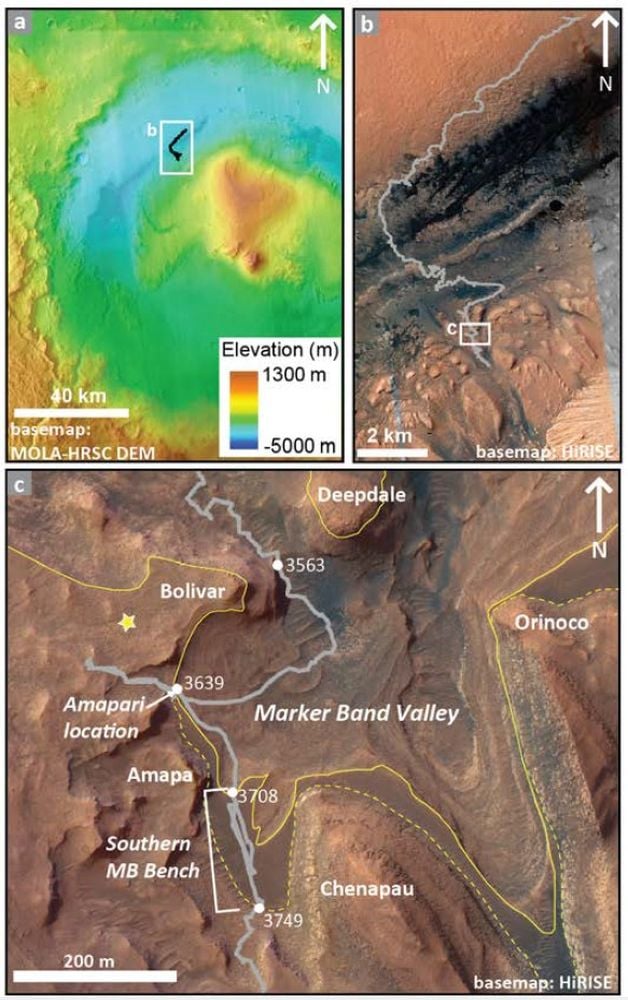
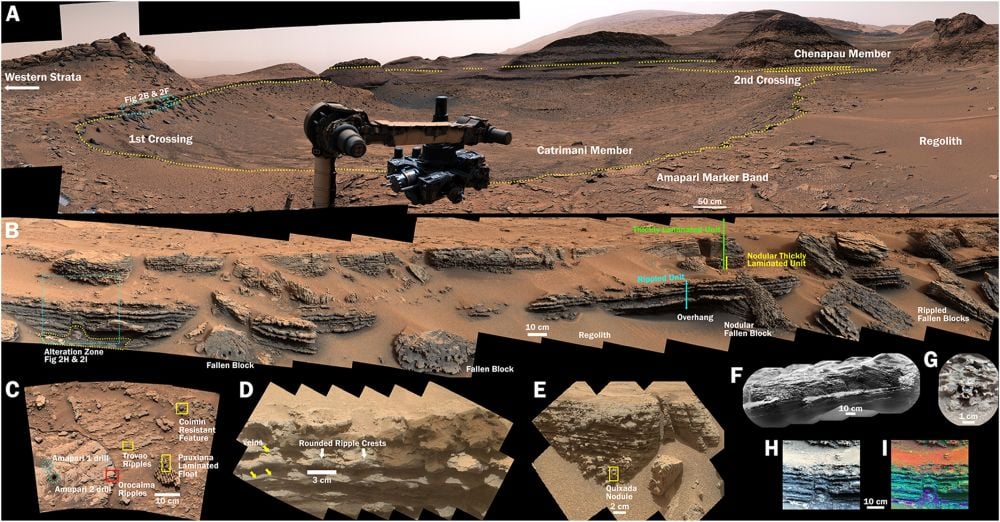
Part of a Mars rover's job is to detect anomalies. When something stands out from its surroundings, it indicates that something noteworthy has happened. NASA's MSL Curiosity has detected a metallic anomaly in Gale Crater, and that anomaly needs an explanation. In 2022, the car-sized, plutonium-powered rover detected high levels of iron, manganese, and zinc in the Gale Crater, the highest levels ever detected there. They're in a feature called the Amapari Marker Band, a stratigraphic layer on Mt. Sharp, the peak in the middle of Gale Crater. Why are metals concentrated there? New research in JGR Planets has the answer. In a paper titled " Amapari Marker Band Metal-Enrichments: Potential Mechanisms and Implications for Surface and Subsurface Water and Weathering in Gale Crater, " the authors outline their case. The lead author is Patrick Gasda, a scientist on the team that manages Curiosity's ChemCam suite of instruments.…