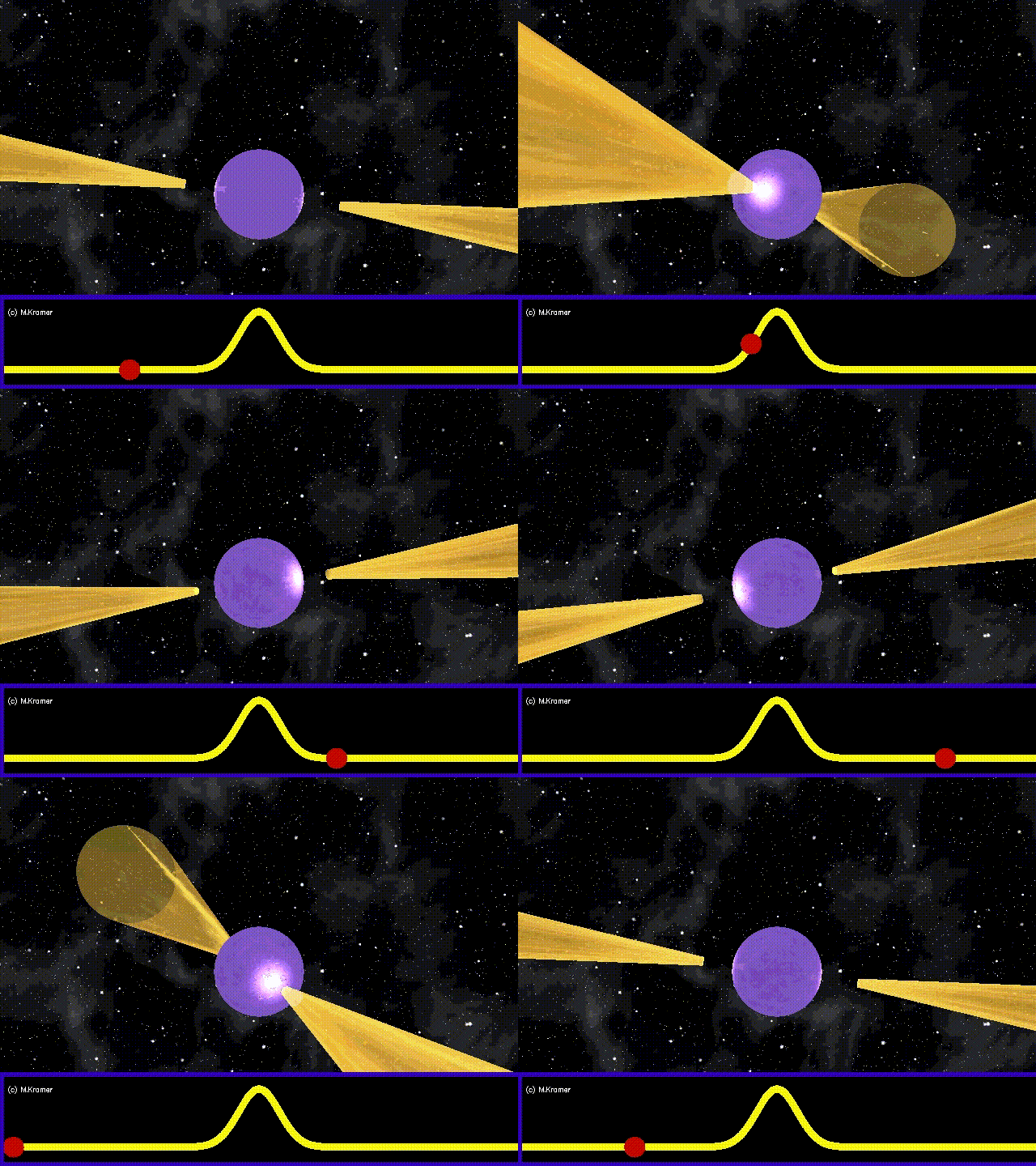
Weighing a galaxy is not straightforward, you can’t just put it on a scale. What you can do is study the gravitational fingerprints it leaves on everything around it and if you have precise enough instruments, those fingerprints can tell you an extraordinary amount. Researchers at the University of Alabama in Huntsville have just demonstrated a remarkable new way to do exactly that, using some of the most precise natural timekeepers in the universe, pulsars. Pulsars are the collapsed remnants of massive stars that died in supernova explosions. What remains after that catastrophic death is an object roughly the size of a city but containing more mass than the Sun, spinning dozens or even hundreds of times per second and emitting beams of radio waves with the regularity of an atomic clock. That extraordinary precision is what makes them so useful. Any change in a pulsar's timing, even a shift of microseconds tells astronomers that something gravitational has nudged it.…