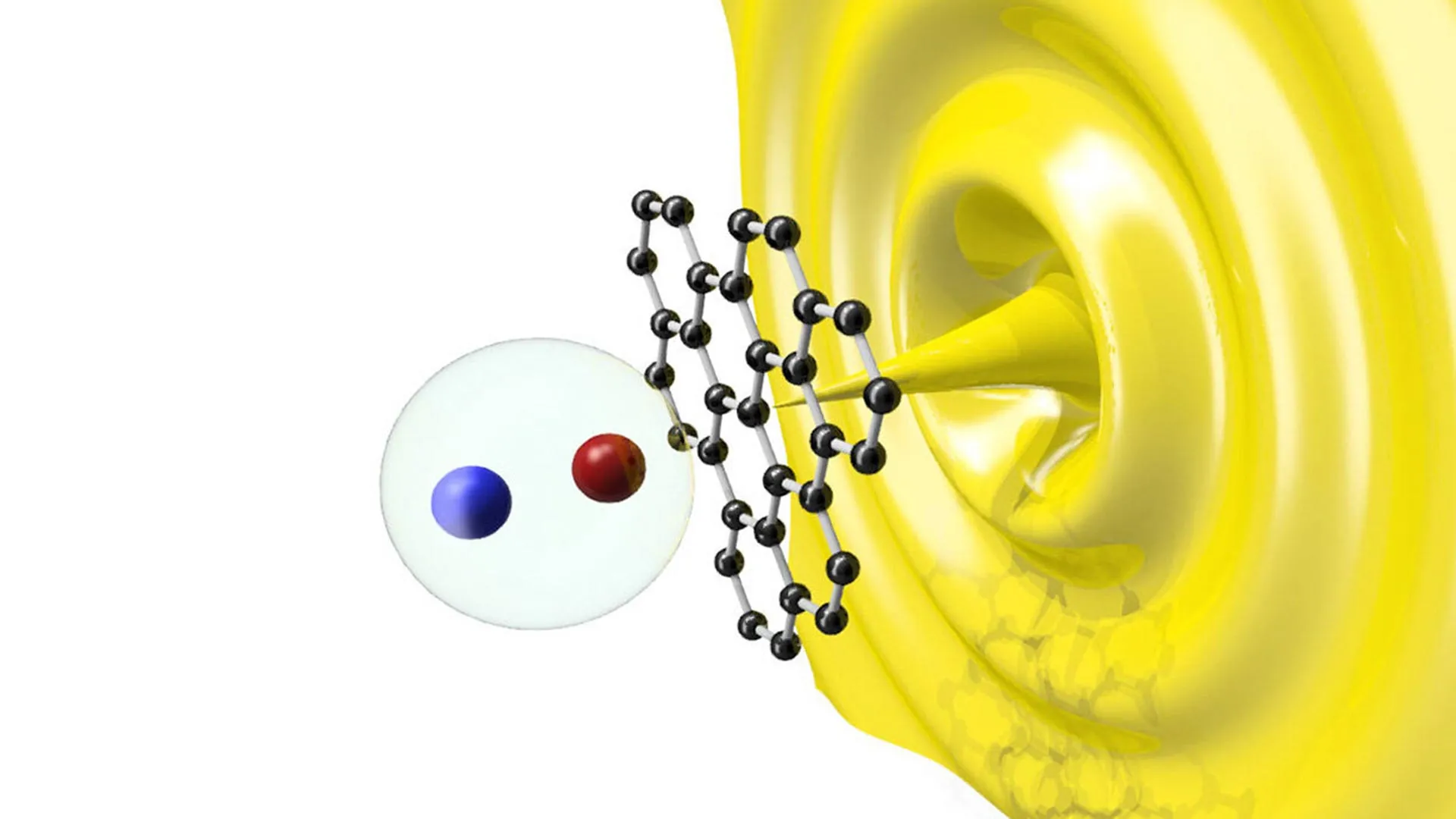
One of the defining breakthroughs that set quantum physics apart from classical physics was the realization that matter behaves very differently at extremely small scales. Among the most important discoveries was wave-particle duality, the idea that particles can also act like waves. This concept became widely known through the double-slit experiment. When electrons were fired through two narrow openings, they produced a pattern of alternating light and dark bands on a detector. This pattern revealed that each electron behaved like a wave, with its quantum wave-function passing through both slits at once and interfering with itself. Scientists later confirmed this effect with neutrons, helium atoms, and even larger molecules, establishing matter-wave diffraction as a key principle of quantum mechanics. However, despite these advances, this phenomenon had not been directly observed in positronium.…