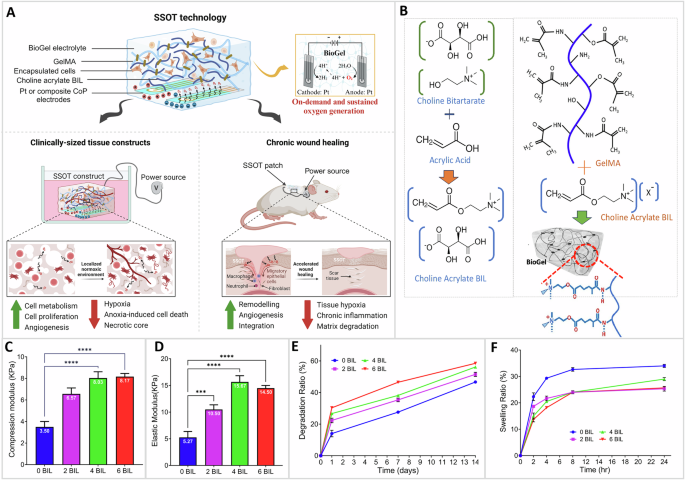
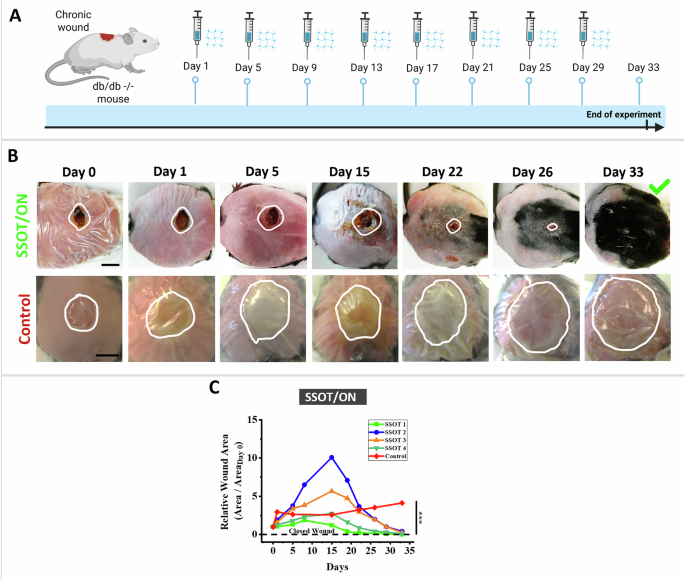
Researchers from UC Riverside , and Rowan University have developed a bioengineered patch that generates its own oxygen supply, tackling one of tissue engineering’s oldest unsolved problems. The study also saw contributions from UC Berkeley , Tarleton State University in Texas , the Terasaki Institute for Biomedical Innovation in Los Angeles . Published in Communications Materials , the work describes a platform the team calls a smart self-oxygenating tissue system (SSOT). It works by running a small electric current through a specially designed gel that contains water, splitting water molecules into oxygen and hydrogen through electrolysis. The oxygen is released directly into the surrounding tissue, on demand, without relying on the bloodstream. That matters because cells can only survive if a blood vessel is within about 100 to 200 μm of them, roughly the width of two human hairs. In thin tissue samples, oxygen diffuses through naturally.…