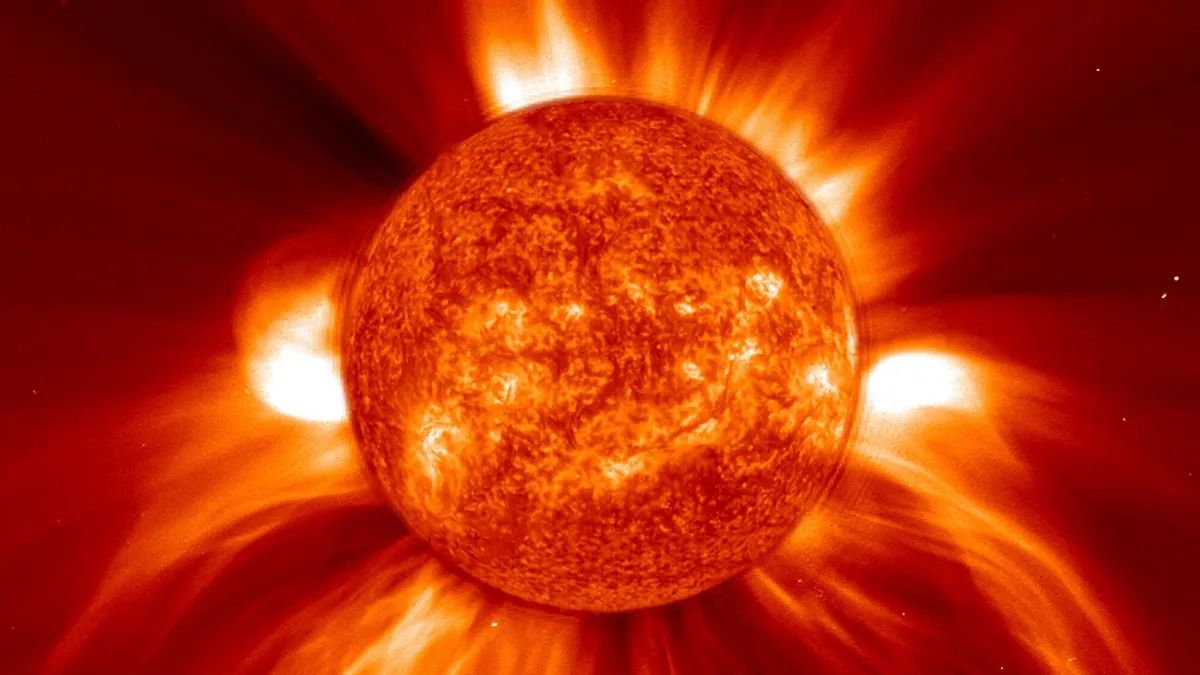
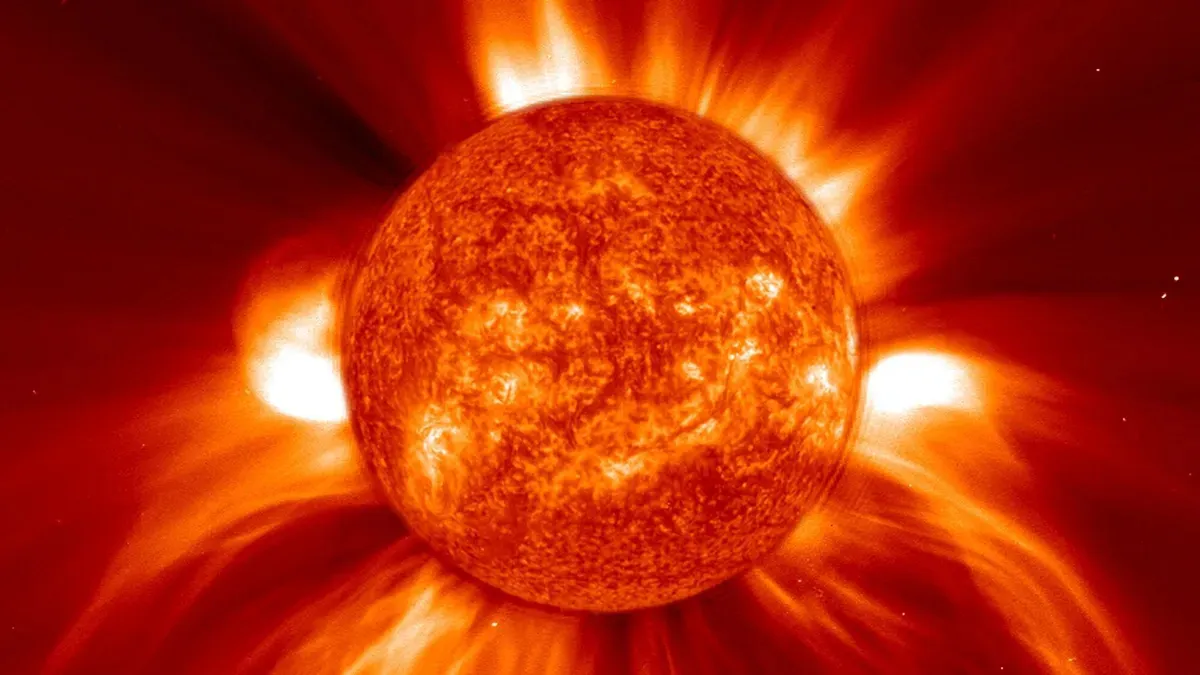
A coronal mass ejection, captured by the ESA-NASA Solar and Heliospheric Observatory spacecraft. (Image credit: NASA/GSFC/SOHO/ESA) The growing debris field in Earth orbit may someday endanger our access to the stars. Today, that field consists of nearly 130 million pieces of space junk — dead satellites, old rocket bodies and tiny fragments generated by on-orbit collisions. "For the first time, we find that, once solar activity passes a certain level, this loss of altitude happens noticeably more quickly," the study's corresponding author, Ayisha Ashruf, a scientist and engineer at Vikram Sarabhai Space Centre in Thiruvananthapuram, India, said in a statement . "This observation is expected to be key for planning sustainable space operations in the future," Ashruf added. All objects in Earth orbit lose altitude over time, slowly moving toward our atmosphere. While space stations and satellites compensate for this loss with engine burns to maintain their desired orbits, space junk falls naturally.…