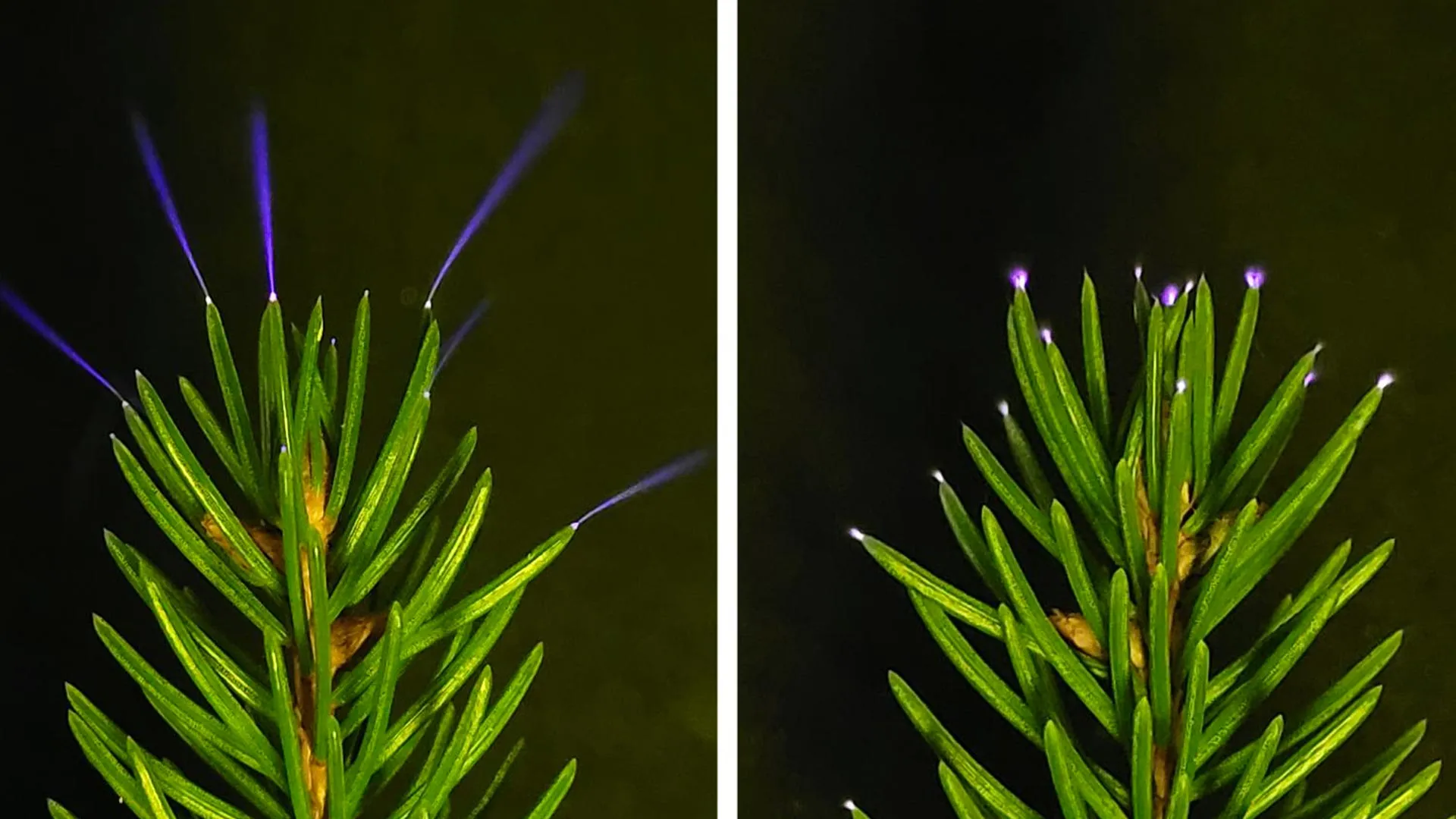
In June 2024, a group of Penn State meteorology and atmospheric science researchers set out on a road trip along the East Coast in a modified 2013 Toyota Sienna. The van was outfitted with a custom-built telescopic weather instrument extending from the roof. Their goal was to track down Florida's near-daily summer thunderstorms and observe a phenomenon that had never been confirmed outside a laboratory. That phenomenon, known as corona discharge, involves tiny bursts of electricity forming at the tips of leaves. These faint electrical pulses can cause treetops to emit a subtle glow in the ultraviolet (UV) range. Scientists have suspected for more than 70 years that forests might produce these effects during storms due to unusual electric field activity, but direct evidence in nature had remained elusive.…