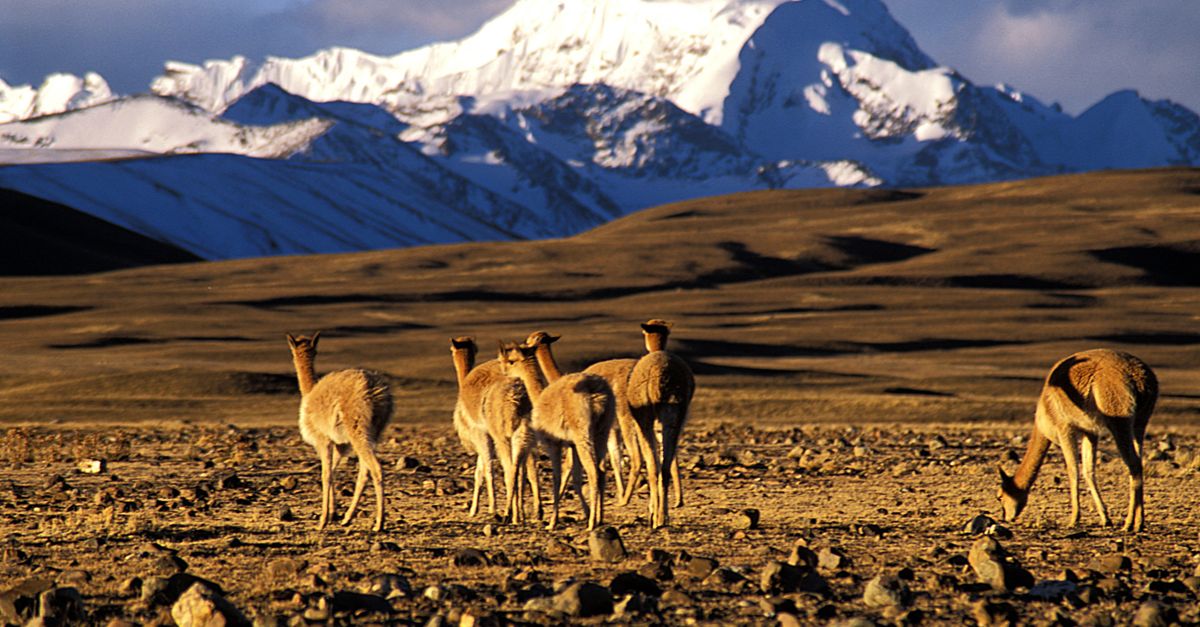
The vast plains of the Altiplano in southern Bolivia are a seemingly lifeless expanse. With sparse vegetation, desert sands and dry salt flats, it’s difficult to imagine how any creature could survive in an ecosystem like this. Yet in the midst of this landscape, the vicuña — the undomesticated, fluffy cousin of the alpaca, and the source of the finest and most expensive animal fiber on the planet — is not only surviving, it is thriving. This wasn’t always the case. In the time of the Incas, who worshipped the pony-sized creature and permitted only royalty to wear its wool, about 3 million vicuñas roamed the plains. By the 1960s, vicuñas were hunted to near extinction — killed for their wool instead of simply sheared — with only 6,000 remaining throughout the world. Today, their population has soared to more than 350,000. So what caused this meteoric rebound? And why on Earth are luxury fashion houses paying so much money for vicuña wool, once known as the “silk of the new world”?…