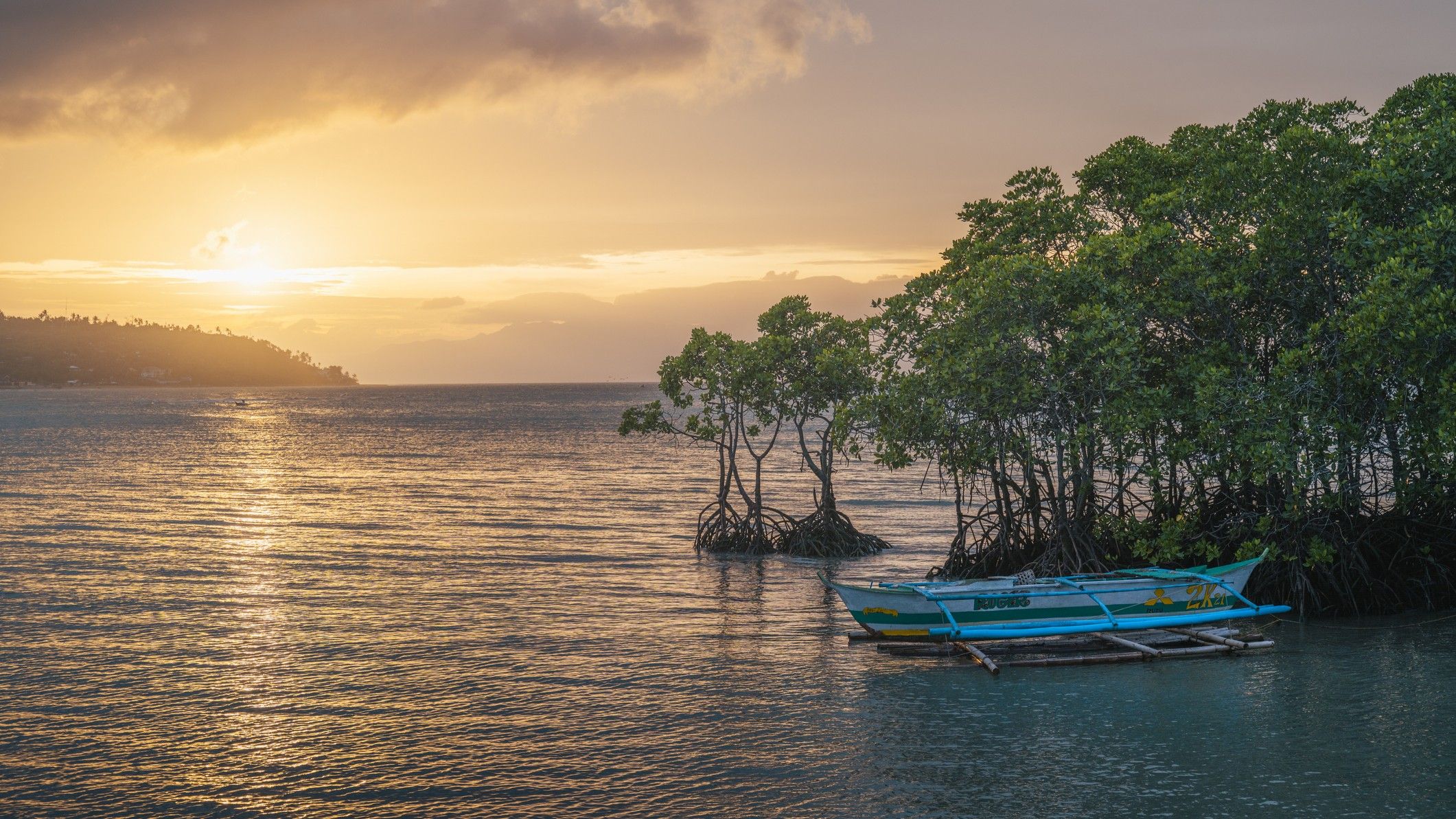
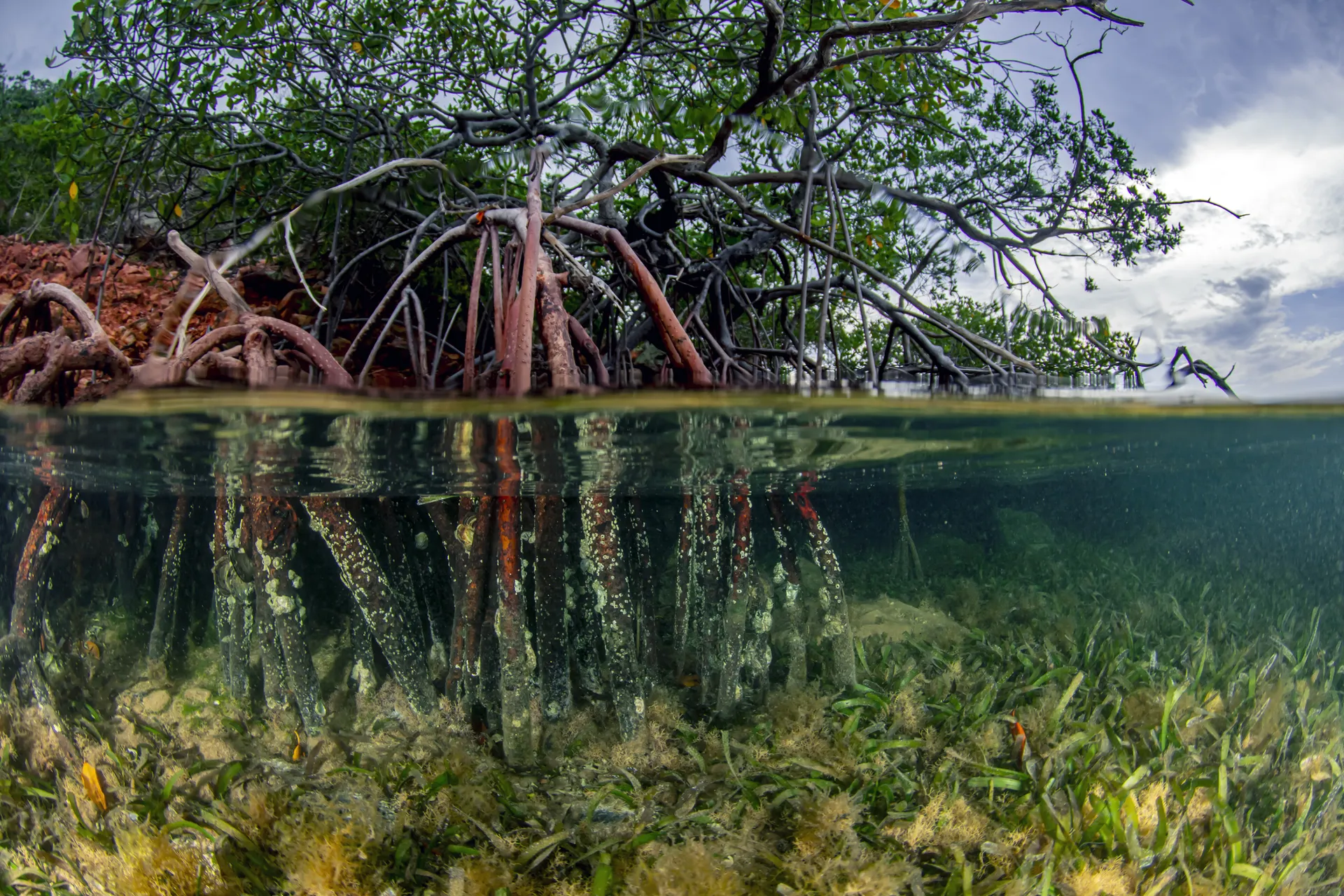
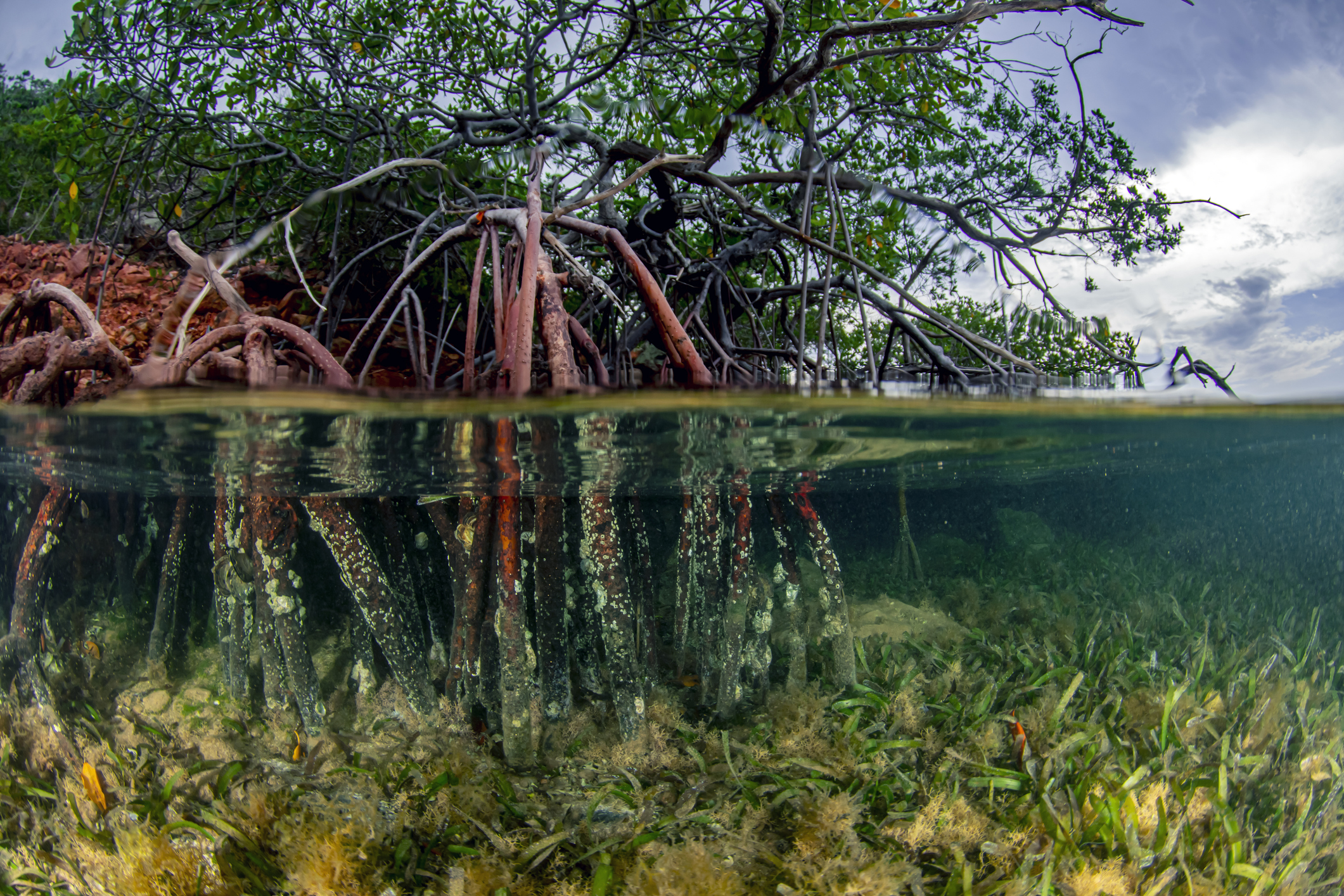
Mangrove forests around the world provide a largely overlooked nitrogen-pollution cleanup service — one that, if humans had to pay for it, would cost $8.7 billion per year, a new study estimates. Mangroves are salt-tolerant plants that grow between the high-tide and low-tide marks in tropical and subtropical coastal regions. Their tall, tangled roots trap sediments rich in microbes that break down nitrogen in the water into nitrogen gas (N 2 ) and nitrous oxide (N 2 O), effectively removing this nutrient from the ecosystem. "We're still really in the infancy of trying to understand what is driving this nitrogen removal," Benoit Thibodeau , an assistant professor in the Department of Earth and Environmental Science at The Chinese University of Hong Kong, said in a joint interview with his co-author Ziyan Wang , a doctoral student in environmental science at the same university.…