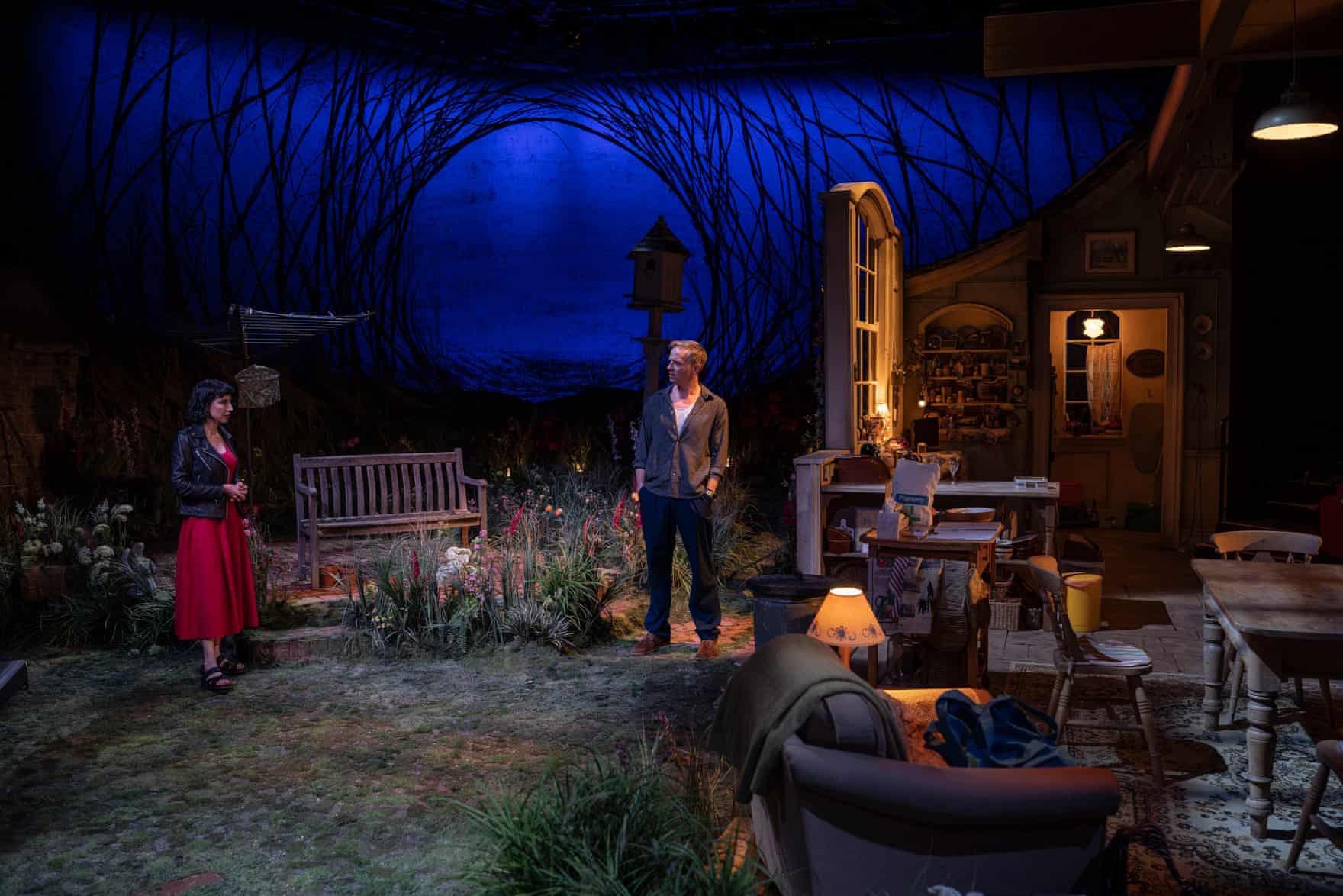
A s a TV writer-director, John Morton specialises in the sort of English talk that either means nothing at all or something completely different from what was said. In the sitcoms Twenty Twelve, W1A and currently Twenty Twenty Six , the hesitations, repetitions and desperate metaphors – in conversations that sound improvised but are precisely written – reveal corporate conceit and deceit. But the stilted and stalled speech in Morton’s playwriting debut, Eclipse, represents unsaid and unsayable things among the gathered family of Edward, a late-stage cancer patient who has asked to die under “home hospice” care at an old rectory in Devon. Edward, confined behind a door in the corner of the convincingly lived-in kitchen that dominates Simon Higlett’s set, is never seen or heard but feels completely real.…