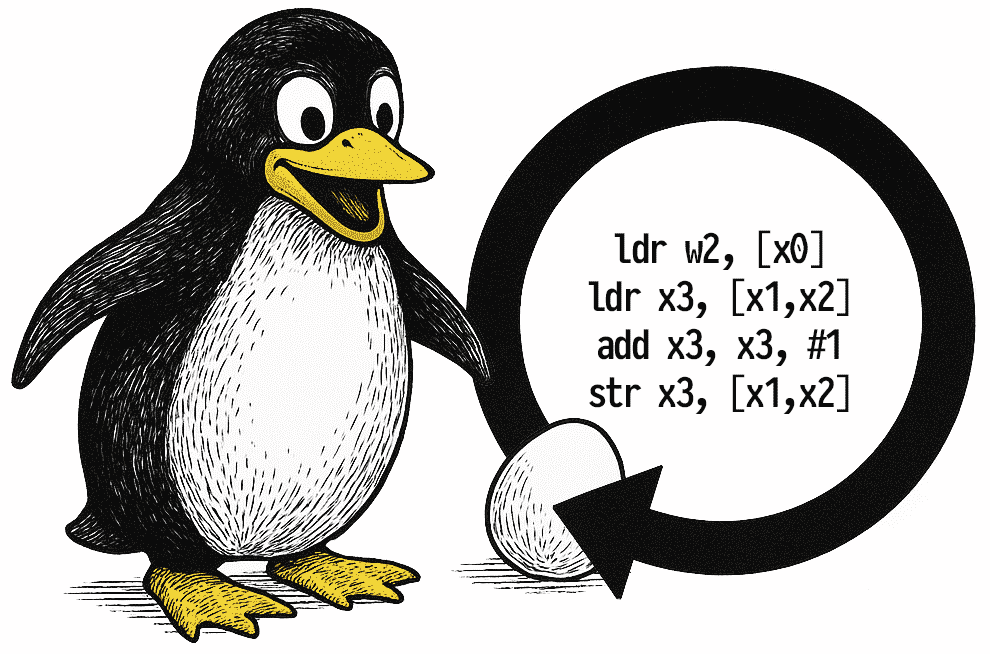
May 31 st , 2026 @ justine's web page The best kept secret at the frontier of system programming right now is the Linux 4.18+ (c. 2018) concept of restartable sequences or rseq for short. They allow you to create thread-safe data structures without locks or atomics which scale to microprocessors with many cores. It's currently only possible to use rseq on Linux using handwritten assembly code. However I believe in the future, all operating systems will be updated to support rseq() , all system programming languages will be redesigned to be able to express restartable sequences, and all data structure libraries will be rewritten to use them. So far the only software I've seen using rseq is tcmalloc, jemalloc, glibc, and cosmopolitan. That's destined to change now that microprocessors with 128 or even 192 cores are becoming inexpensive. For example, On my $160 Raspberry Pi 5 (which has 4 cores), rseq makes my malloc() implementation 3x faster versus having a dlmalloc mspace assigned to each thread.…