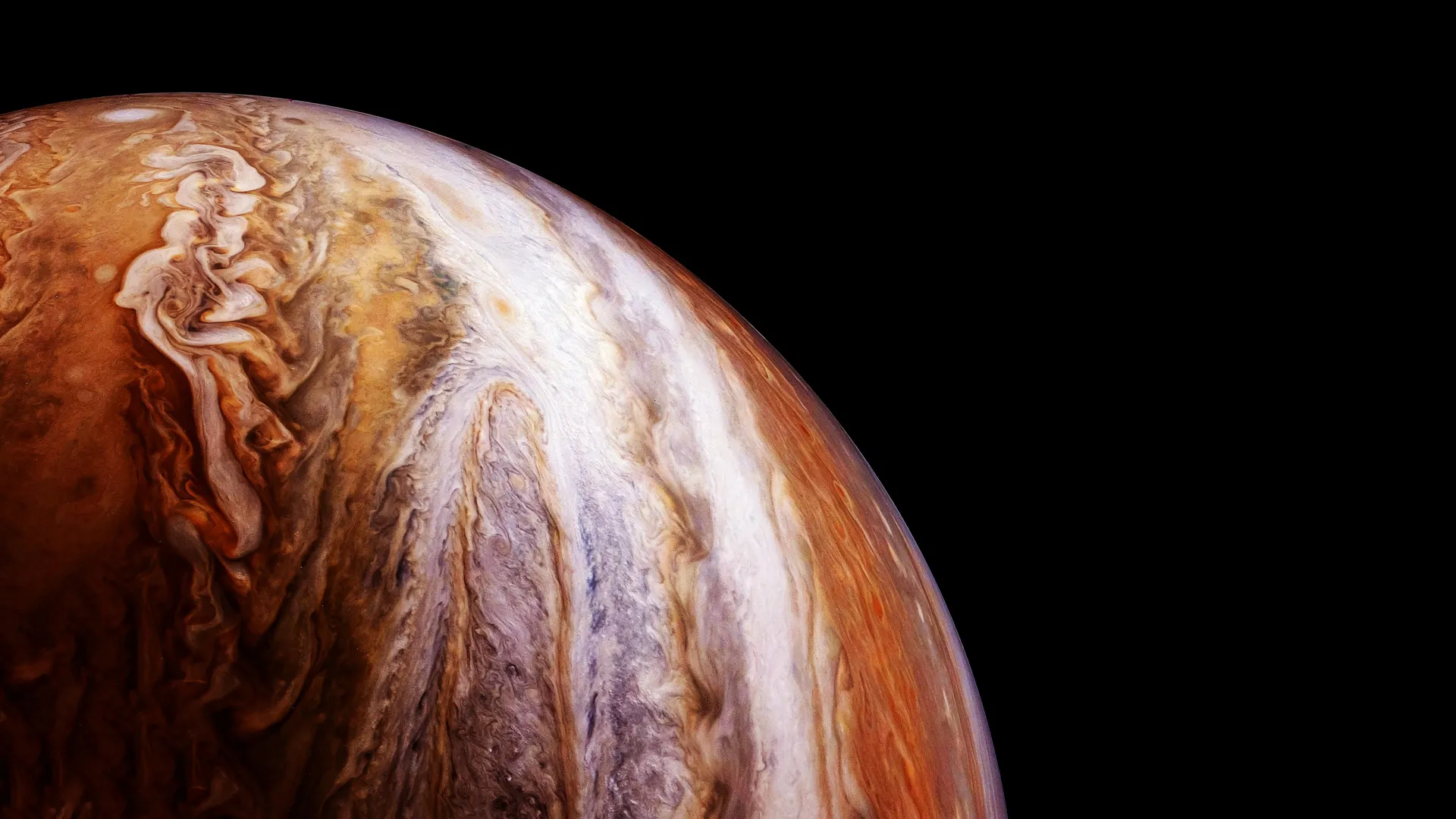
Astronomers have identified something surprising on a distant gas giant: water ice clouds. The discovery was made by a team led by Elisabeth Matthews at the Max Planck Institute for Astronomy (MPIA), and it challenges many existing models of how exoplanet atmospheres behave. The planet, known as Epsilon Indi Ab, is similar to Jupiter, yet its atmosphere appears more complex than expected. The observing method used in this study also marks an important step toward the long term goal of finding and studying Earth like planets. The search for planets beyond our solar system has evolved over decades. Scientists ultimately hope to detect signs of life on distant worlds, possibly within the next few decades. Early efforts, from 1995 through about 2022, focused mainly on discovering new exoplanets. Researchers relied on indirect techniques that could reveal a planet's mass, size, or sometimes both. The launch of the James Webb Space Telescope (JWST) in 2022 marked the beginning of a new phase.…