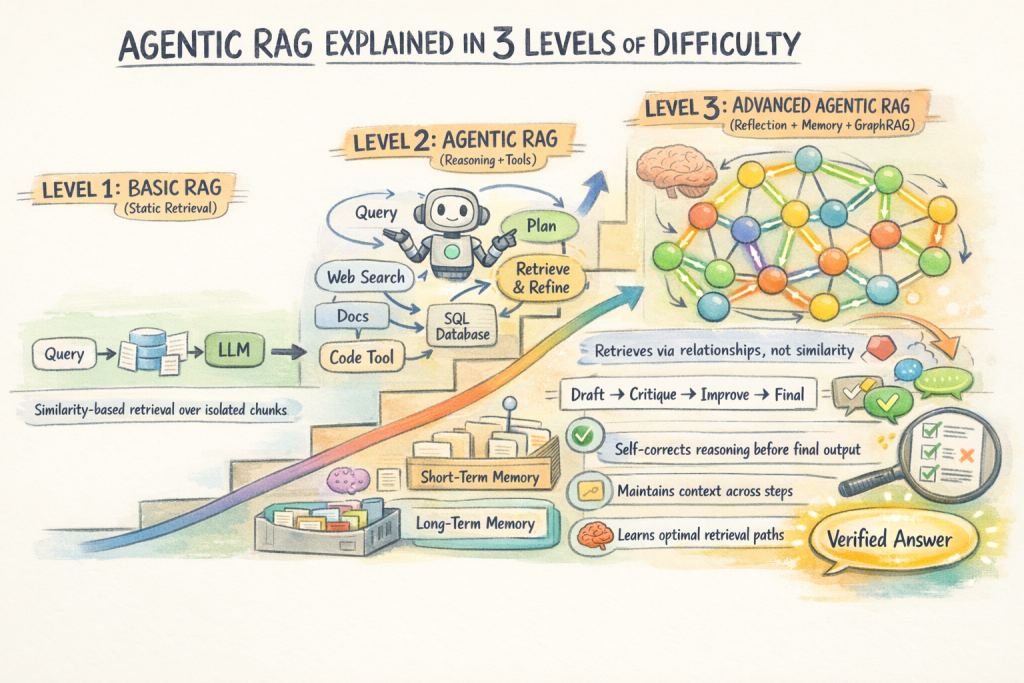
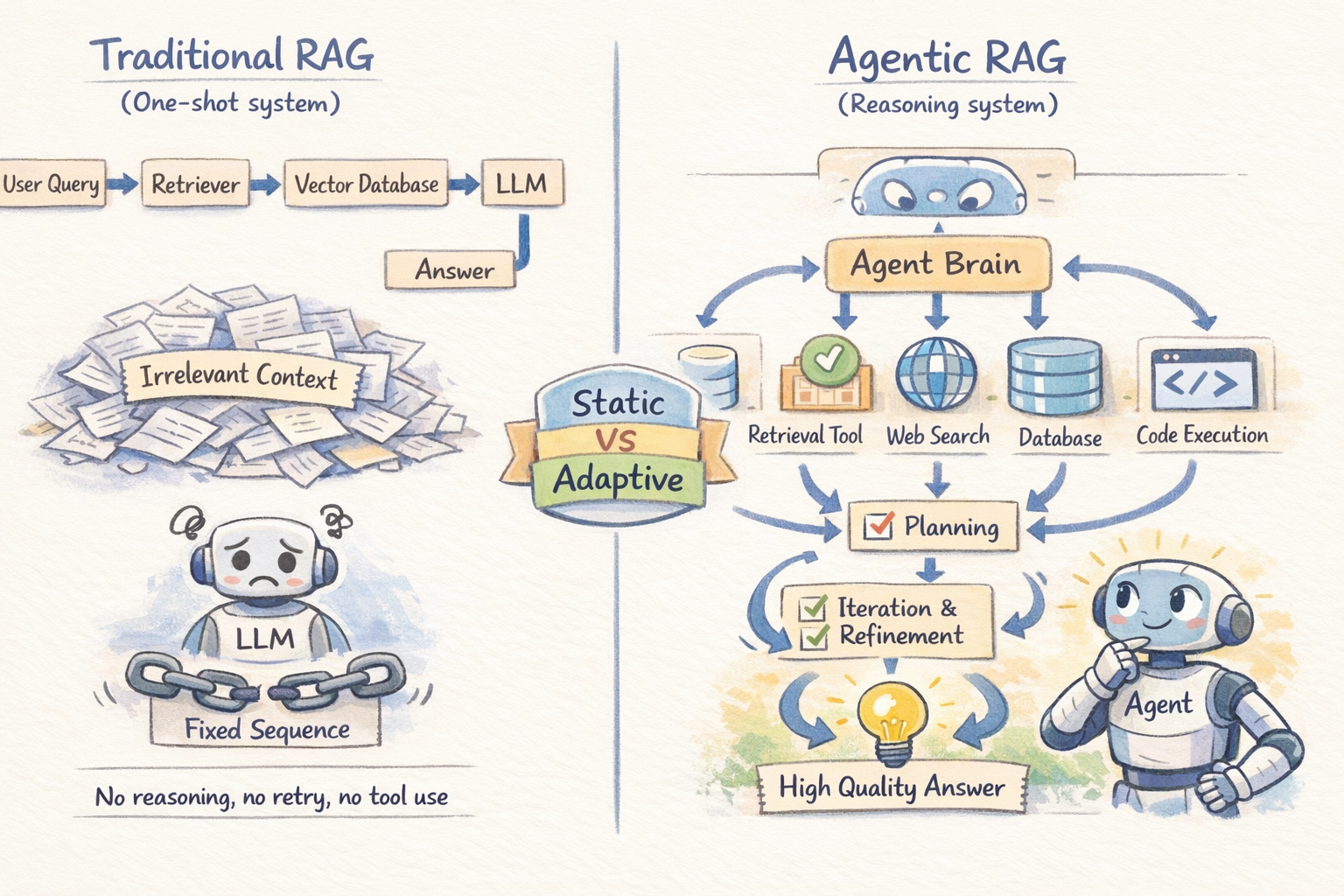
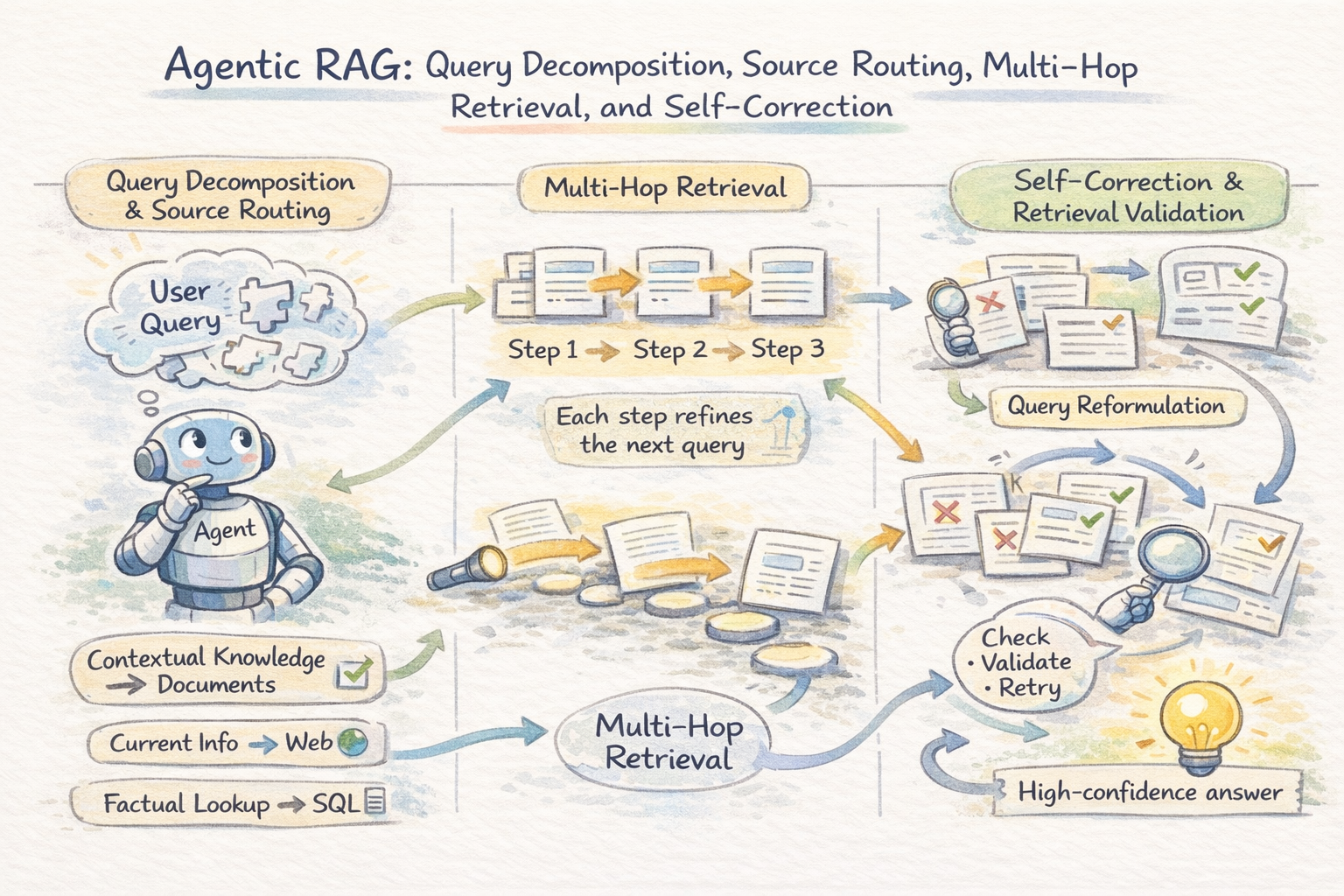
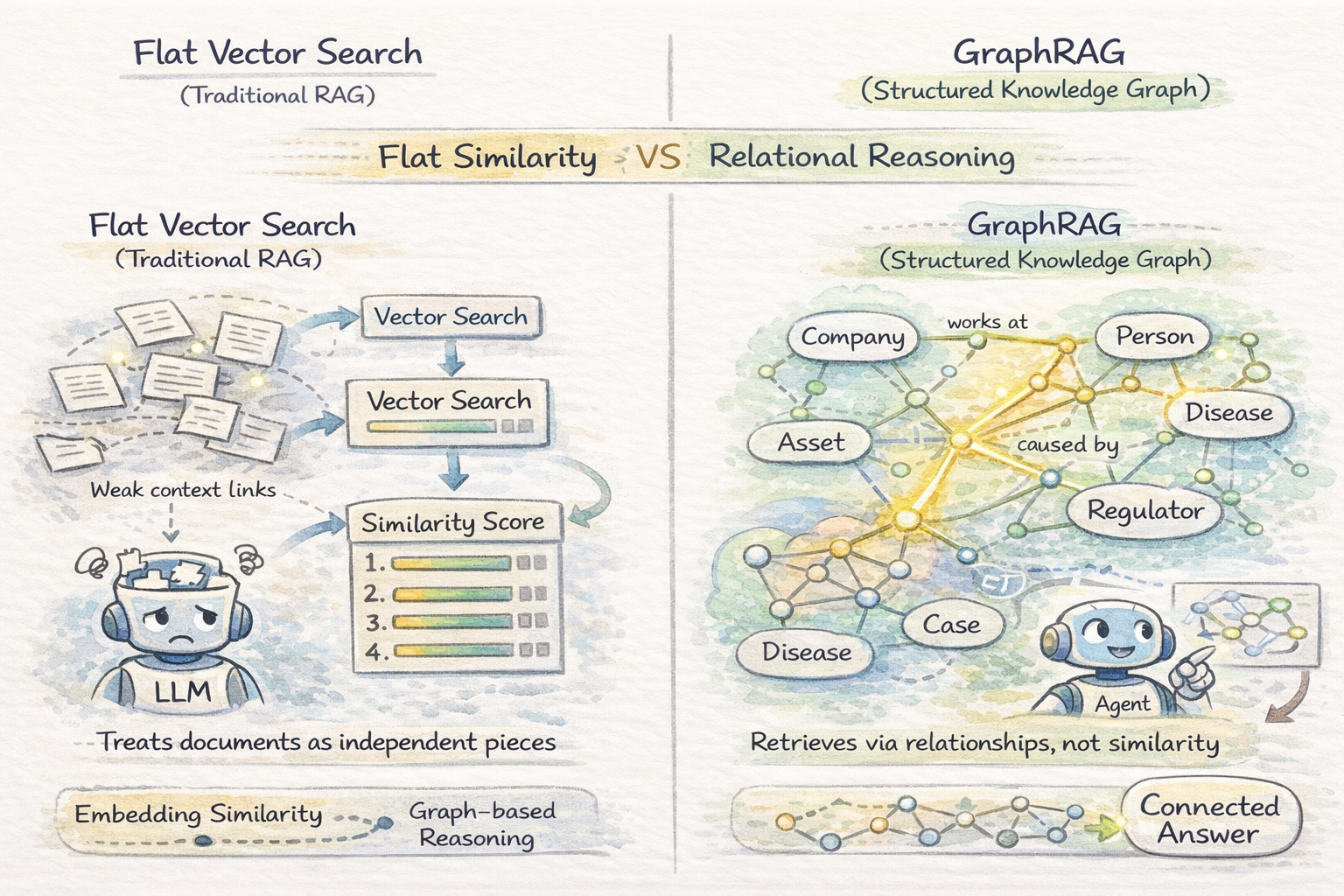
In this article, you will learn what agentic RAG is, how it differs from traditional RAG, and when to use it. Topics we will cover include: The key limitations of traditional RAG pipelines and what agents add to address them. How the agentic retrieval loop works, including query decomposition, multi-hop chaining, and self-correction. Advanced architectures like Graph RAG, reflection, and memory, along with the production tradeoffs that come with them. Agentic RAG Explained in 3 Levels of Difficulty Introduction Traditional Retrieval-Augmented Generation (RAG) retrieves information once and generates a response based on that single result. This approach works well for simple, clearly defined questions. However, it starts to break down when a task requires pulling information from multiple sources, reasoning across documents, or refining incomplete results. A basic RAG pipeline has no built-in way to retry, adjust its retrieval strategy, or validate the quality of what it retrieved.…