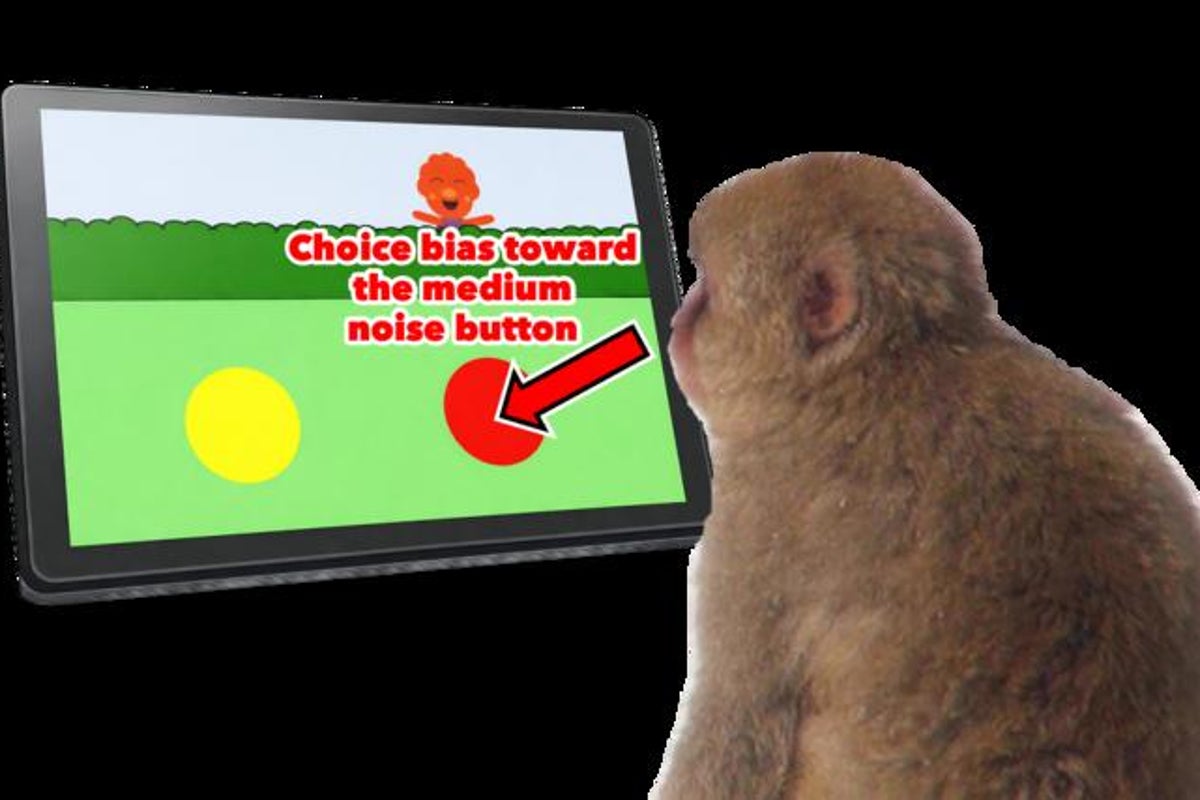
Monkeys voluntarily spent long periods playing a touchscreen video game for a new study , driven purely by curiosity without any food reward, leaving scientists stumped. The findings, according to researchers, can lead to a better understanding of how curiosity drives animal behaviour . Curiosity operates independent of extrinsic rewards like food or mating opportunities and drives animals to explore their environments. But exactly how some parts of any animal’s environment sparks more curiosity than others remains unclear. Researchers theorise that curiosity tends to be biased toward moderately complex or uncertain stimuli while avoiding overly simple or complex situations. This is called the "Goldilocks principle” and also characterises human curiosity. However, very few studies have explored this impulse in animals. Monkey playing video game (KyotoU/Sakumi Iki) Scientists from Japan’s Kyoto University assessed how curiosity works in monkeys by exposing them to a touchscreen video game.…