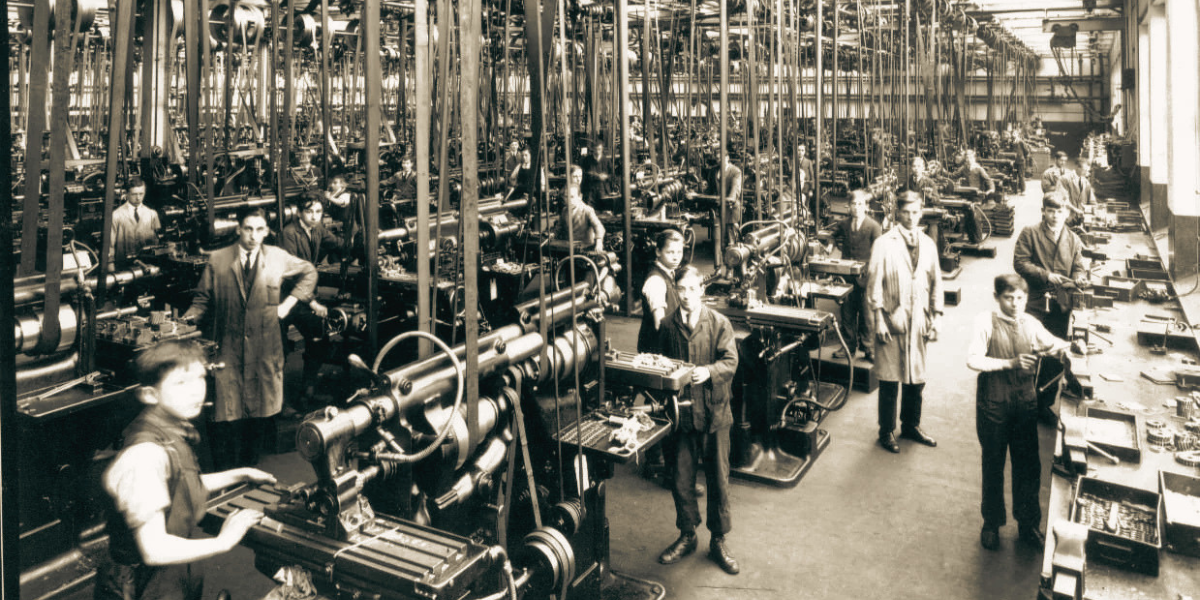
Late nineteenth-century American machine shop foreman Frederick Winslow Taylor had a problem: his friends didn’t like him. Rather like Samuel Bentham a century earlier, he began his career in a facility defined by working-class solidarity but did not himself come from the working class. Workers in Taylor’s shop at Midvale Steel Company collaborated to determine exactly how fast labor in the shop would be. Article continues after advertisement Opposing the market imperative to work faster and faster required workers to cooperate—and supervisors to know their place. When Taylor worked his way up to the low-level supervisory position of “gang-boss,” his coworkers, whom he described as his “personal friends,” immediately reminded him of his expected role and warned him against exceeding their agreed-upon productivity rates. He responded that he was “now working on the side of the management” and would do “whatever he could to get a fair day’s work” out of the machines, and by extension out of their workers.…