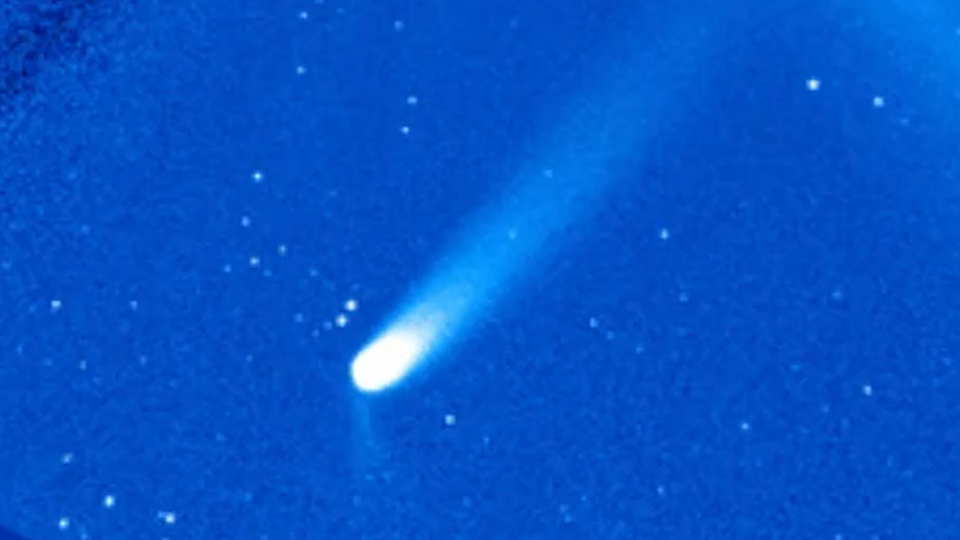
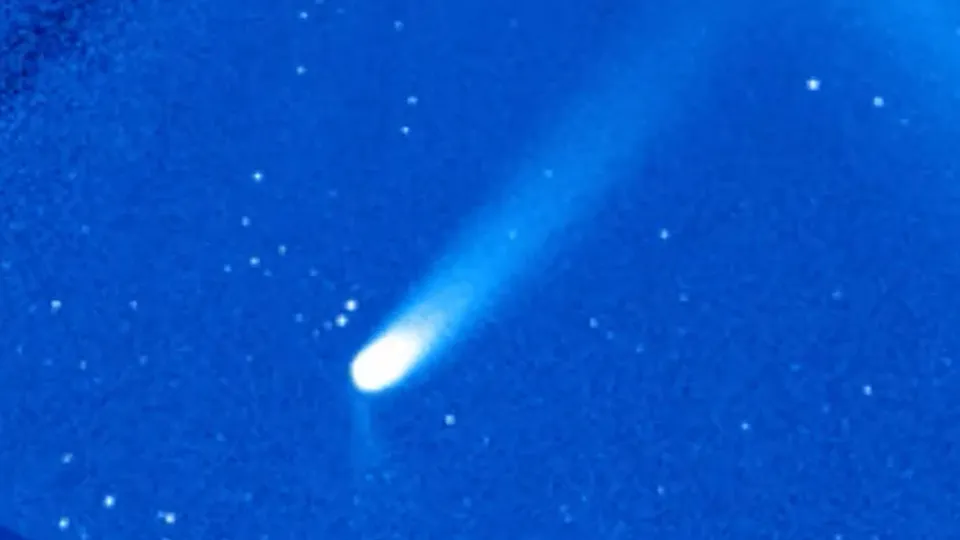
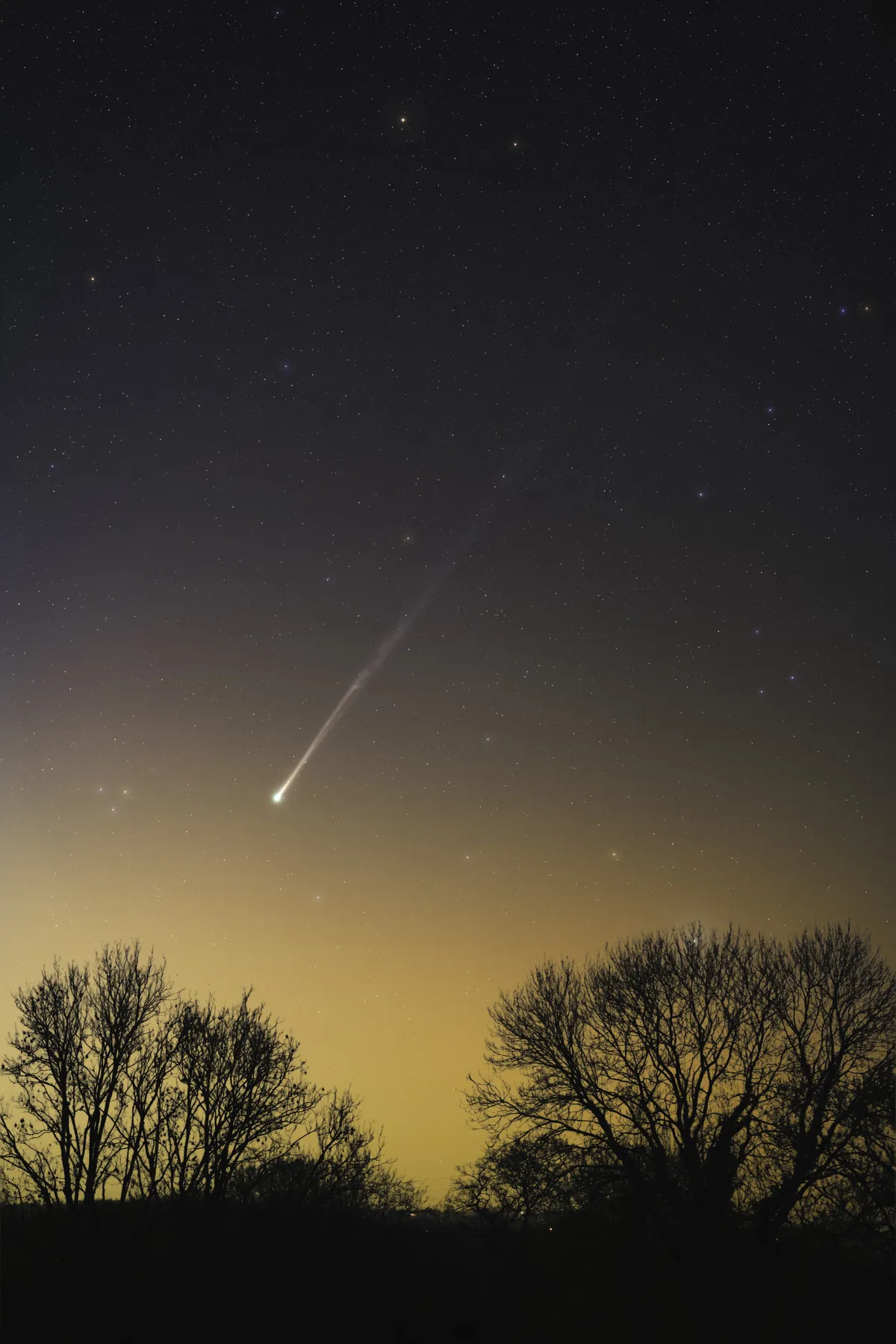
A sungazing spacecraft captured spectacular views of Comet C/2025 R3 (PanSTARRS) as its ion tail appeared to "switch on" and swing away from the sun during a close approach to Earth on April 26. Comet C/2025 R3 was discovered in September 2025 and quickly stirred up excitement among the comet-chasing community during its rush toward the sun , with some wondering if PanSTARRS could brighten enough to be the great comet of 2026. The joint NASA/ESA Solar and Heliospheric Observatory (SOHO)'s coronograph, an instrument that blocks out the light of the sun's bright disk, captured impressive imagery of Comet PanSTARRS' ion tail brightening as it soared past the sun. This narrow tail shifted to stream directly away from the sun, in contrast to the broader, dust-laden primary tail. Why does comet PanSTARRS have two tails? Comet C/2025 R3 (PanSTARRS) shines in the skies over England. (Image credit: Josh Dury.) Comets develop tails as they approach the sun and heat up.…