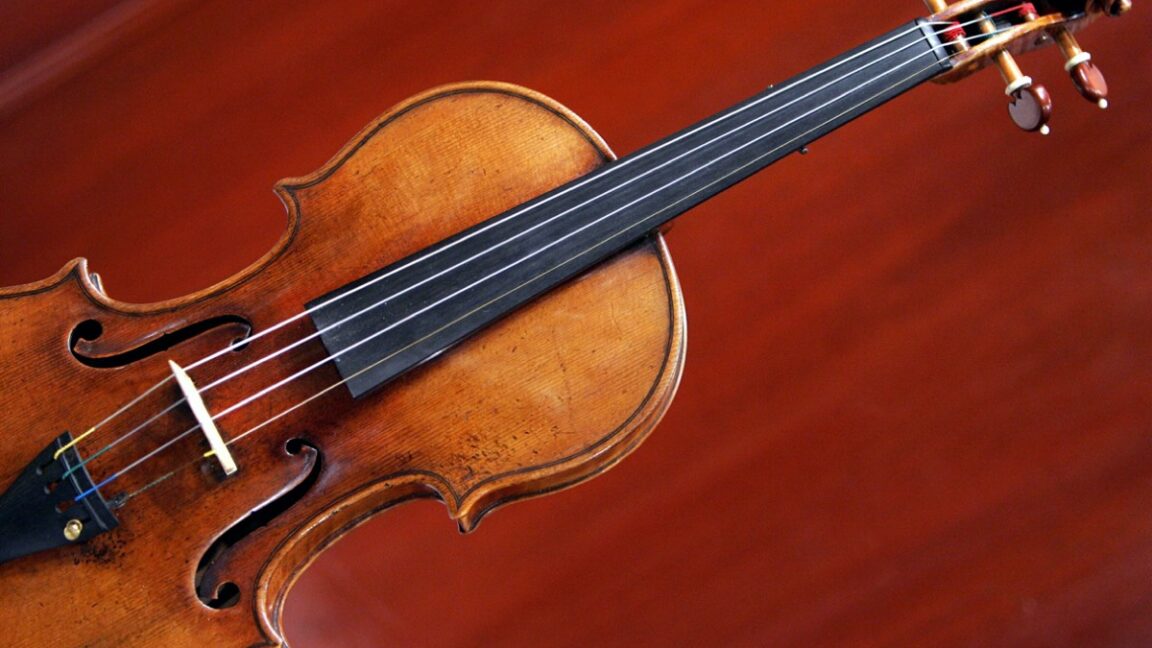
Skip to content Computational model lets users tweak parameters to hear effect on the sound in early design process. A 1729 Stradivari known as the "Solomon, Ex-Lambert" on display at Christie's in New York in March 2007. Credit: Don Emmert/AFP/Getty Images Violin makers, aka luthiers, traditionally learn from hands-on experience how to craft parts and select materials to shape an instrument’s final sound. MIT engineers hope to streamline that painstaking process with their new virtual violin. It’s a computer simulation tool that can capture the precise physics of the instrument and even reproduce a realistic sound of a plucked string, according to a paper published in the journal npj Acoustics. Unlike the more common software programs and plugins that simulate violin sounds via sampling, averaging the final sound based on thousands of notes, the MIT model is based on the fundamental physics of the instrument. “We’re not saying that we can reproduce the artisan’s magic,” said co-author Nicholas Makris .…