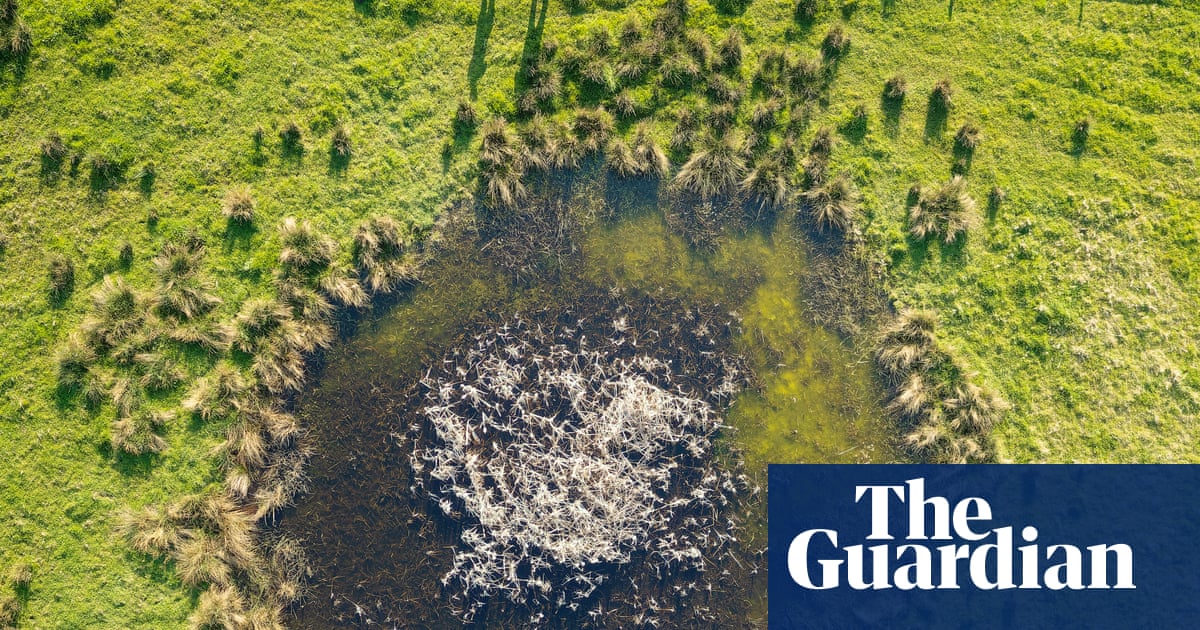
I n February 1945, towards the end of the second world war, a German V2 rocket struck Walthamstow Marshes in east London. The explosion tore a crater into the marshland. Left untouched, it slowly filled with water, sediment … and life. Today, this wartime scar has become a thriving pond. “It’s small but it really punches above its weight,” says Luke Boyle, a ranger for the Lee Valley Regional Park Authority, as he kneels at the edge to examine aquatic plants sprouting their early spring shoots. “We can’t manage the hydrology here, so it is actually a vital part of the ecosystem – it supports a range of plants, insects and amphibians, more than you might expect,” he says. Bomb Crater Pond holds clean water all year round supporting wildlife and cattle Walthamstow’s Bomb Crater Pond lies within a fenced-off section of the marshes, protected as part of a site of special scientific interest. Its clear waters provide a year-round refuge for wildlife in an otherwise highly managed urban landscape.…