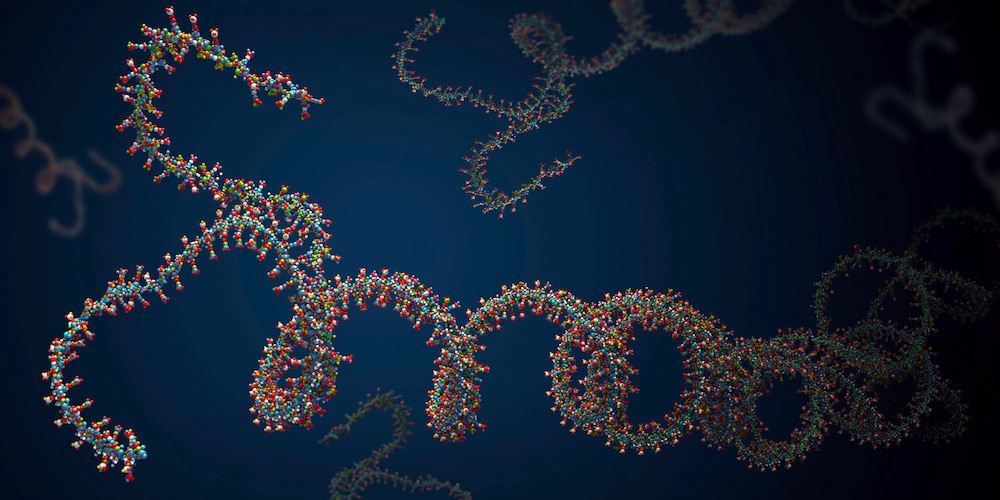
We don’t know exactly how life arose on Earth. For one thing it was a long time ago: Roughly 3.8 billion years in the past, give or take, and records of anything that happened from that period in Earth’s very ancient history are spotty. For another, we don’t know the chemical path life took. Surely simple molecules built up into more complex ones, eventually becoming able to store information and self-replicate. And then, abracadabra, DNA popped up and the rest is biological history. But those are big, big steps, and it’s unclear how they happened. One idea is called RNA World . It posits that RNA — ribonucleic acid , similar to but simpler than DNA — was the basis for life on Earth for a while, before the development of proteins and DNA, which together make up the big molecules necessary for life on Earth today. But how did RNA arise? Simpler molecules like ribonucleotides had to develop first, because they are the building blocks of RNA.…