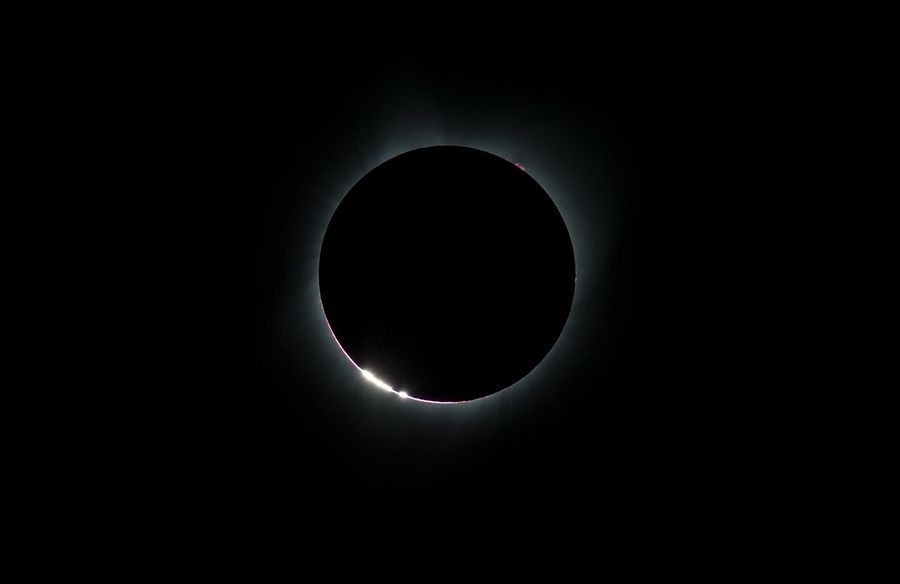
Today in the history of astronomy, a favorite eclipse phenomenon is described. | Published: May 15, 2026 Baily's beads, like these seen during the 2017 total solar eclipse, appear just before and just after totality. Credit: NASA/Aubrey Gemignani The annular eclipse of May 15, 1836, has an important place in history because an astronomer who observed it coined a term for a phenomenon millions of viewers had seen before and have seen since. English astronomer Francis Baily experienced 4 minutes 22 seconds of totality from Jedburgh, England. Like others before him — including Edmond Halley, who wrote of “Points on the Moon’s Limb” during a 1715 eclipse — Baily described dots of sunlight often seen just before and just after totality as well as during some annular eclipses. He called these points of light “beads,” and explained that they appear because sunlight is passing through valleys located at the Moon’s irregular edge; these openings briefly let us see minuscule areas of the Sun’s surface.…