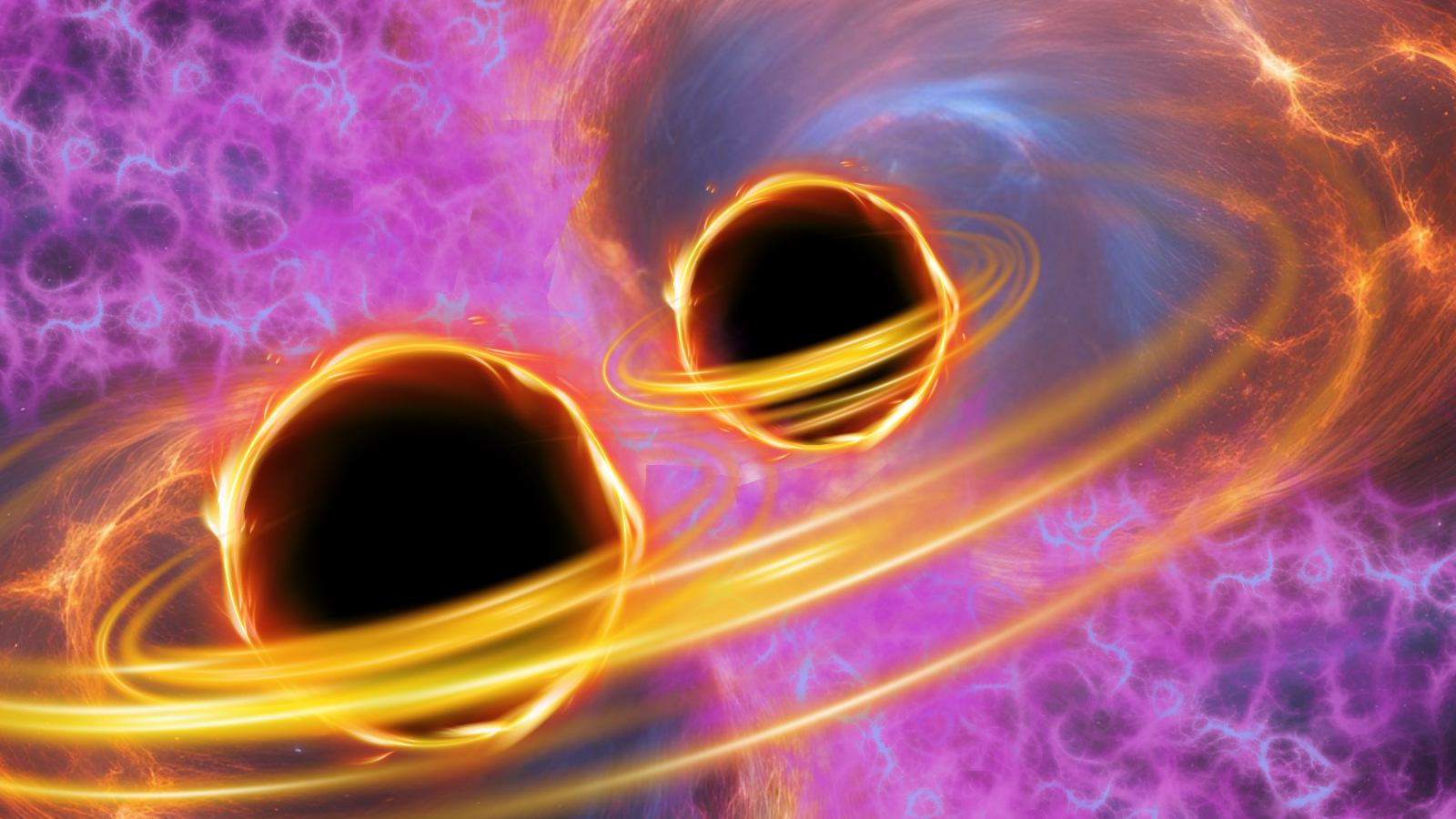
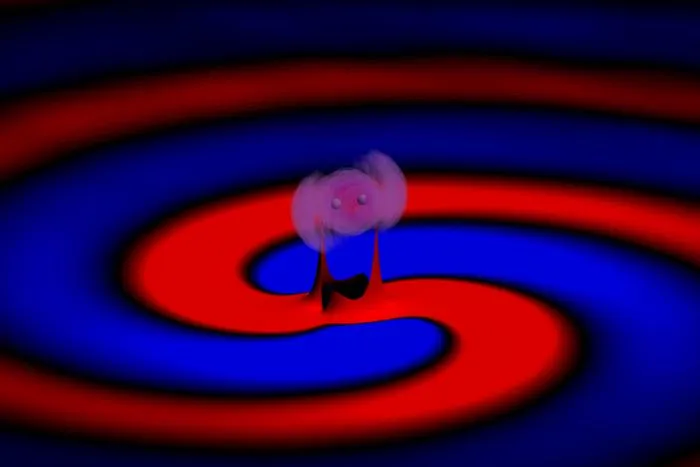
An illustration shows two colliding black holes flanked by dark matter. (Image credit: Robert Lea (created with Canva)) The most mysterious and yet ubiquitous stuff in the cosmos, dark matter is effectively invisible. This is simply because it doesn't interact with light. But what if instead of trying to see dark matter, scientists attempted to hear it instead? New research suggests dark matter could leave a tiny but discernible imprint in the cacophony of ripples in spacetime called " gravitational waves " that ring through the cosmos when two black holes slam together and merge. However, this is only if spinning black holes can "churn" dark matter like cosmic butter. (We'll get to that shortly.) Fortunately, when it comes to detecting gravitational waves from colliding black holes, humanity's instruments, such as LIGO (Laser Interferometer Gravitational-Wave Observatory), are getting more and more sensitive all the time.…