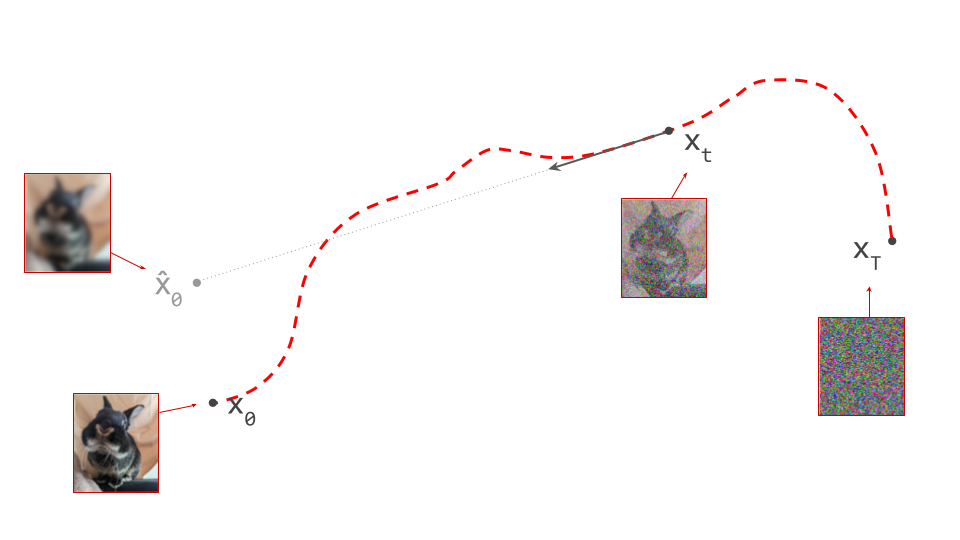
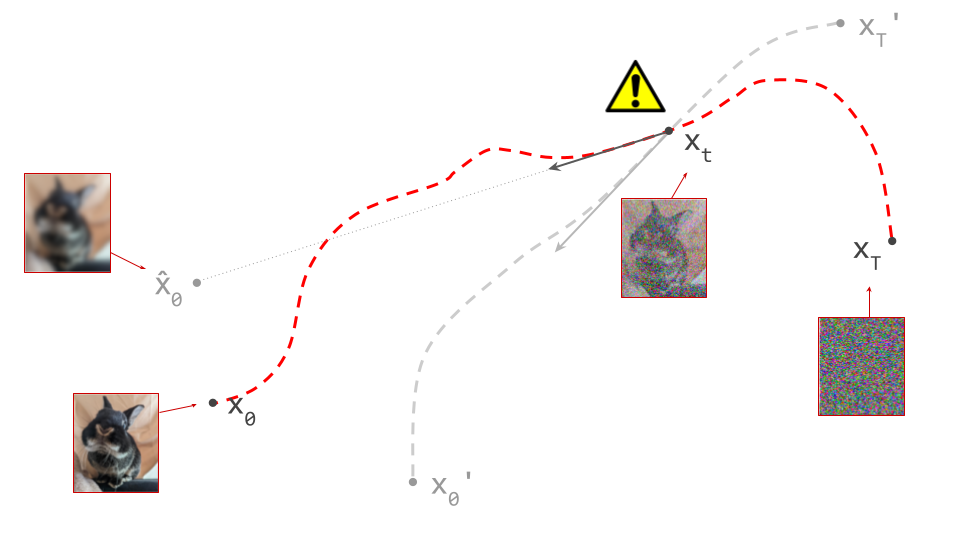
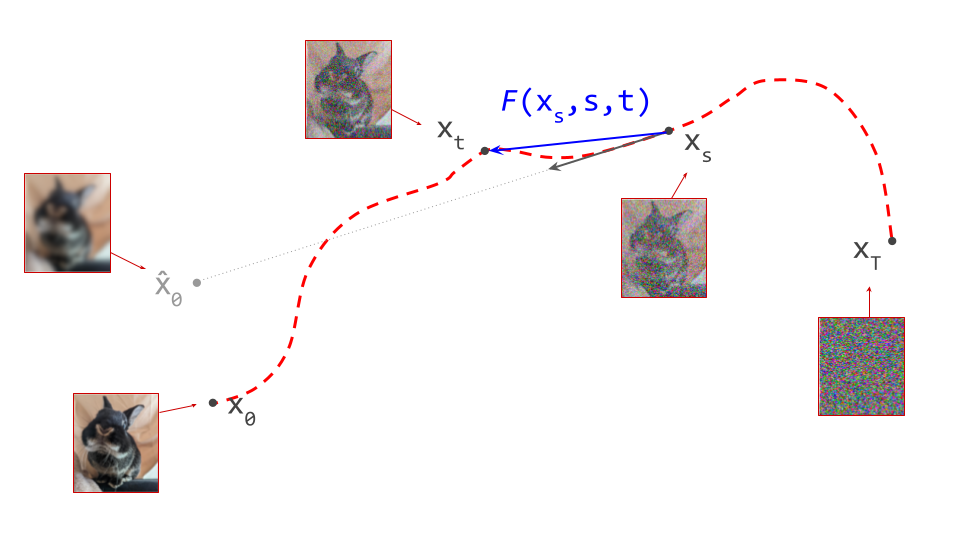
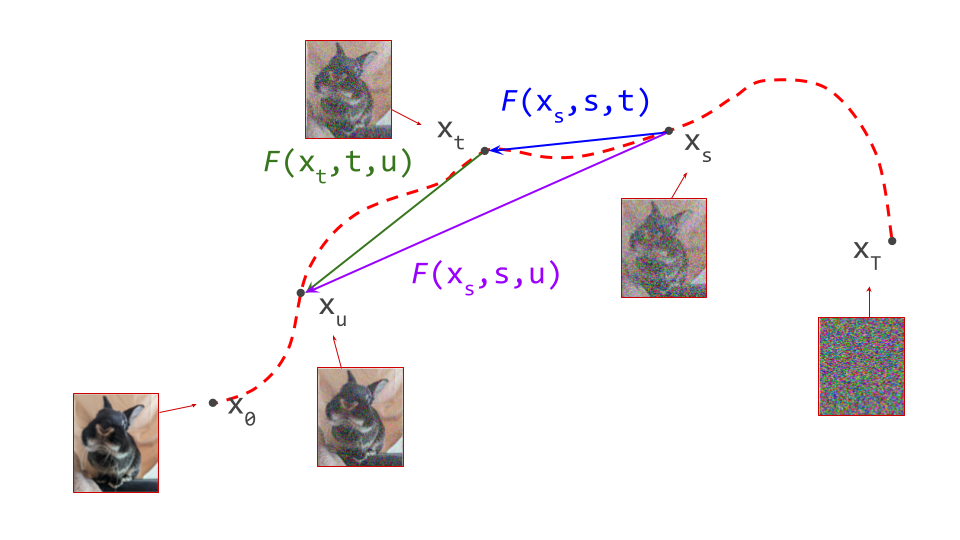
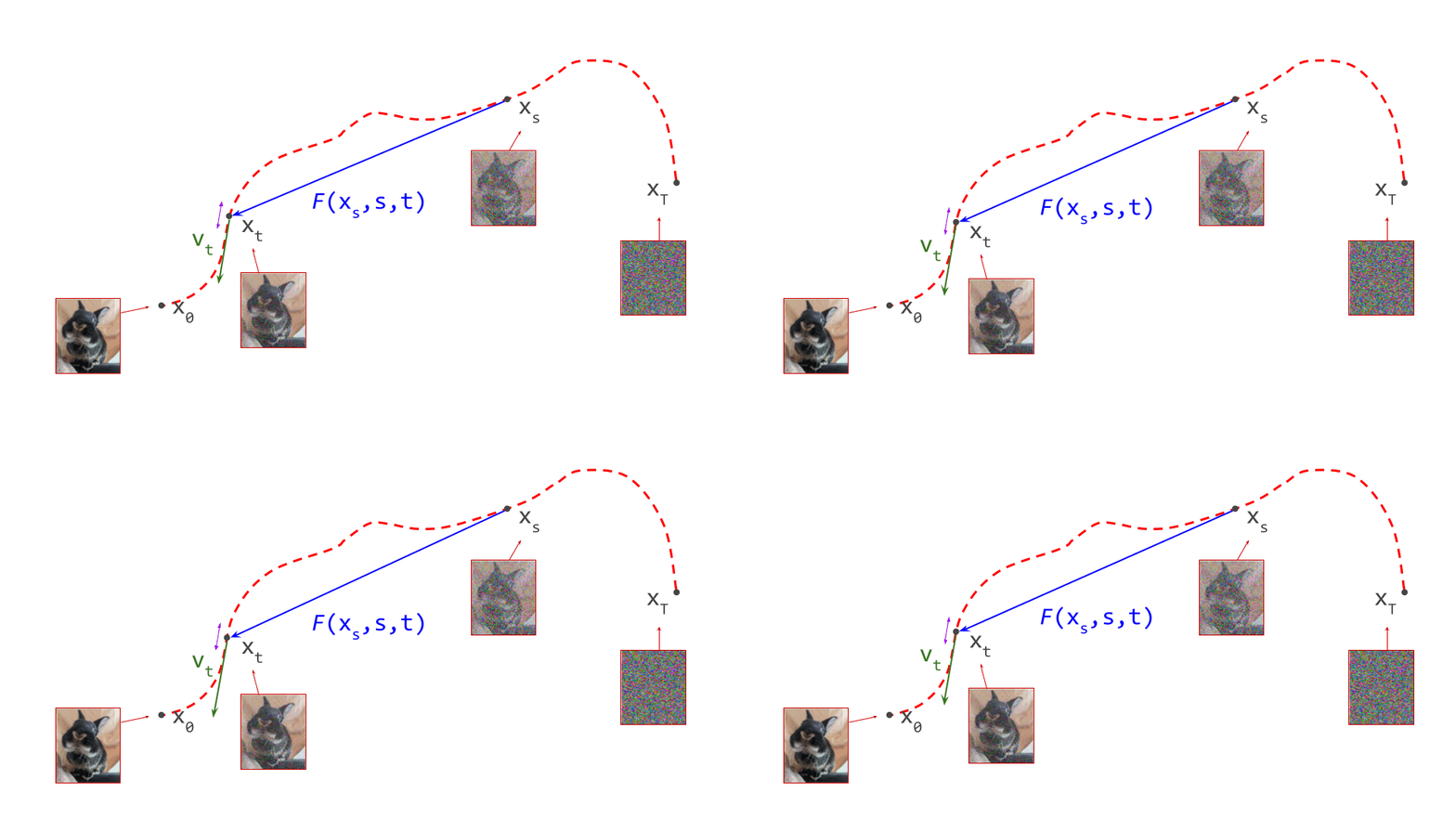
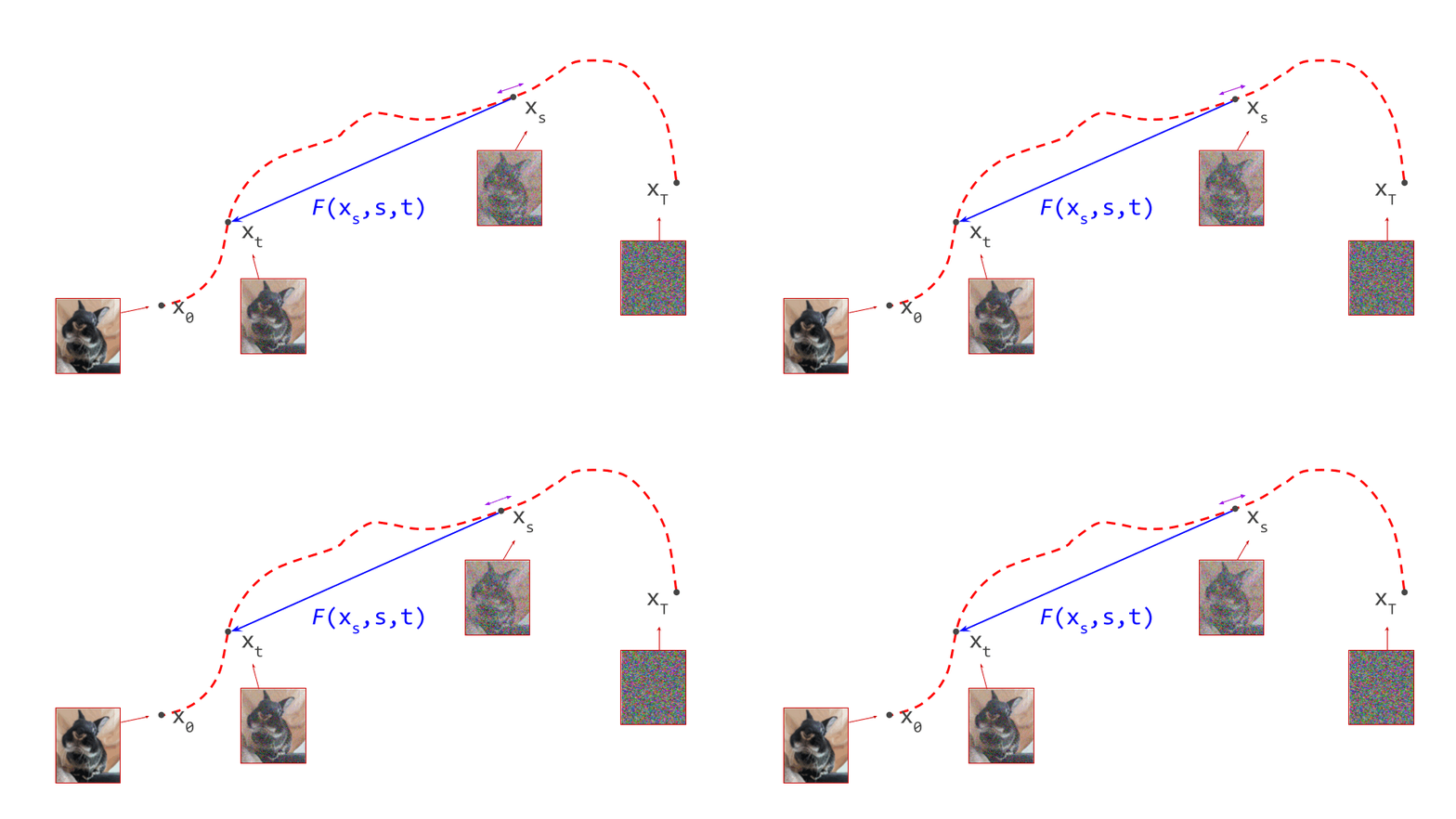
Sampling from a diffusion model is an iterative process: at each step, the denoiser estimates the tangent direction to a path through input space. We move along this path by repeatedly taking small steps in this direction, effectively calculating an integral across noise levels . This gradually transforms samples from a simple noise distribution into samples from a target distribution, and traces out the path that connects them. Can we train neural networks to directly predict this integral instead, in order to speed up sampling? Yes we can – welcome to the world of flow maps ! Ever since the rise of diffusion models, people have sought ways to make them faster and cheaper to sample from. About two years ago, I wrote a blog post about diffusion distillation , which is one of the main tools used to reduce the number of steps required to obtain high-quality samples. Although the core principles underlying various distillation methods have not changed, a lot of new variants have popped up since.…