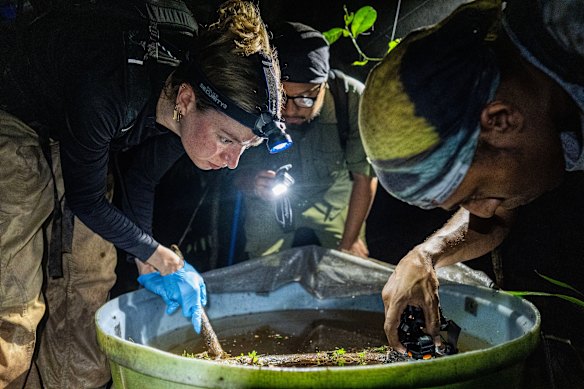
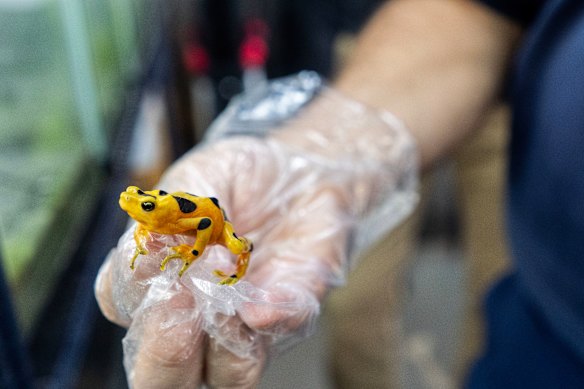
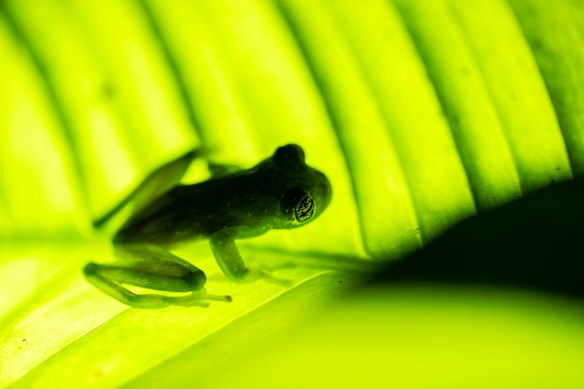
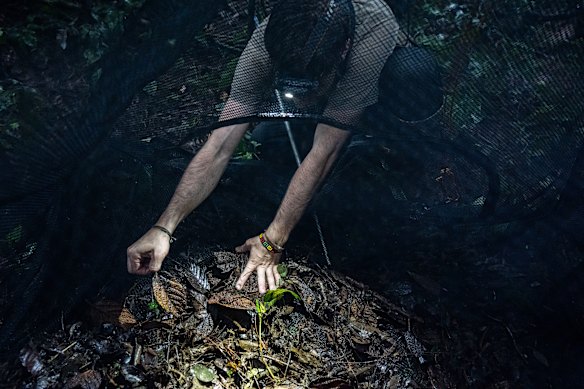
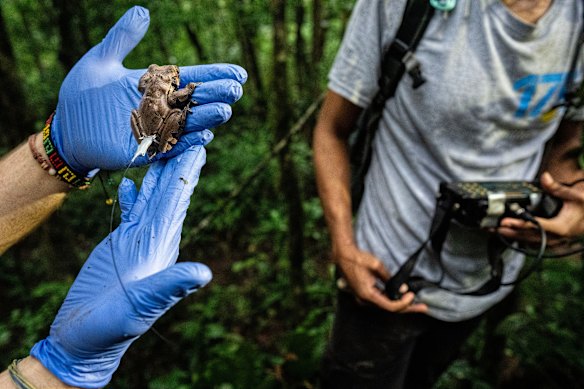
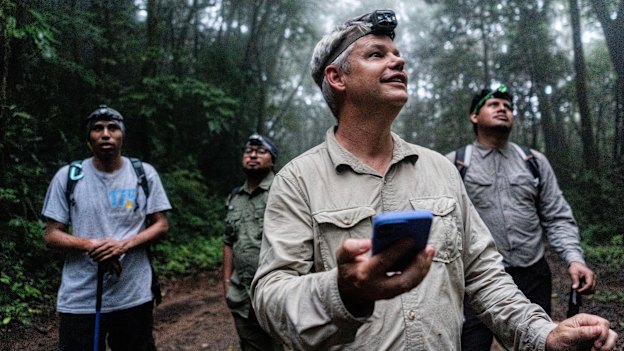
Brian Gratwicke’s lunchbox was full of frogs. Kneeling on the muddy rainforest floor, the biologist opened his red Coleman cooler and scooped one up. It was a Pratt’s rocket frog – about the size of a walnut, sporting black-and-white racing stripes. Gratwicke deposited the frog in a small mesh tent, a “catio” for indoor pets to glimpse the outdoors, and encouraged it to acclimate to its transitional home in Altos de Campana National Park in Central America. “There you go,” he told it. “Look at all that nice leaf litter.” The frog darted into the carpet of leaves, unaware it had just leapt into a high-stakes experiment. Gratwicke is a conservation biologist who leads amphibian work at the Smithsonian’s National Zoo and Conservation Biology Institute. He had flown to Panama, in the middle of rainy season, to help resurrect frog species that had vanished from the cloud forest decades ago. Whether these amphibians can strike out on their own and thrive here again is uncertain.…