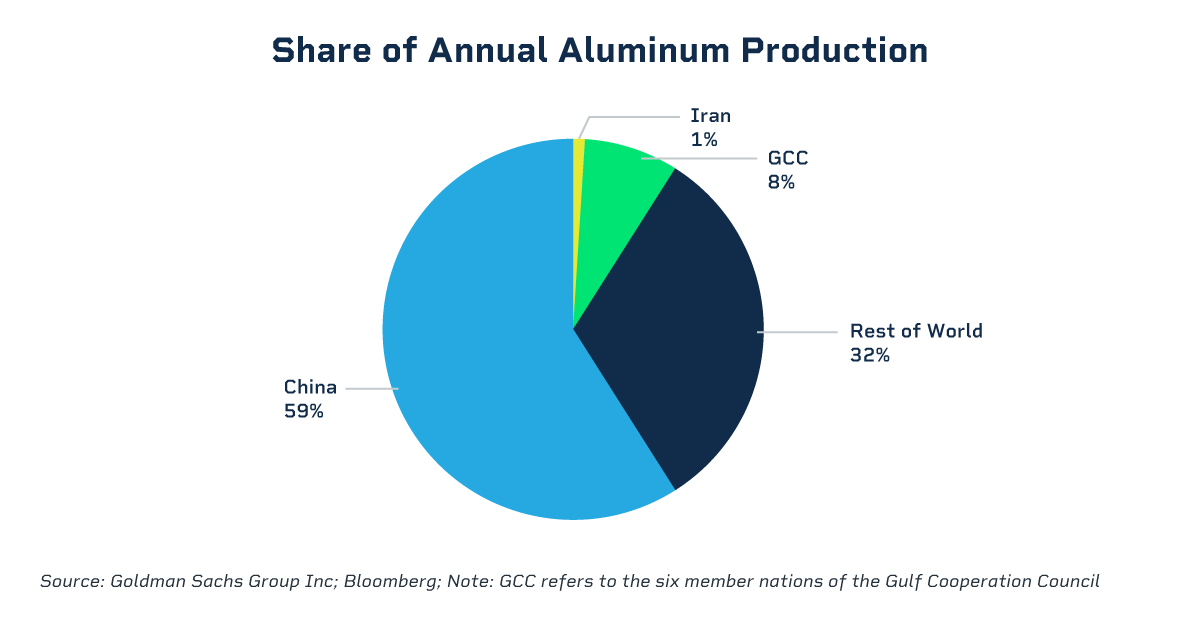
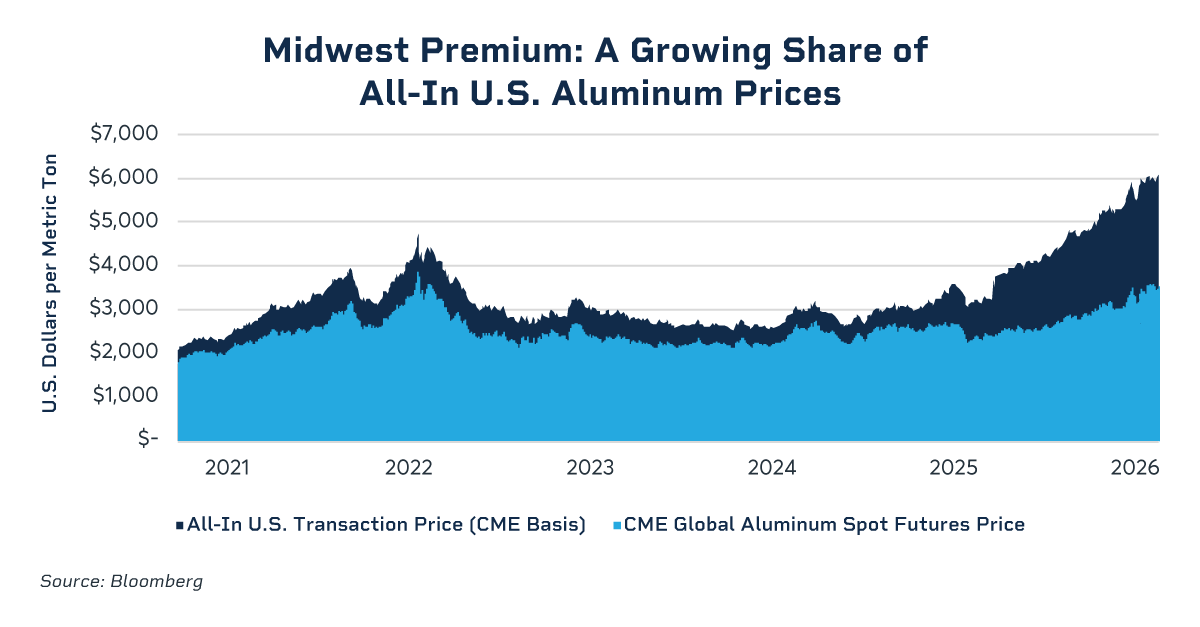
Getty Images By Ivan Castano The Iran war has sent aluminum prices higher this year, unnerving a slew of global industries that rely on the base metal to manufacture cars, canned goods and aircraft. Before the conflict began in late February, prices were hovering at $3,200 per metric ton (tonne) but rose to a four-year high of $3,500 per tonne a fortnight later as fears of supply shocks hit the market. Wood Mackenzie had already predicted a 200,000-tonne deficit for this year, possibly rising to 800,000 tonnes by 2028. This was sharply higher than the roughly 50,000-tonne shortage expected as of late 2025, when electric vehicles (EVs), renewable energy (mainly solar panels) and AI data centers were taking demand to new heights. Crucially, the war triggered the closure of the Strait of Hormuz, a vital waterway through which Middle East output – which accounts for 9% of the world's total – reaches ports in Europe and the United States.…