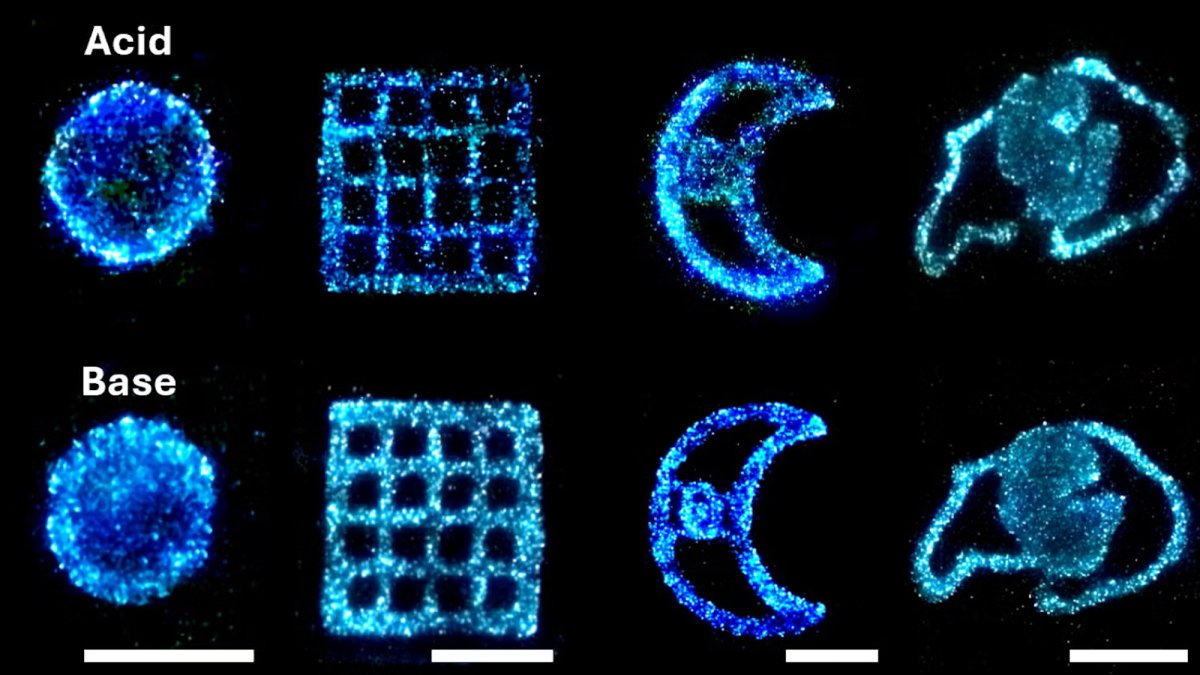
Acidic (top) and basic (bottom) environments trigger different bioluminescent behaviors in algae. Credit: Giulia Brachi Get the Popular Science daily newsletter💡 Breakthroughs, discoveries, and DIY tips sent six days a week. Bioluminescence is everywhere in nature, but it puts on its biggest light shows underwater . In the deepest regions of the oceans, as much as 90 percent of all living creatures may possess at least some ability to shimmer thanks to cellular chemical reactions. However, the ethereal displays aren’t limited to these deep, dark waters. The cold blue glow from bioluminescent algae like Pyrocystis lunula is occasionally visible atop waves for other organisms to see. Still, spotting these glimmers is difficult for the naked eye. P. lunula only shines for a few milliseconds at a time when agitated. However, those lights could hypothetically remain illuminated for much longer if certain chemical switches are flipped on in the algae.…