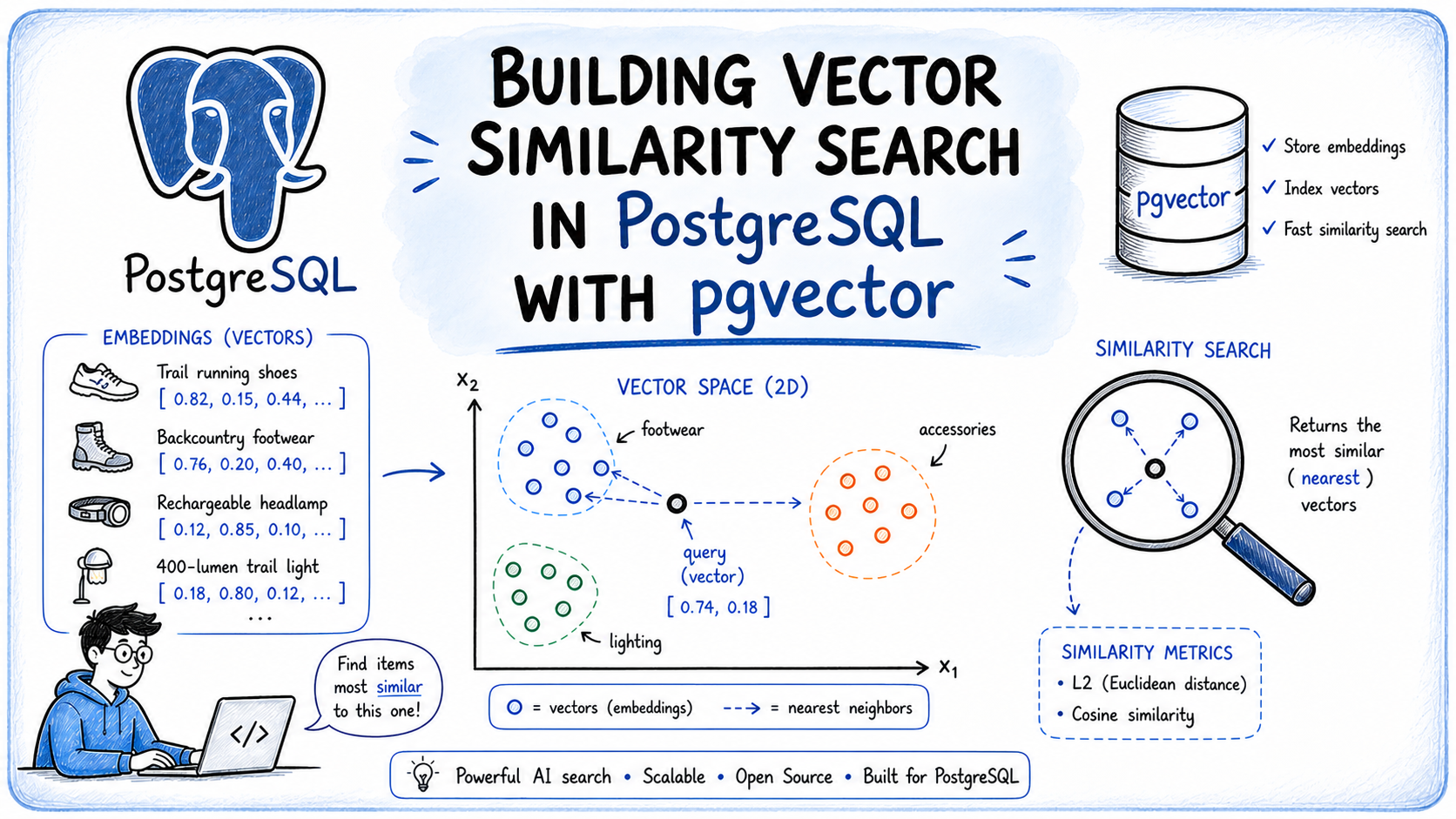
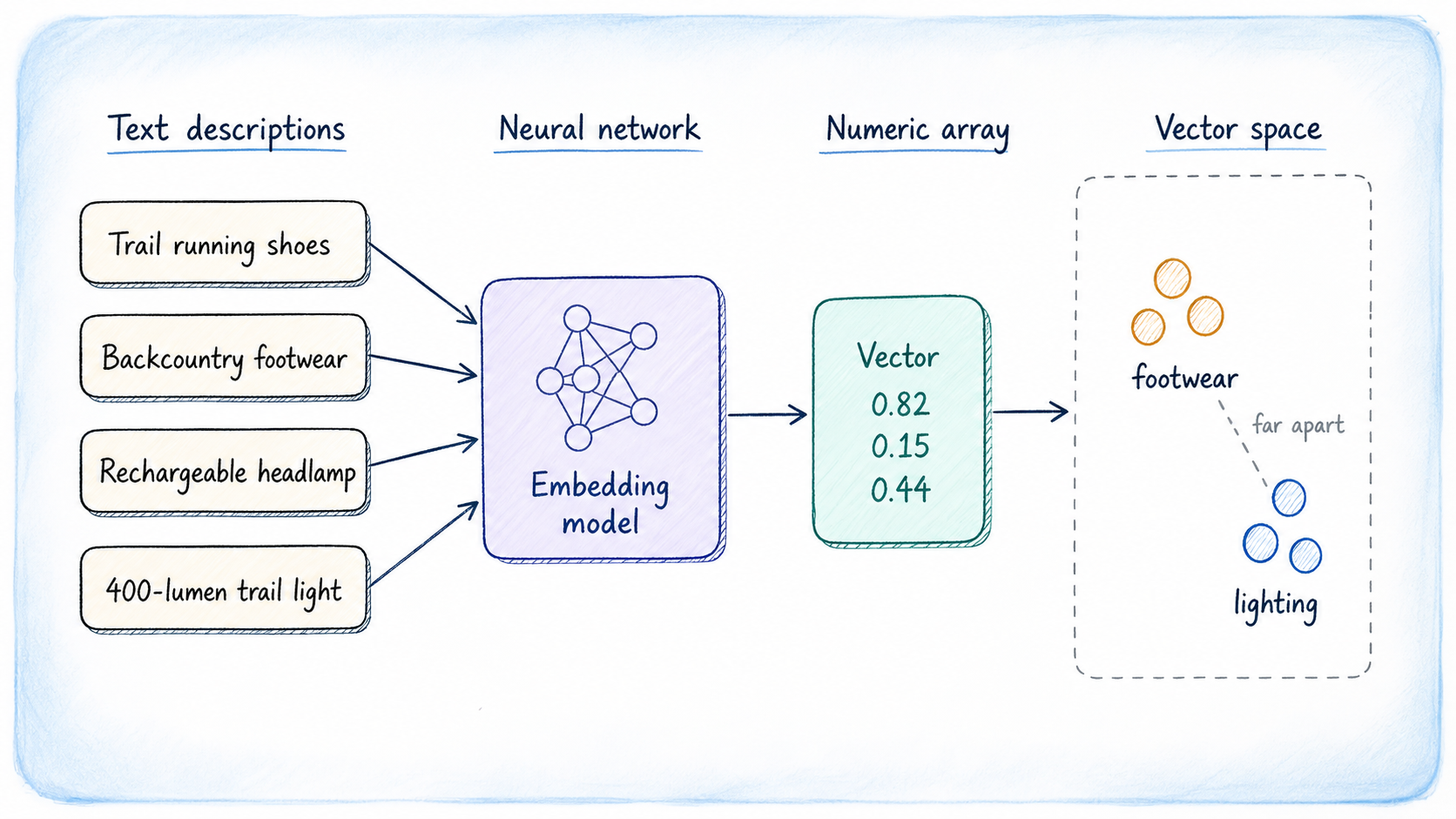
In this article, you will learn how to implement vector similarity search in PostgreSQL using the pgvector extension, allowing you to find semantically similar results based on meaning rather than keyword matching. Topics we will cover include: What vector embeddings are and how they enable semantic similarity search. How to install and configure pgvector, store embeddings in PostgreSQL, and query them using SQL distance operators. How to choose the right distance metric and index type for your workload, and how to combine similarity search with standard SQL filters. Building Vector Similarity Search in PostgreSQL with pgvector Introduction Search works well when users know exactly what they are looking for, but it breaks down when intent is described in natural language. A user searching for “something warm and breathable for high-altitude trekking” will get poor results from a keyword index, because the words in that query rarely align with the words in your data.…