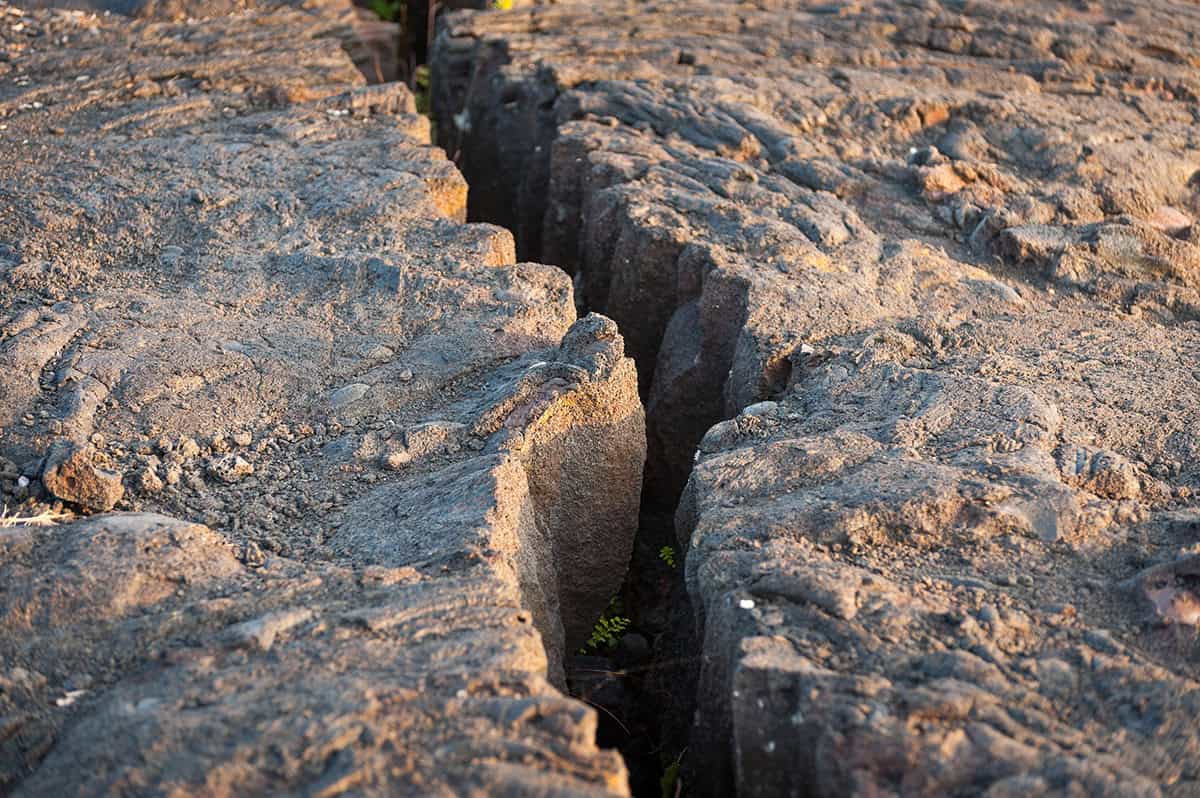
Adhesive asperities, not abrasion, dominate fault friction and reshape our understanding of stick‑slip behaviour Earthquake boundary (Courtesy: Shutterstock/Karen Grigoryan) Earthquakes occur when tectonic plates rub against each other, become temporarily stuck, and then suddenly release accumulated stress as they slip. Although earthquakes have been studied for decades, the microscopic mechanics that cause faults to stick, slip, and generate friction are still not fully understood. In this research, scientists use a granite-on-granite system to investigate these processes. Granite is common in continental crust and mechanically similar to many fault rocks, making it a strong laboratory analogue. The researchers used three complementary approaches. First, they performed controlled experiments measuring friction, wear, and surface roughness as two granite surfaces slid past each other, including tests with water, different temperatures, and different sliding speeds.…