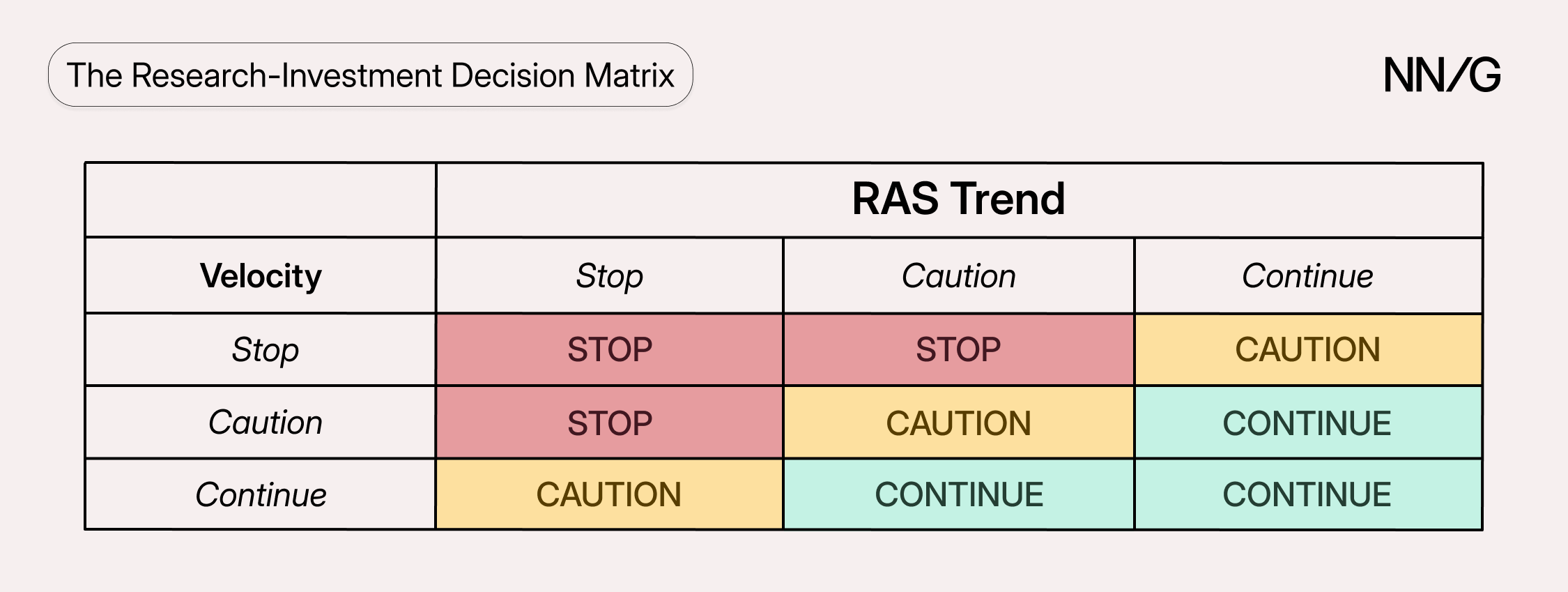
Summary: RAS helps managers allocate resources based on actual impact, shifting focus from outputs to outcomes and enabling data-driven UX strategies. In articles 1 and 2 of this series, we defined research breakage , introduced the recommendation-adoption score (RAS) (see the template here ), and showed how to calculate it . In this article, we turn to how leaders should use that data. Most research leaders make research-investment decisions based on intuition, in response to squeaky wheels, or simply by allocating resources to those who happen to ask. But do these choices maximize the impact of the research team? This is where RAS comes in. Beyond exposing breakage, the RAS helps managers allocate their research talent and resources to where it matters most and provides them with clear justification for these decisions.…