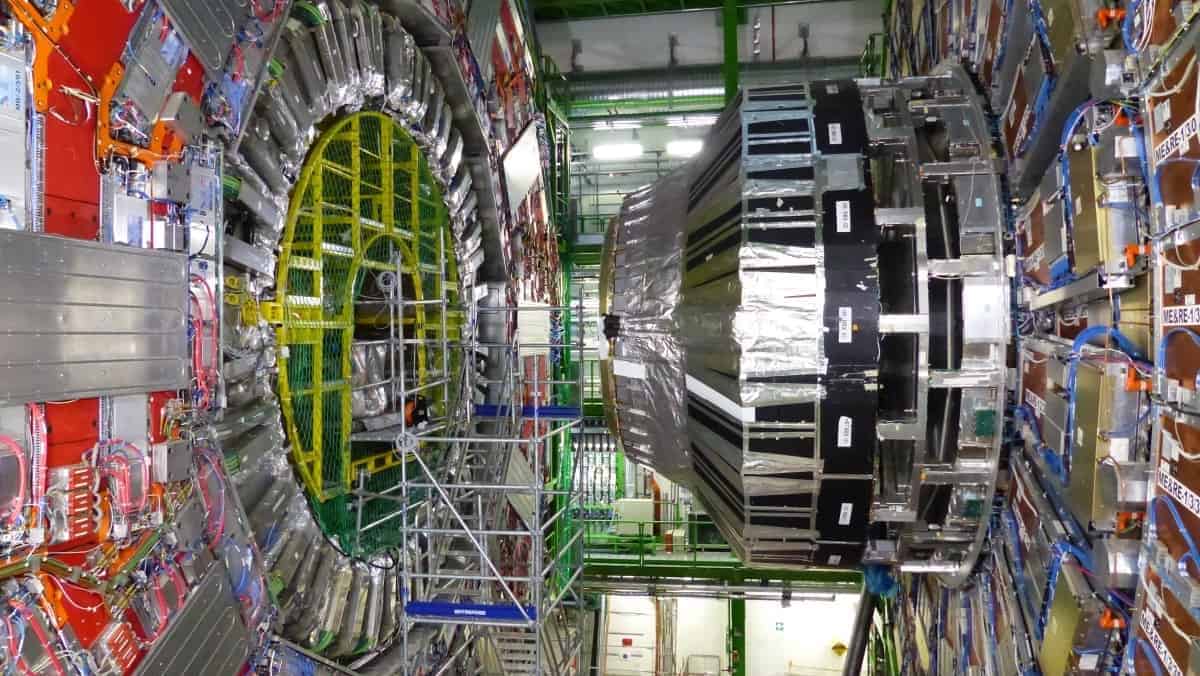
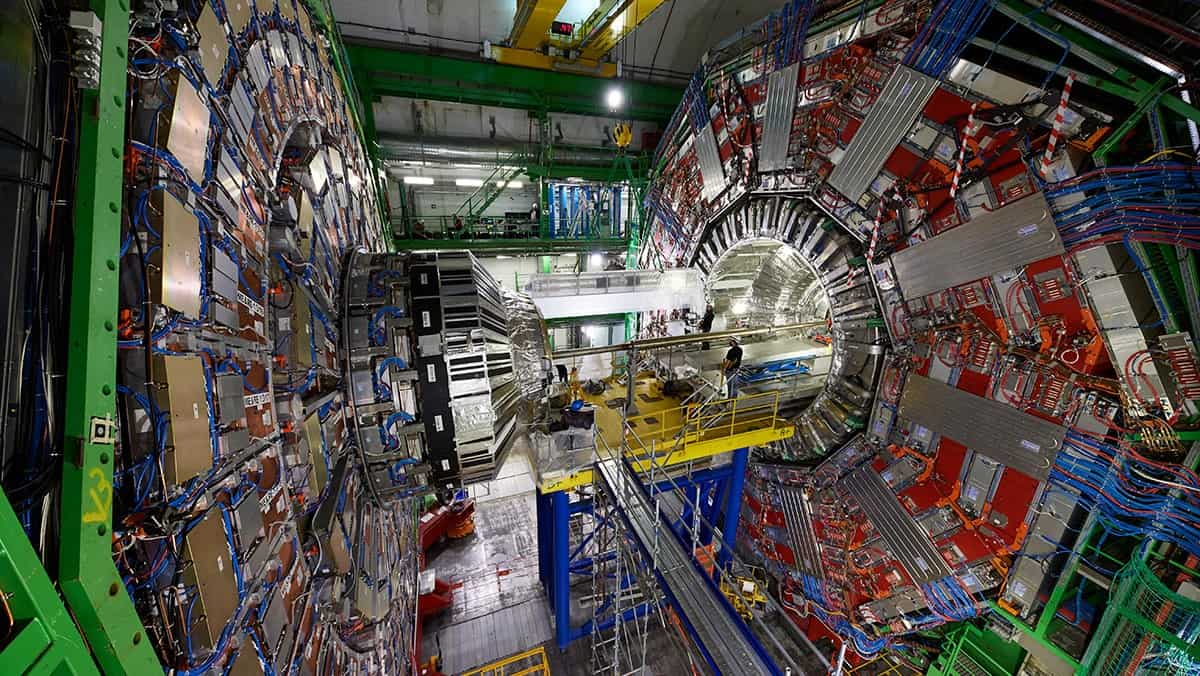
CMS at CERN Oxygen collisions at the LHC could have created a quark–gluon plasma. (Courtesy: Matin Durrani)"> CMS at CERN Oxygen collisions at the LHC could have created a quark–gluon plasma. (Courtesy: Matin Durrani) Colliding oxygen nuclei could briefly recreate one of the most extreme states of matter in the universe – according to evidence gathered by physicists working on the CMS Collaboration at the Large Hadron Collider at CERN. Their analysis suggests that when smashed together, even relatively small atomic nuclei can produce a tiny droplet of quark–gluon plasma (QGP). This is a superhot “soup” of elementary particles that is believed to have filled the universe just after the Big Bang. Under normal conditions, quarks – the particles that make up protons and neutrons – are tightly bound together by gluons, which carry the strong nuclear force.…