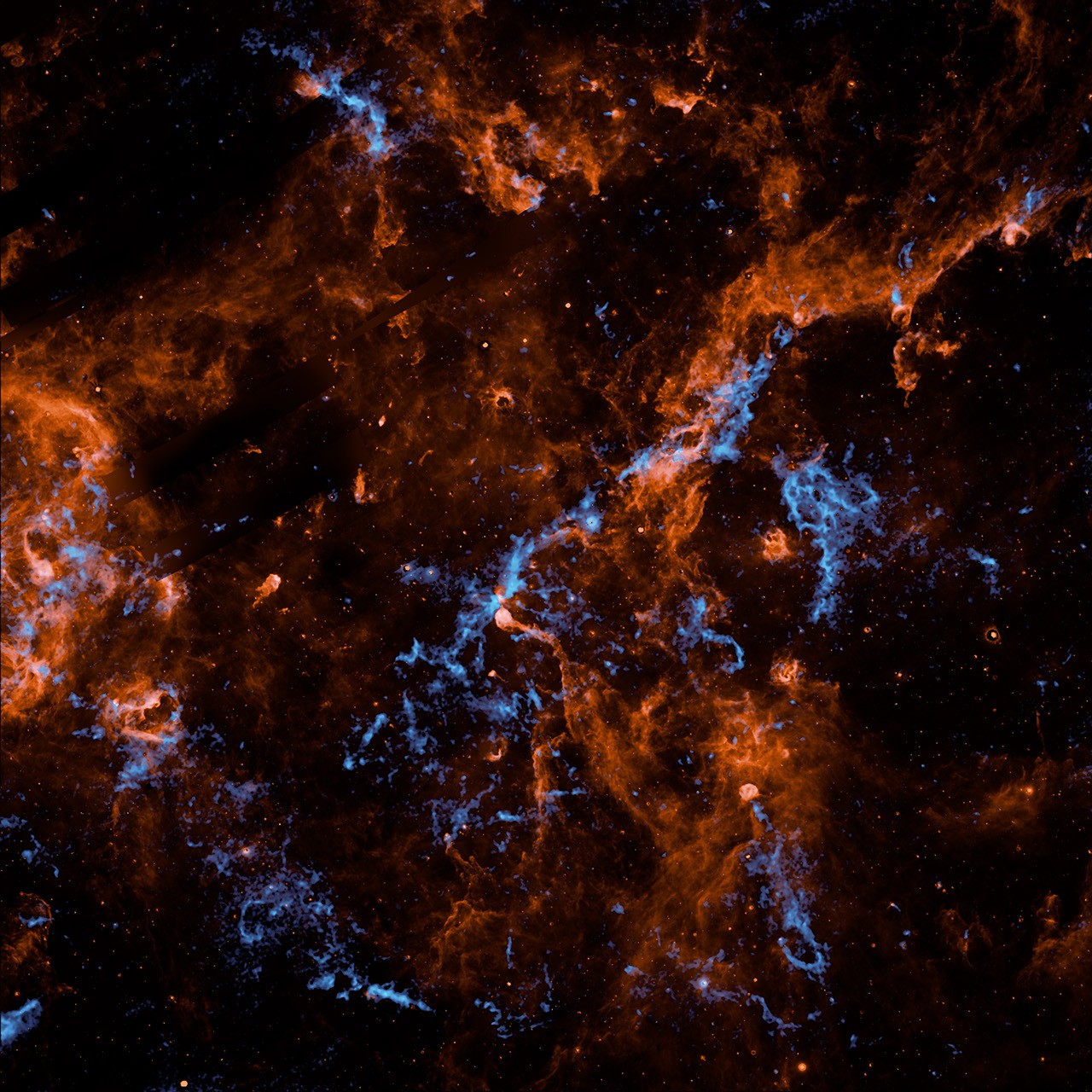
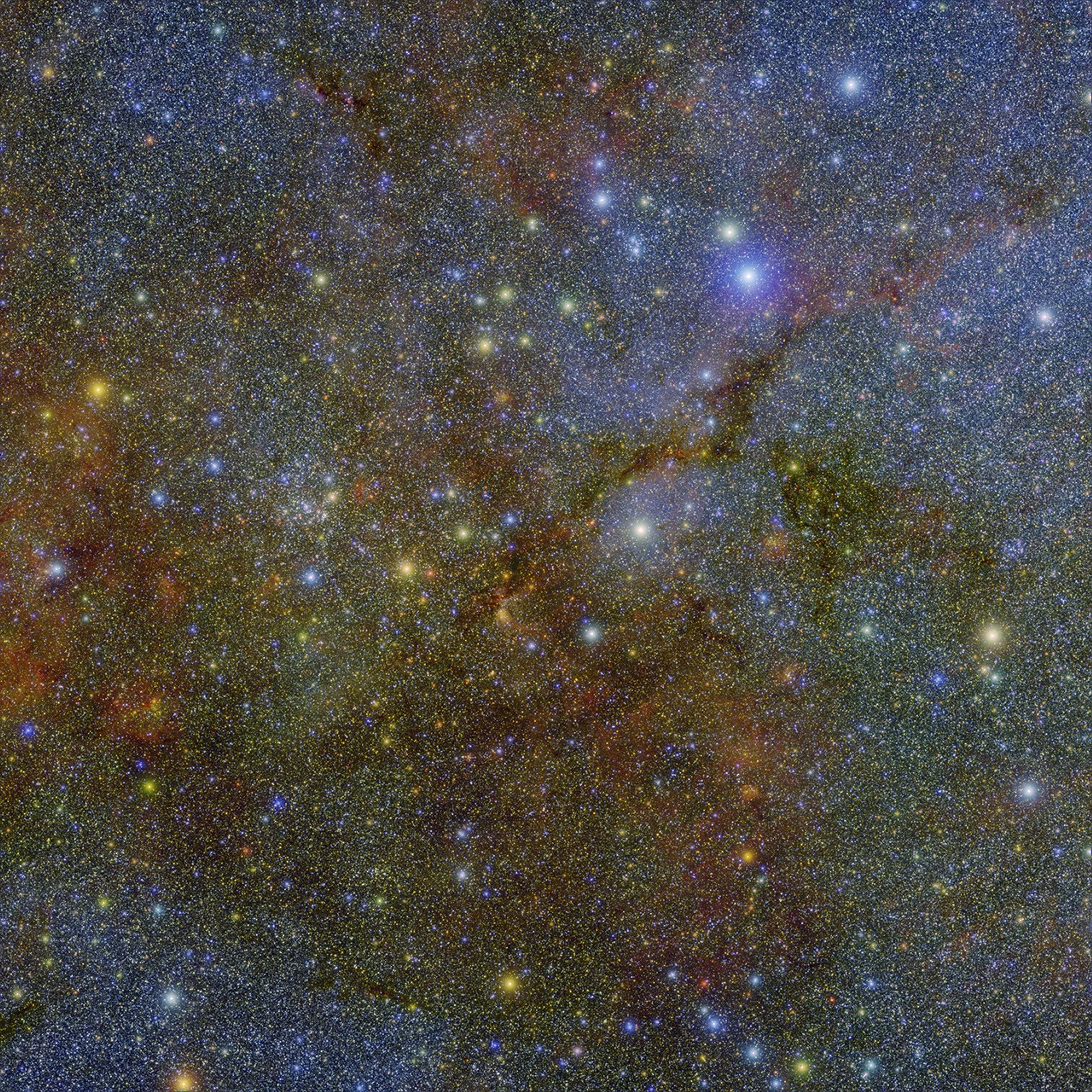
An observation made by NASA’s SPHEREx (Spectro-Photometer for the History of the Universe, Epoch of Reionization, and Ices Explorer) shows the chemical signatures of water ice (shown in bright blue) and polycyclic aromatic hydrocarbons (orange) in Cygnus X, one of the most active and turbulent regions of star birth in our Milky Way galaxy. One of several maps of molecular clouds made by SPHEREx, this observation is detailed in a study published April 15, 2026, in The Astrophysical Journal. The study supports the hypothesis that interstellar ice forms on the surface of tiny dust particles no larger than particles found in the smoke from a candle. The findings show the densest regions of ice coincide with the densest regions of dust, and the dust shields the ice from the intense ultraviolet radiation emitted by newborn stars. Figure A shows the same region, but in three different wavelengths assigned the colors green, blue, and red.…