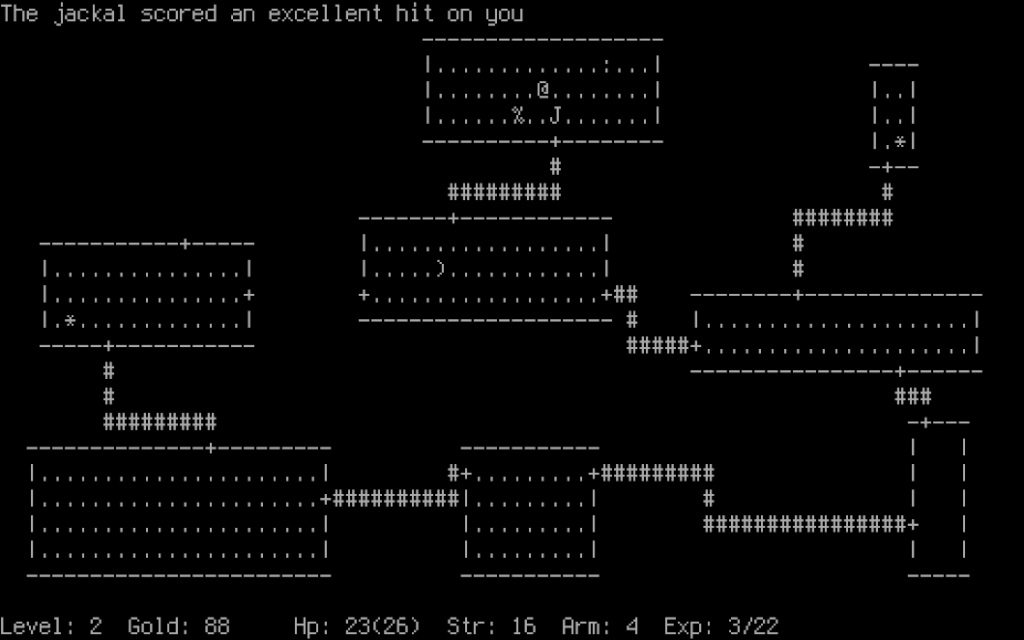
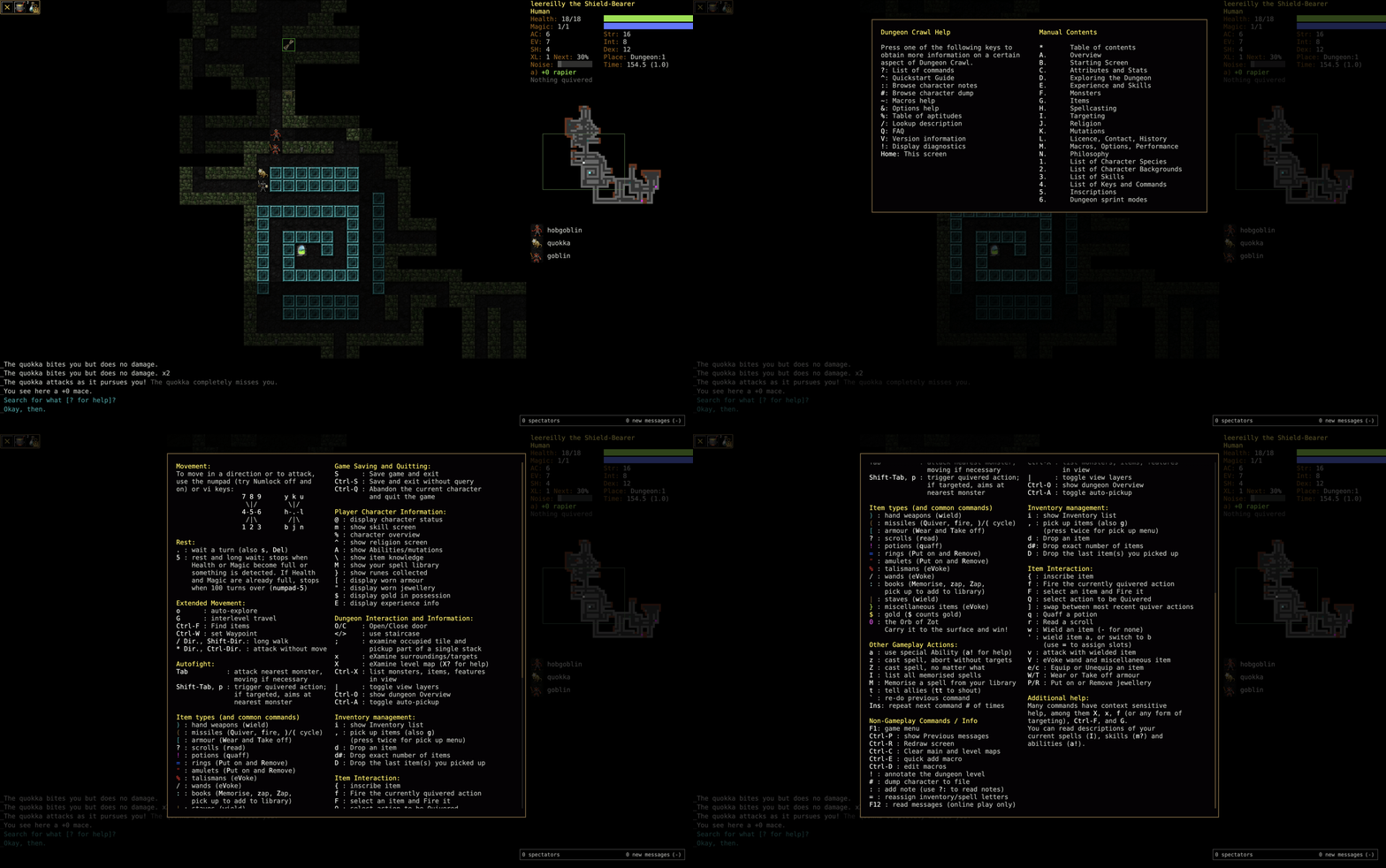
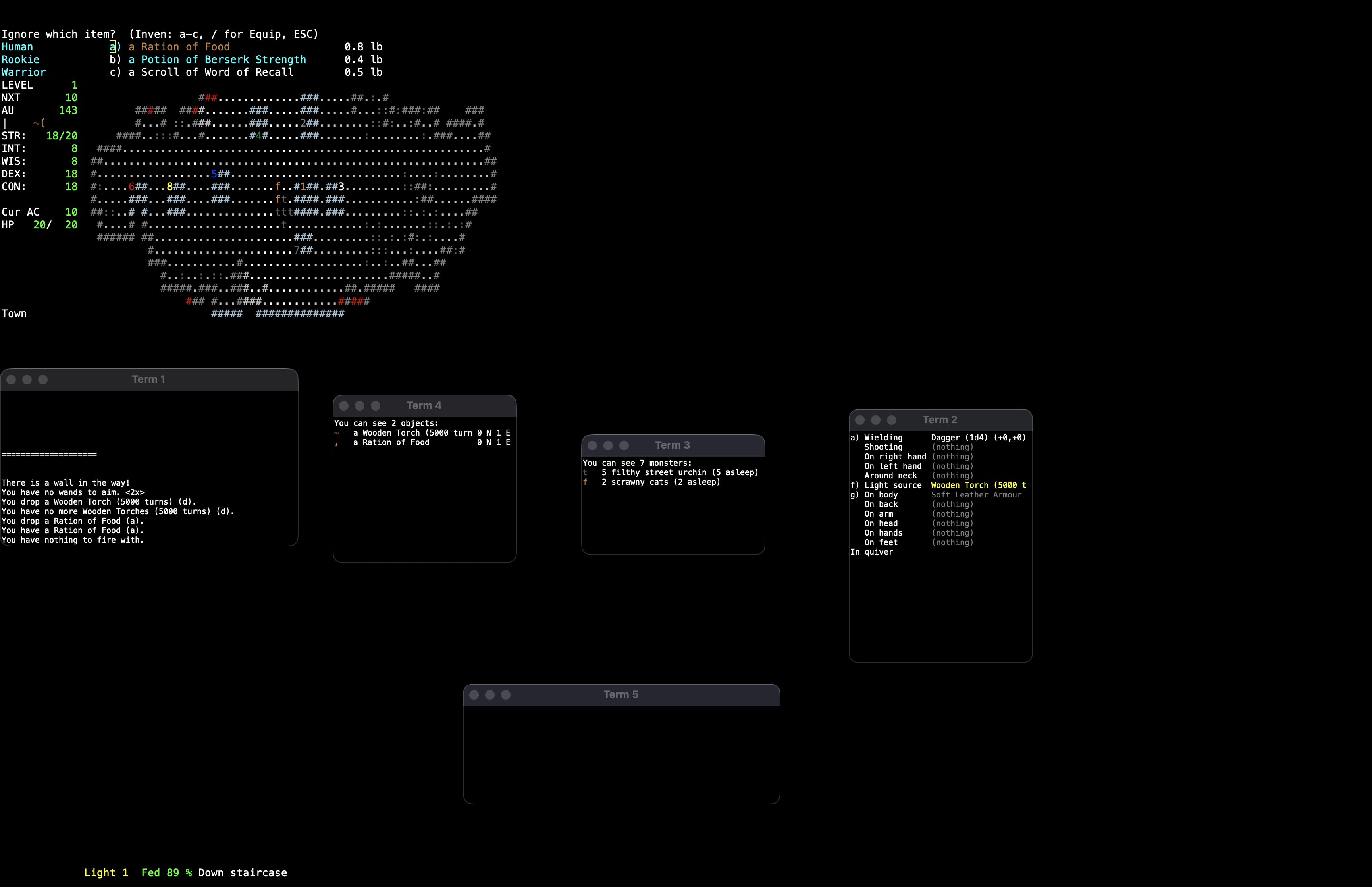
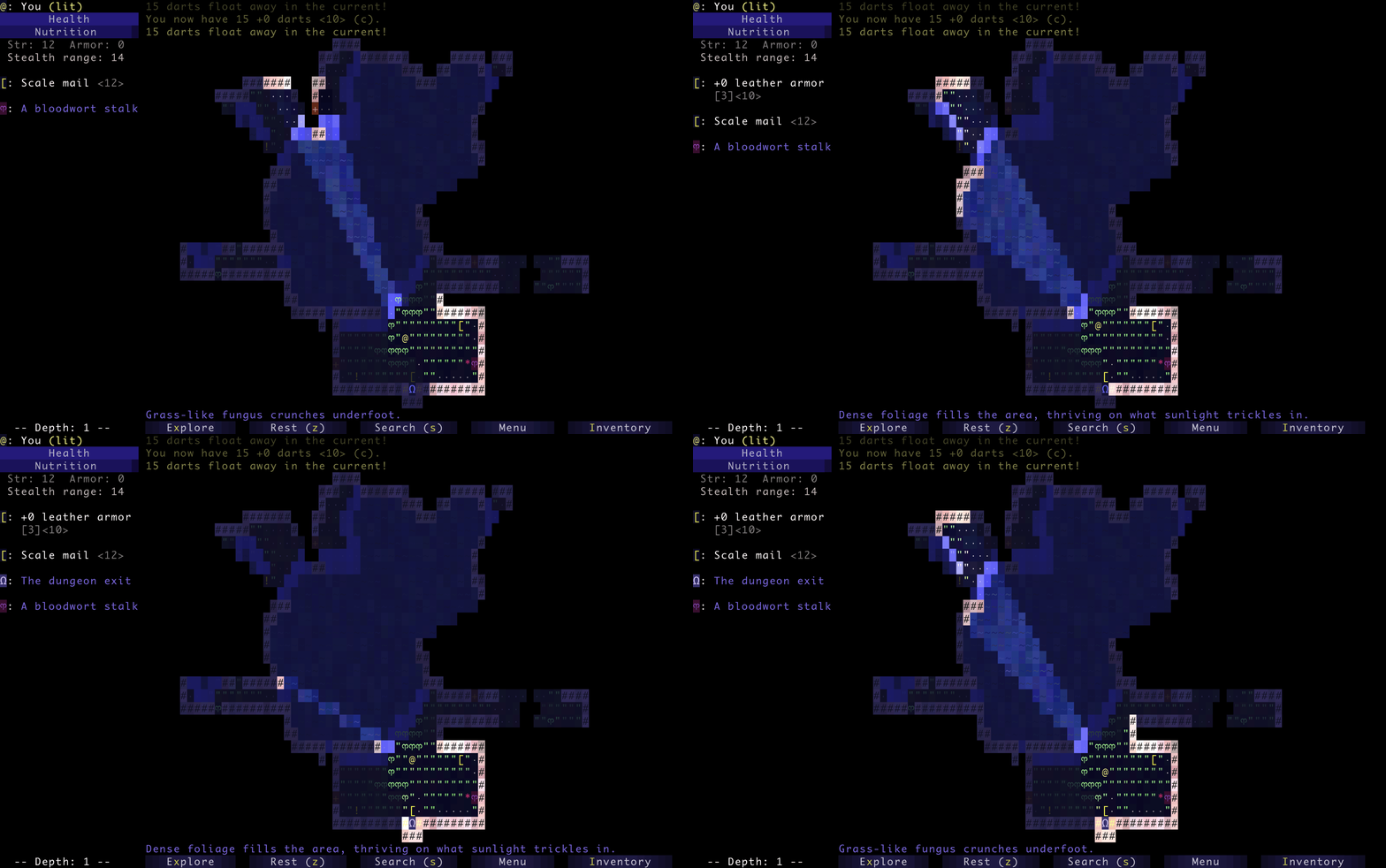
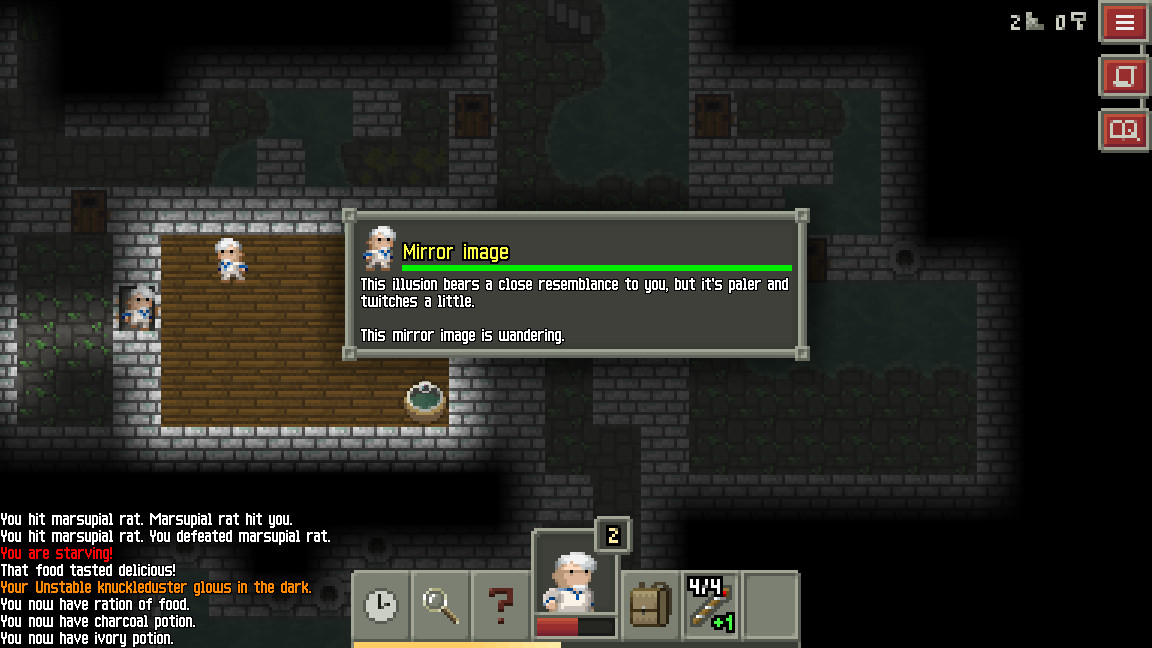
The first version of NetHack was released in 1987 as a heavily modified descendant of Hack , itself based on Rogue , a Unix-era experiment built for character-based terminals around 1980. The term “roguelike” later emerged in the early 1990s. This is also when Usenet communities, like rec.games.roguelike, were founded. Players and developers gathered there to trade ideas, variants, and philosophies inspired by Rogue’s design. Screenshot of Rogue courtesy of the Retro Rogue Collection. The player “@” can be seen above a food item “%” and a jelly monster “J”. That lineage helps explain something unusual about the genre. NetHack was developed collaboratively over networked systems before most people even had internet access. Angband required a coordinated relicensing effort decades later just to become fully open source. And Pixel Dungeon was declared “complete”… and then immediately forked by the community into dozens of new games.…