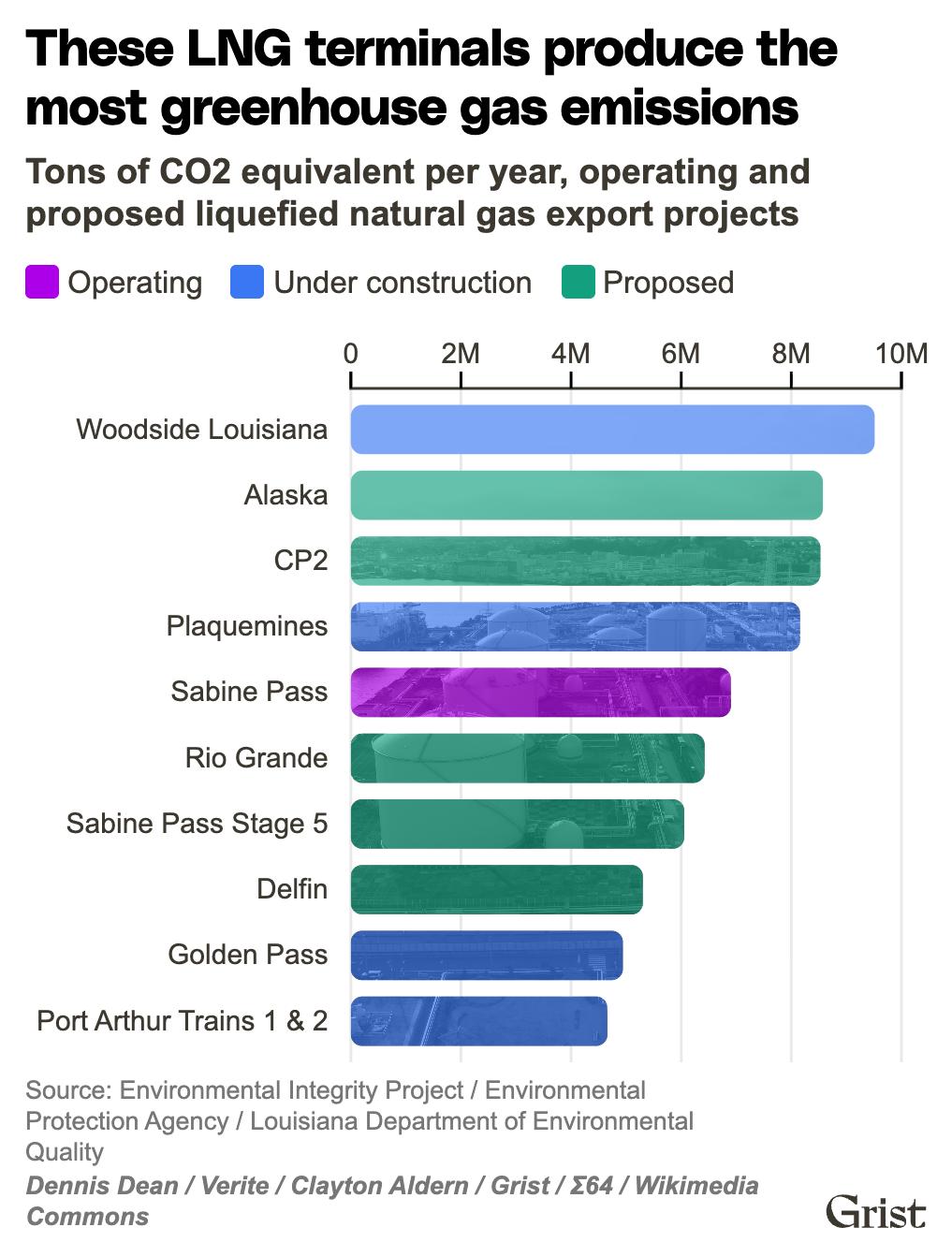
When Louisiana launched the country’s liquefied natural gas export boom in 2016 , LNG was touted as a cleaner, climate-friendly alternative to coal and oil. But the state’s first LNG terminal, Sabine Pass LNG, quickly became one of Louisiana’s largest sources of climate-warming pollution, releasing more greenhouse gases than the state’s biggest oil refineries. An even larger source is on the way. A sprawling LNG facility under construction near Lake Charles, about 40 miles east of the Sabine Pass terminal, is projected to produce substantially more emissions — eclipsing every LNG export terminal built in the United States so far and exceeding the dozens of LNG projects proposed for the next decade, according to a Verite News analysis of state and federal records. “Wow, that’s really distressing,” said Anne Rolfes, executive director of the Louisiana Bucket Brigade, an environmental group, in response to the findings.…