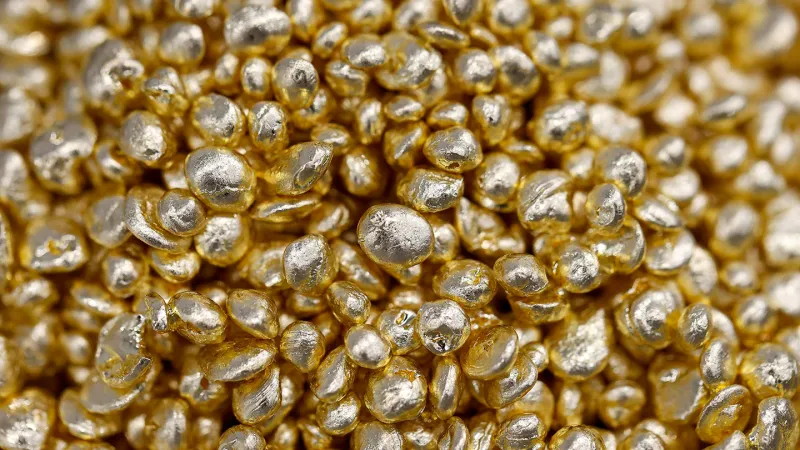
Rearrangement of atoms on the metal’s surface helps prevent reactions with oxygen Unlike other metals, which oxidize in air, gold (pictured) doesn’t react. Now scientists have a better understanding of why. " data-large-file="https://www.sciencenews.org/wp-content/uploads/sites/2/2026/05/052126_EC_shiny-gold_main.jpg?w=800"> Unlike other metals, which oxidize in air, gold (pictured) doesn't react. Now scientists have a better understanding of why. Bloomberg Creative/Getty Images This is a human-written story voiced by AI. Got feedback? Take our survey . (See our AI policy here .) Steel rusts over time; copper goes green. But gold seems impervious to the elements. Scientists have now discovered a new detail behind how gold stays so pristine. Atoms on the surface of gold rearrange into a geometry that hinders oxidation, the process that causes many metals to tarnish. Without that rearrangement, gold would begin to oxidize in seconds , researchers report May 21 in Physical Review Letters .…