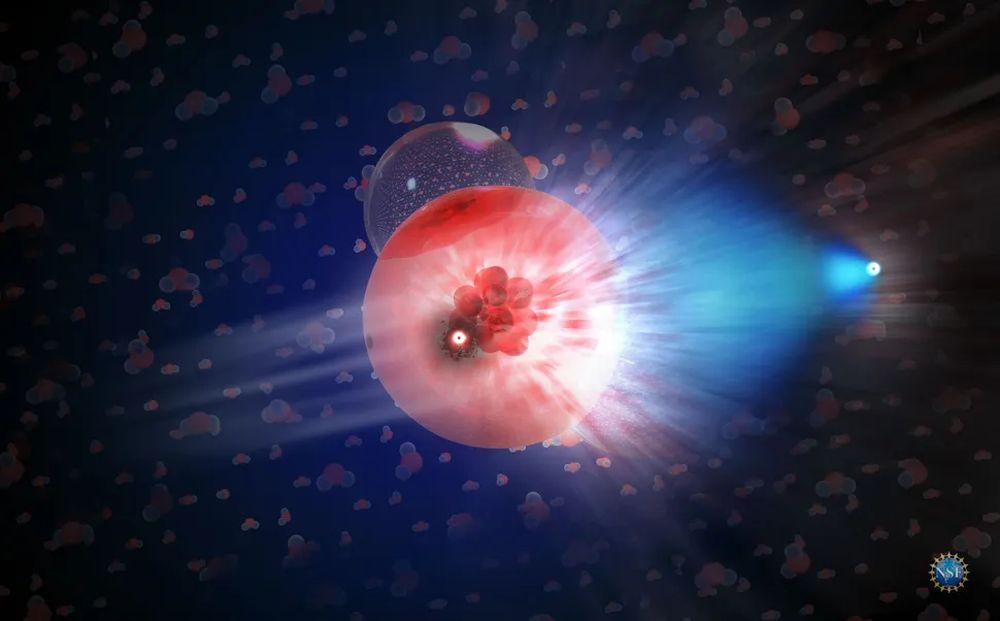
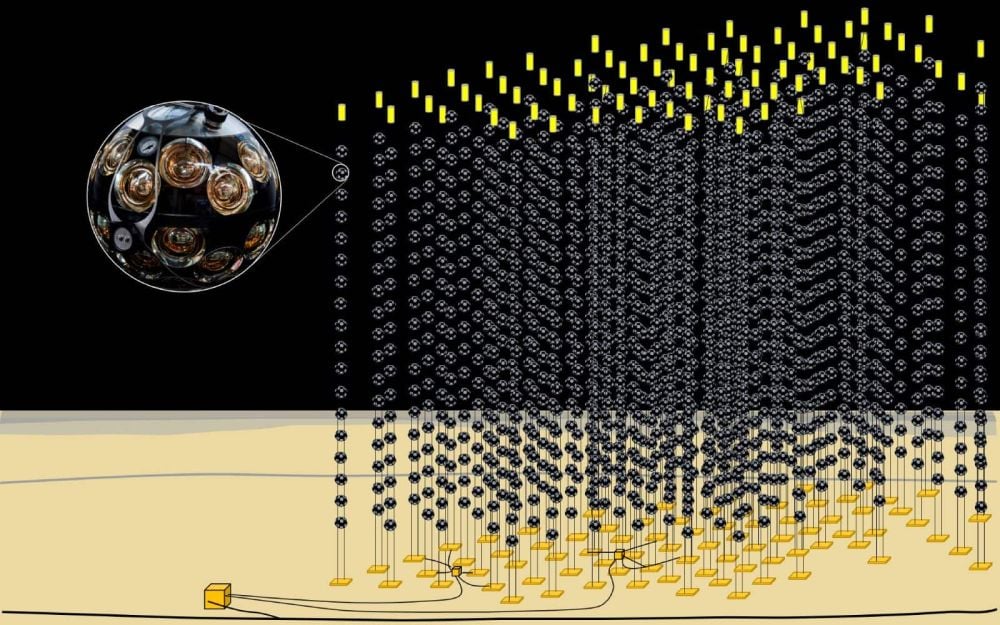
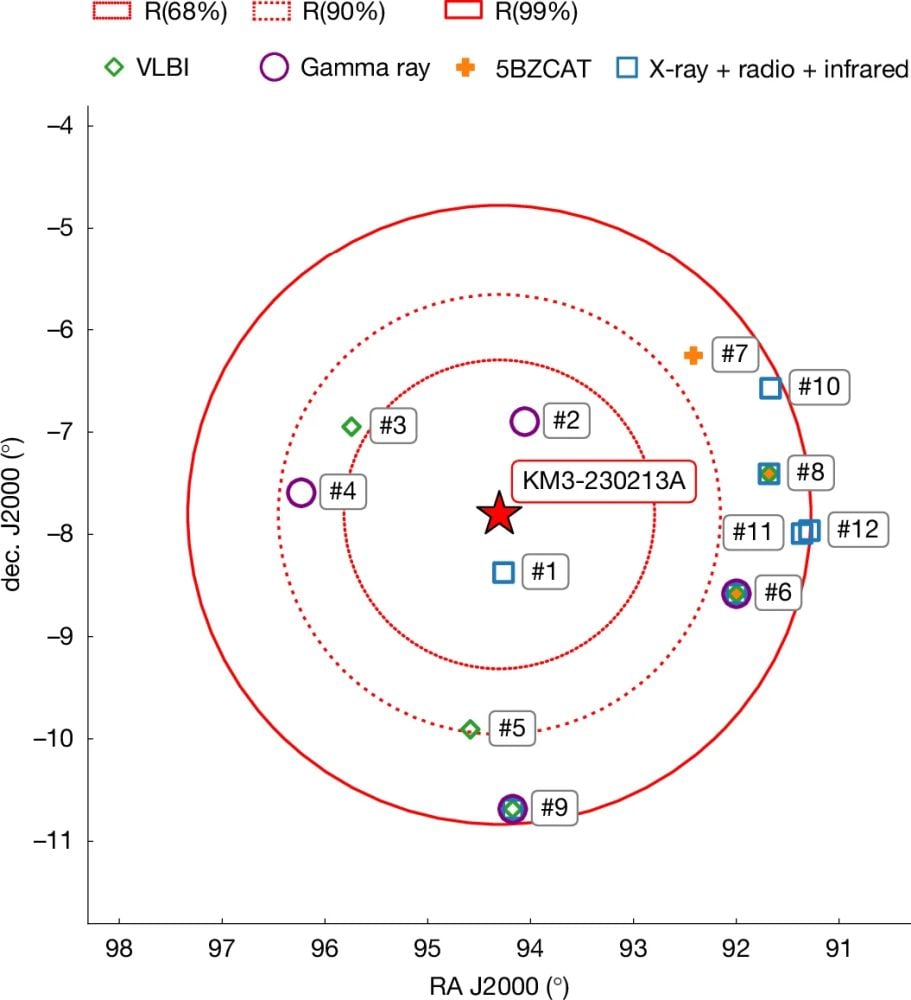
In the exotic world of particle physics, neutrinos may be the most mysterious members. They rarely interact with other matter, have almost no mass, and have no electrical charge. These characteristics make them extremely difficult to study. Even detecting them requires specialized facilities in deep caves, in thick Antarctic ice, or on the ocean floor. One of the foremost neutrino detectors is called KM3NeT, which stands for the Cubic Kilometre Neutrino Telescope. It's on the sea-floor in the Mediterranean, and in February 2023, it detected the most energetic neutron ever observed. It's called KM3-230213A, and it's estimated energy was 220 PeV (220 x 10 15 electron volts or 220 million billion electron volts). That's an unbelievable amount of energy, and ever since it was detected, physicists have been trying to determine its source. Neutrinos come from the high-energy Universe. This is the realm of cataclysmic supernovae, gamma-ray bursts, kilonovae, and other extraordinarily energetic events.…