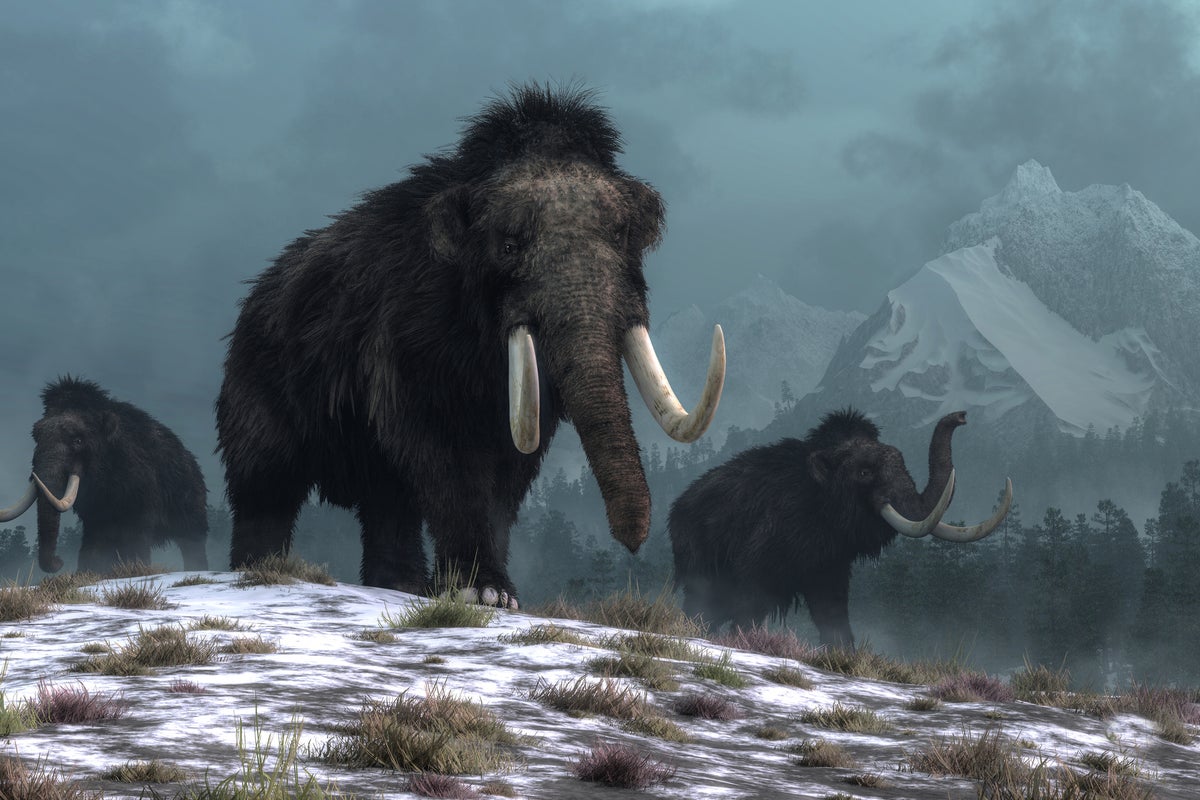
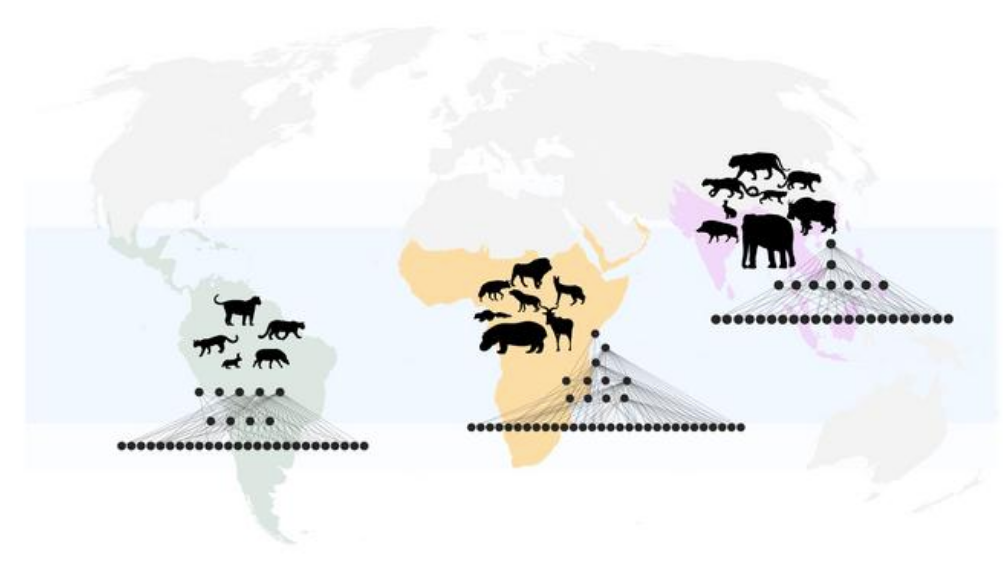
For millions of years, colossal ice age beasts dominated the planet. But then, in a geological blink, they were gone. In just a 40,000‑year span, ending around 10,000 years ago, the world lost many of its most spectacular giants in a wave of megafauna extinctions that reshaped life on Earth. This marked the end for woolly mammoths whose curving tusks grew over 12 feet long, as well as saber-toothed cats with seven-inch fangs, elephant-sized sloths, massive woolly rhinos and a giant three-ton species of wombat the size of a car. In fact, during this period, most of the planet's large-bodied species – but especially those weighing over a tonne – were completely wiped out. New research, published in the journal Proceedings of the National Academy of Sciences , suggests that the severity of ancient extinctions can still be observed in the food webs in some parts of the world today, and could even help scientists understand the potential long-term impacts of species facing extinction today.…