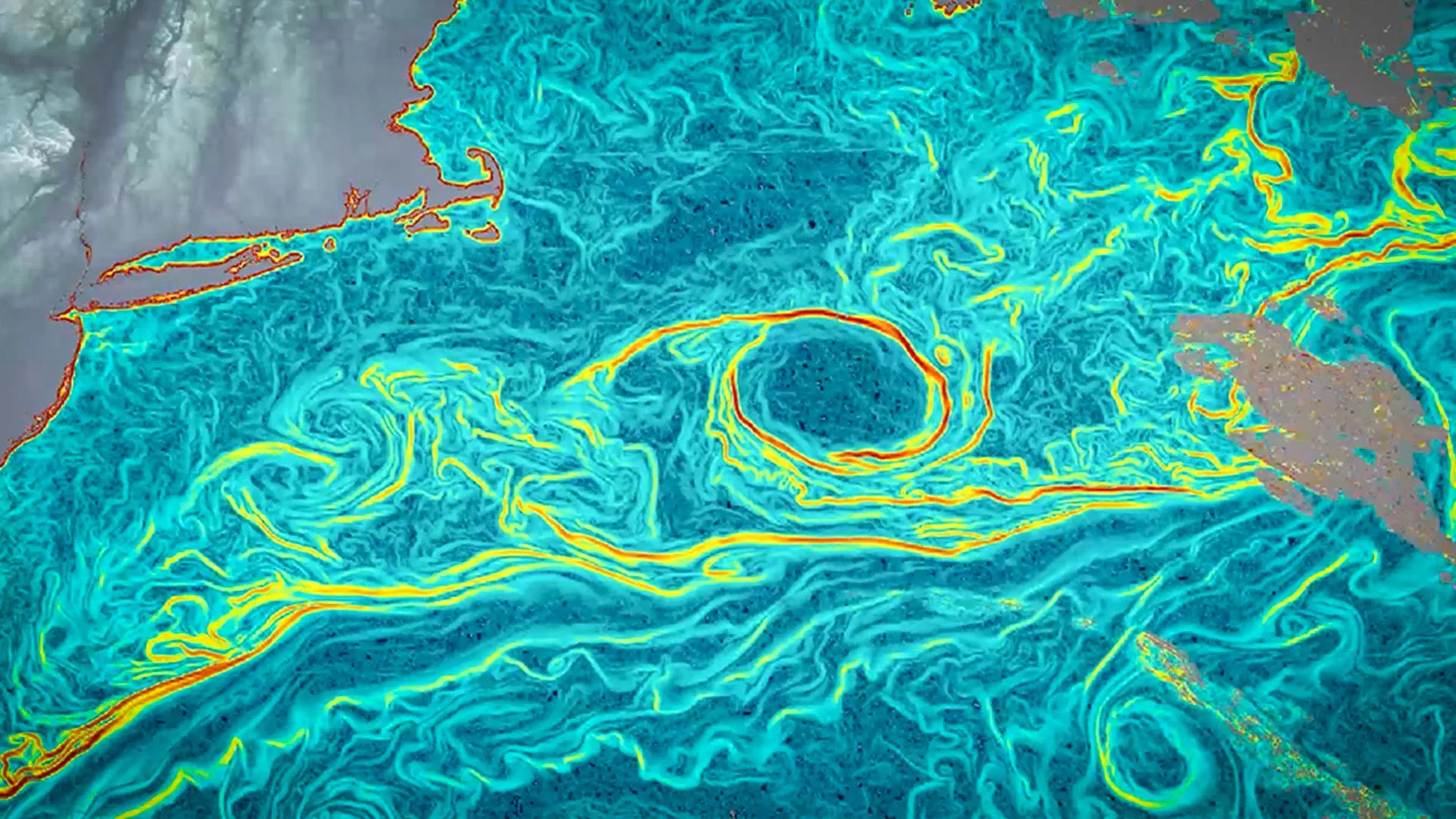
Scientists have introduced a new way to track ocean surface currents across vast areas with far greater detail than before. The technique, known as GOFLOW (Geostationary Ocean Flow), uses deep learning to analyze thermal images captured by weather satellites that are already in orbit. Because it relies on existing satellites, the method delivers a major advance in ocean monitoring without requiring new equipment in space. The research was led by Luc Lenain of UC San Diego's Scripps Institution of Oceanography and Kaushik Srinivasan, a Scripps alumnus now at UCLA. Their findings were published in Nature Geoscience . Co-authors Roy Barkan of Tel Aviv University and Nick Pizzo of the University of Rhode Island also trained at Scripps. Funding came from the Office of Naval Research, NASA and the European Research Council. Why Ocean Currents Matter for Climate and Life Ocean currents are essential to how the planet works.…