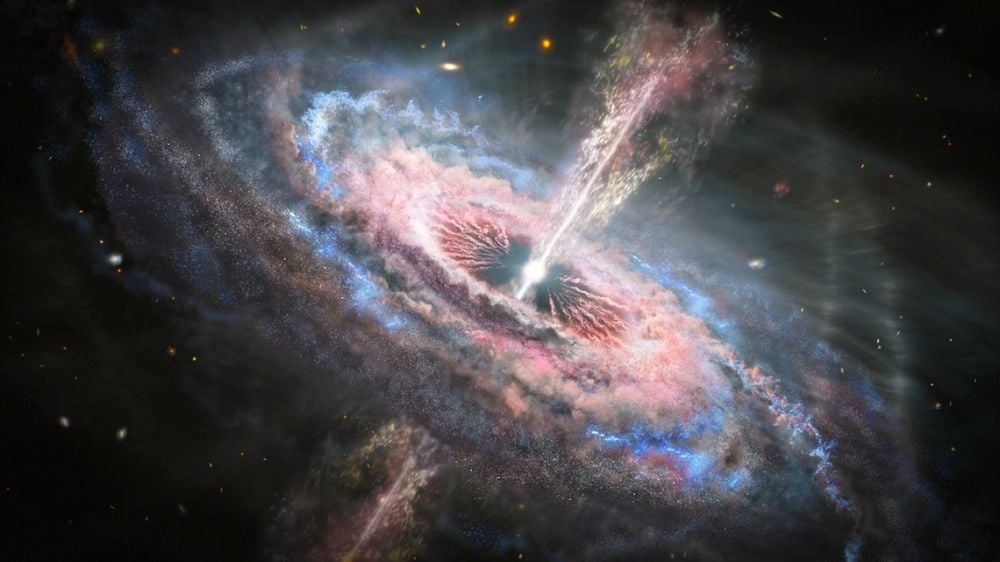
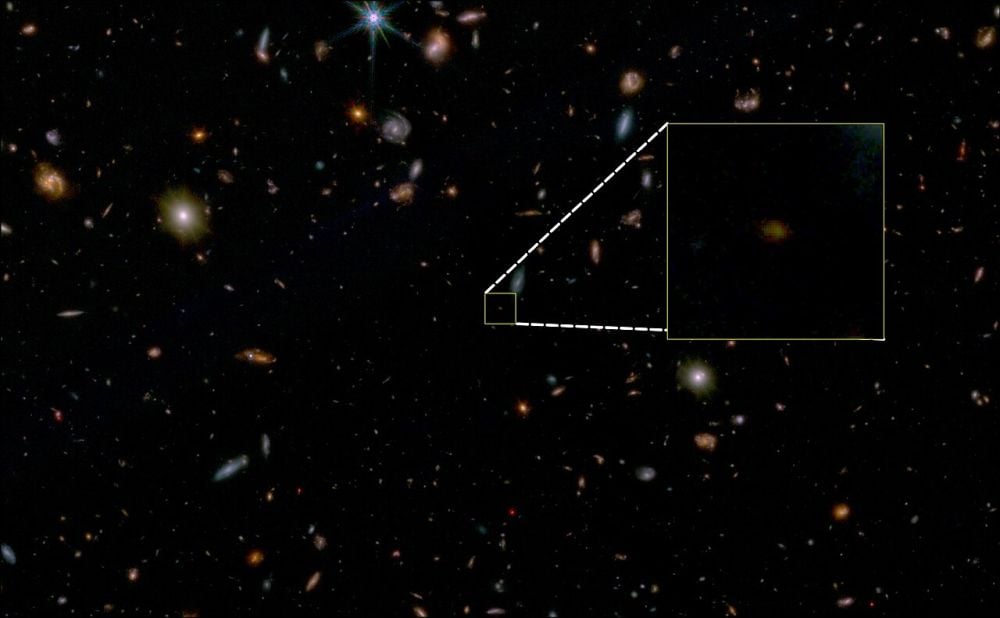
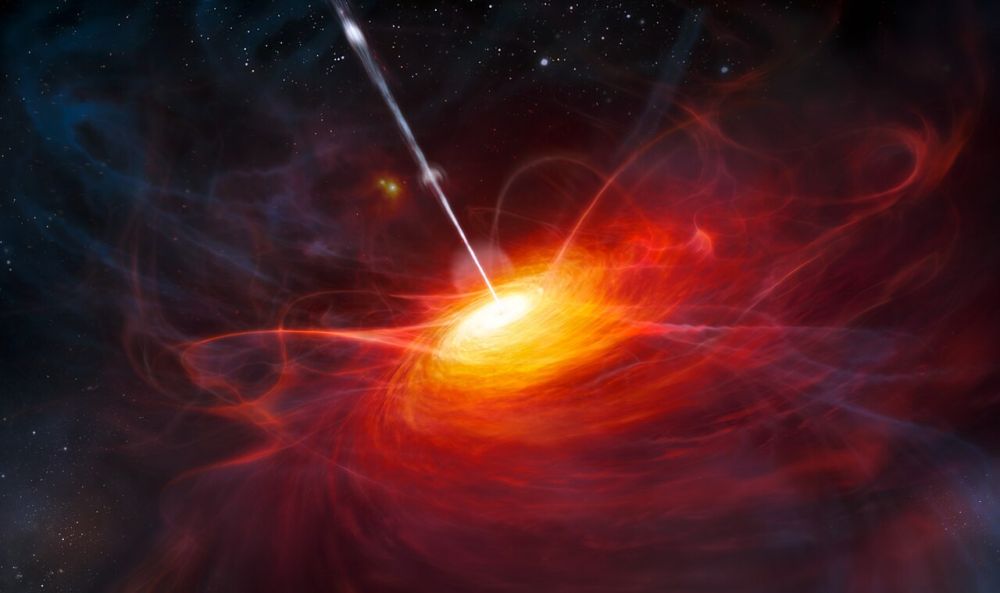
The JWST has shown us that even very ancient galaxies have supermassive black holes in their centers, a finding that clashes with our understanding of the early Universe and how galaxies and black holes grow. Though not all of the ancient galaxies the telescope has observed appear to have SMBH, most do. This suggests a clear link between SMBH and galaxy evolution, but the exact nature of that link has so far eluded astrophysicists. The JWST's puzzling observations don't end there. For some reason, many galaxies seem to have stopped forming stars as early as only two billion years after the Big Bang. This discovery has also puzzled scientists. New research shows that quasars may have something to do with it. When SMBH are actively accreting material, they're called active galactic nuclei (AGN). AGN emit an overwhelming amount of energy, and the most energetic and brightest ones are called quasars.…