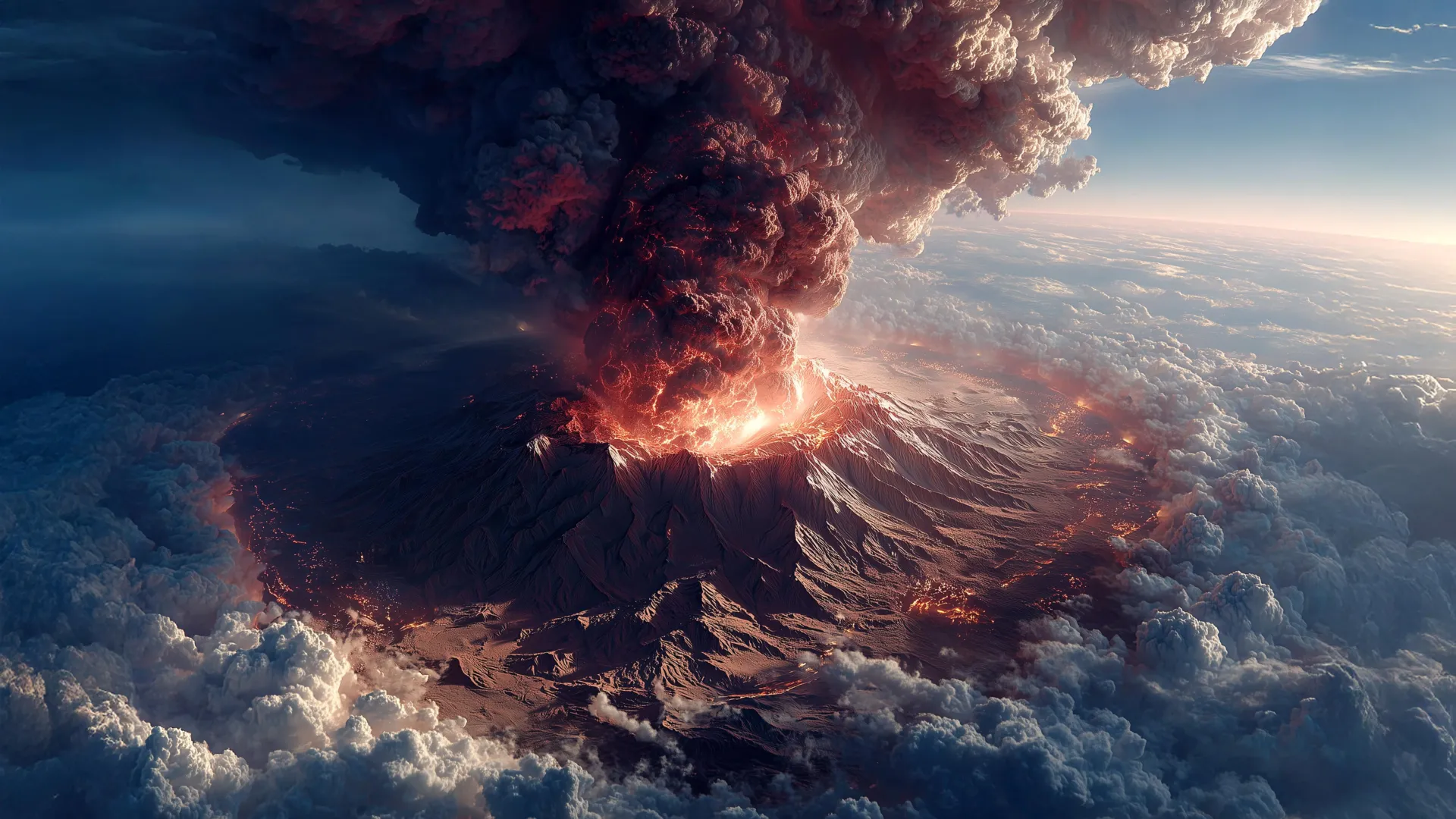
Seventy four thousand years ago, Earth experienced one of the most powerful volcanic disasters in the past 2.5 million years. The Toba supereruption , centered in what is now Indonesia, unleashed devastation on a staggering scale. The eruption was so enormous that scientists believe its effects reached nearly every corner of the planet. For archaeologists who study ancient volcanic events , one question stands out above all others: How did humans survive? The Toba eruption was more than 10,000 times larger than the 1980 eruption of Mount St. Helens , yet our species endured. The Toba Supereruption Changed the Planet The eruption blasted 672 cubic miles (2,800 km 3 ) of volcanic ash high into the stratosphere and left behind a gigantic crater measuring about (62 x 18 miles, or 100 x 30 kilometers). The skies may have darkened for years as volcanic material blocked sunlight around the globe, triggering severe cooling. Closer to the eruption, conditions would have been catastrophic.…